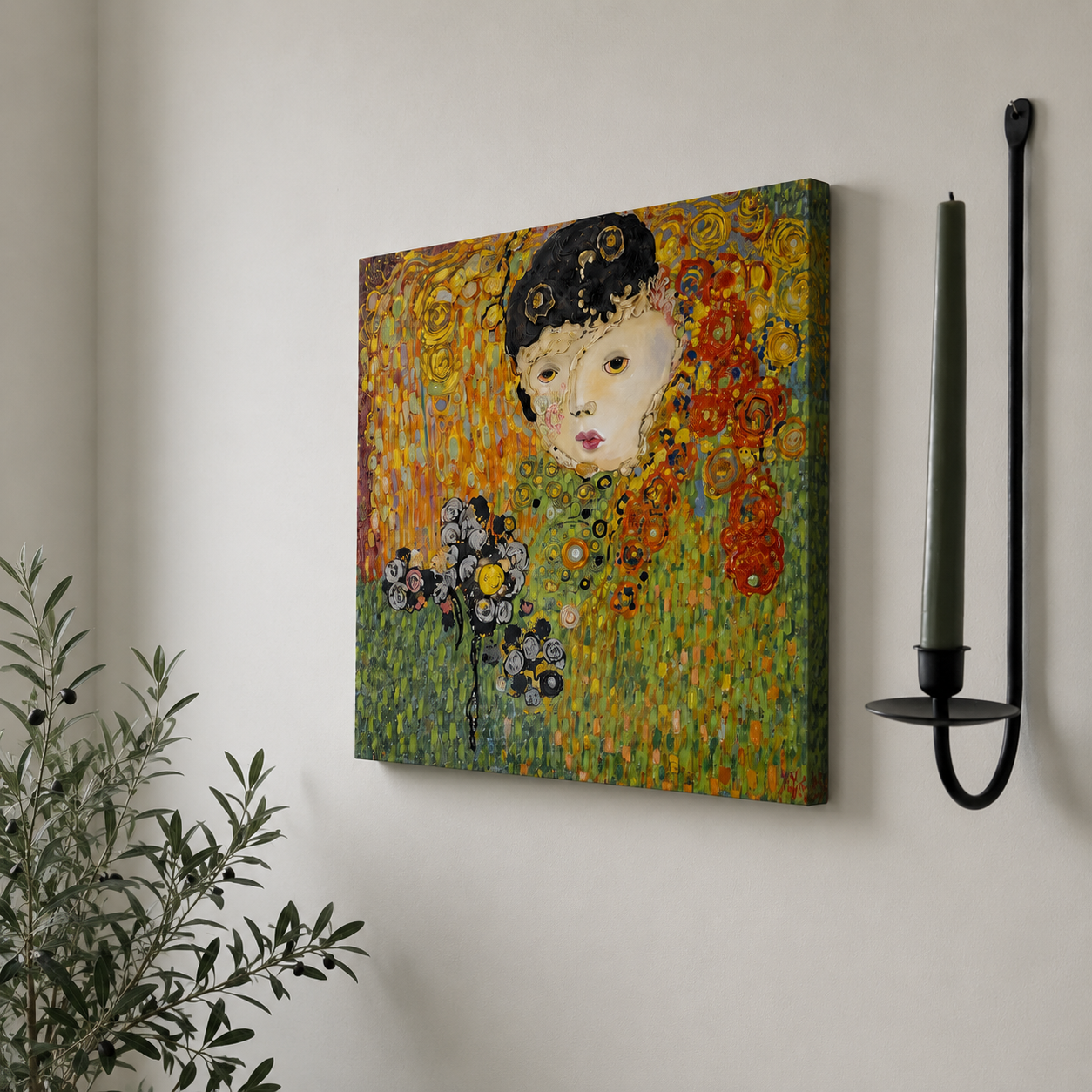
How to Choose Meaningful Art for a New Chapter in Life
There are moments in life when a room stops being just a room.
A first apartment after years of instability.
A home shared with someone new.
A quieter house after loss.
A studio built after taking a risk on yourself.
A wall that once felt empty, but now asks to hold something that means more.
In those moments, art is no longer simply decoration. It becomes a marker. A witness. A way of saying: something has changed here.
For people entering a new chapter, the right artwork does more than fill space. It gives form to memory, intention, and identity. It can hold a feeling you are not yet able to explain in words—hope, calm, renewal, courage, abundance, grief transformed into beauty.
So how do you choose meaningful art for a new chapter in life?
Not by asking what matches the sofa first.
Not by following every passing trend.
And not by buying whatever is easiest to scroll past online.
You begin somewhere deeper.
1. Start with the chapter, not the color palette
Most people are taught to choose wall art by size, palette, and room style. Those things matter, but they should not come first.
The first question is this: What is changing in your life right now?
Maybe you are beginning again after a difficult period.
Maybe you are trying to create peace in a home that has felt chaotic.
Maybe you want your space to reflect expansion, success, softness, or spiritual grounding.
Maybe you want a reminder of who you are becoming.
When art is chosen from that place, it feels different. It does not just “go with the room.” It gives the room emotional gravity.
A meaningful piece often enters your life because it resonates with a transition:
-
a move
-
a relationship milestone
-
recovery
-
motherhood
-
independence
-
career reinvention
-
inner healing
-
a return to self
The visual language may vary, but the role of the work is the same: it holds the energy of a threshold.
2. Choose art that says something without explaining everything
The most enduring pieces are rarely the loudest.
Meaningful art does not need to be literal to be powerful. In fact, some of the most memorable works are suggestive rather than explicit. They create atmosphere. They imply a story. They invite projection.
A strong piece may communicate:
-
calm without looking passive
-
abundance without looking obvious
-
protection without looking heavy
-
tenderness without becoming sentimental
-
strength without shouting
This is one reason people are drawn to symbolic or emotionally charged visual language. A figure turning away. A bloom at its fullest point. A horse in motion. A field suspended in stillness. Light breaking through shadow. A composition that feels balanced, but alive.
You do not always need to “understand” a piece immediately. Sometimes the better question is: Does it stay with me?
If an artwork keeps returning to your mind, there is usually a reason.
3. Let the piece shape the atmosphere of the room
The best art changes more than the wall. It changes the room’s emotional temperature.
Some works make a space feel quieter.
Some create lift.
Some introduce a sense of focus, depth, or ceremony.
Some make a home feel more settled, more whole, more intentional.
This is why meaningful art is often chosen not only for visual beauty, but for the quality of presence it brings.
Before selecting a piece, ask:
-
What should this room feel like when I enter it?
-
What do I need more of here—clarity, softness, confidence, groundedness?
-
Do I want this space to restore me, energize me, or remind me of something?
A bedroom may call for stillness and emotional safety.
A living room may need a work with presence and conversation value.
An entryway may benefit from a piece that signals arrival, direction, and tone.
A workspace may need art that sharpens intention and reinforces identity.
When art aligns with the emotional function of a room, it stops feeling random. It begins to feel placed with purpose.
4. Look for resonance, not just taste
There is a difference between liking something and feeling claimed by it.
A piece can be beautiful, stylish, and well-made—and still not belong in your life. Another piece may feel strangely personal from the moment you see it. That reaction matters.
Good taste helps you edit.
Resonance helps you choose.
When a work feels meaningful, people often describe the experience in instinctive language:
-
“I kept coming back to it.”
-
“It felt like where I am right now.”
-
“I don’t know why, but it felt like mine.”
-
“It says something I’ve been trying to say.”
That type of response is not accidental. It usually means the work has met you at a real psychological or emotional moment.
In a world flooded with images, resonance is rare. That rarity is part of what makes a piece worth living with.
5. Pay attention to scale—meaning needs presence
One mistake many people make when buying art for a meaningful life moment is choosing a piece that is too small to hold visual and emotional weight.
If a work is meant to mark a turning point, it should have enough presence to do so.
This does not mean everything must be oversized. But it does mean that scale should match significance. A piece that is meant to anchor a room or symbolize a new beginning should not feel apologetic on the wall.
Larger-format canvas works often create a stronger sense of immersion. They allow the image, texture, and atmosphere to fully register from across the room. They also make the decision feel intentional rather than incidental.
A meaningful artwork should not look like an afterthought.
6. Craft matters more than people think
Even the most compelling image loses power if the physical object feels disposable.
This is especially important when choosing art that is meant to stay with you through a chapter of life, not just a season of decorating.
The difference is often visible in:
-
print depth
-
tonal subtlety
-
edge sharpness
-
canvas texture
-
frame proportion
-
structural integrity
-
how the piece holds light throughout the day
Gallery-quality production changes the experience of ownership. It slows the eye down. It gives the work weight and credibility. It makes the piece feel worthy of the role you are asking it to play.
A meaningful piece should not feel temporary in your hands.
7. Choose art you can grow into
Some art impresses quickly and fades just as fast. Other works reveal themselves slowly.
For a new life chapter, the second kind is often better.
The right piece should have enough depth that you do not outgrow it the moment the room changes, or the trend cycle moves on. It should remain interesting after weeks, months, and years. It should continue to return something to you.
That is one of the strongest signs of meaningful art: it keeps becoming more legible as your life unfolds.
You notice something new in it after a hard season.
You understand its tone differently after a move, a loss, a reconciliation, a success.
You realize that what first drew you to it was only the beginning.
The best pieces do not just reflect who you are. They also reflect who you are becoming.
8. A home deserves objects that witness it
We often think of major life transitions as things marked by calendars, contracts, ceremonies, or photographs.
But spaces remember too.
A home remembers the version of you that arrived there.
It remembers who you were when you unpacked, rebuilt, grieved, hoped, began again.
And the objects you place inside it become part of that memory.
This is why meaningful art matters.
Not because every wall needs to be filled.
But because certain works become quiet witnesses to our lives. They remain as the seasons change. They absorb morning light, years of conversation, and the invisible emotional weather of a home.
When chosen with intention, art does not simply decorate a chapter. It belongs to it.
Final Thoughts
If you are choosing art for a new chapter in life, start with honesty.
Ask what this moment means.
Ask what you want to remember.
Ask what kind of atmosphere you want to live inside.
Ask what image feels less like a purchase and more like a recognition.
The right artwork will not only suit your room. It will meet your life where it is.
And years from now, when everything else has changed again, it may still be there—quietly holding the shape of the moment when something new began.