.png?w=4096&h=1738)
- 30-day returns: You can request a return, refund, or exchange within 30 days of delivery (terms apply).
- Damaged/defective items: Report damage within 48 hours with videos of the artwork and packaging; we'll replace it for free.
- Changed your mind returns: Return shipping paid by customer; items must be unused; restocking fee may apply.
Description
Nu debout et femmes assises is among the finest of an important series of grisaille double-portraits of his mistress and muse Dora Maar that Picasso made in the coastal resort of Royan near Bordeaux shortly after the outbreak of the Second World War. Responding to the traumatic news of the German invasion of Poland, Picasso had hurriedly fled Paris on 1 September 1939 for the comparative safety of the town of Royan on the French Atlantic Coast. There amidst the gloom of the news of the outbreak of war between France and Germany, he set to work on a series of pictures almost all of which he executed in the grim, grisaille colours he had used for Guernica (1937, Museo Nacional Centro de Arte Reina Sofía, Madrid) and would again use for Le charnier (The Museum of Modern Art, New York) in 1944-1945. ‘I have not painted the war because I am not the kind of painter who goes out like a photographer for something to depict,’ Picasso would later say of his work of these years, ‘But I have no doubt that the war is in these paintings that I have done’ (quoted in P.D. Whitney, ‘Picasso is Safe,’ in San Francisco Chronicle, 3 September 1944, in S.A. Nash, ed., Picasso and the War Years 1937-1945, exh. cat., Fine Arts Museum of San Francisco, 1998, p. 13).
Between 1939 and 1944, Dora Maar became the primary vehicle through which Picasso would often express the trauma, deprivation, anxiety and dullness of the years of war and Occupation. As Elizabeth Cowling has written, the origins of this tendency began in Royan immediately after the outbreak of war in September 1939. ‘These months in Royan,’ she records, ‘were very productive, the constant pressure of mortal danger spurring Picasso on to find a way of visualizing the common anguish without resorting either to anecdote or reportage’ (Picasso: Style and Meaning, London, 2002, p. 616).
What art witnesses, stays.
PROVENANCE
Archive Record
Each work enters the archive as a single-entry record. This digital certificate guarantees authenticity and provenance.
Archive No.
--
Format
--
ACQUISITION
On the Archive
Whispart is an ongoing archive practice exploring transition, memory, and renewal. Each work enters the archive as a single-entry record — released once, then sealed.
ROOM SCALE GUIDE
VIEWING DISTANCE
Best read at 1.8–3m.
Let it hold the room from across the space.
WALL MINIMUM
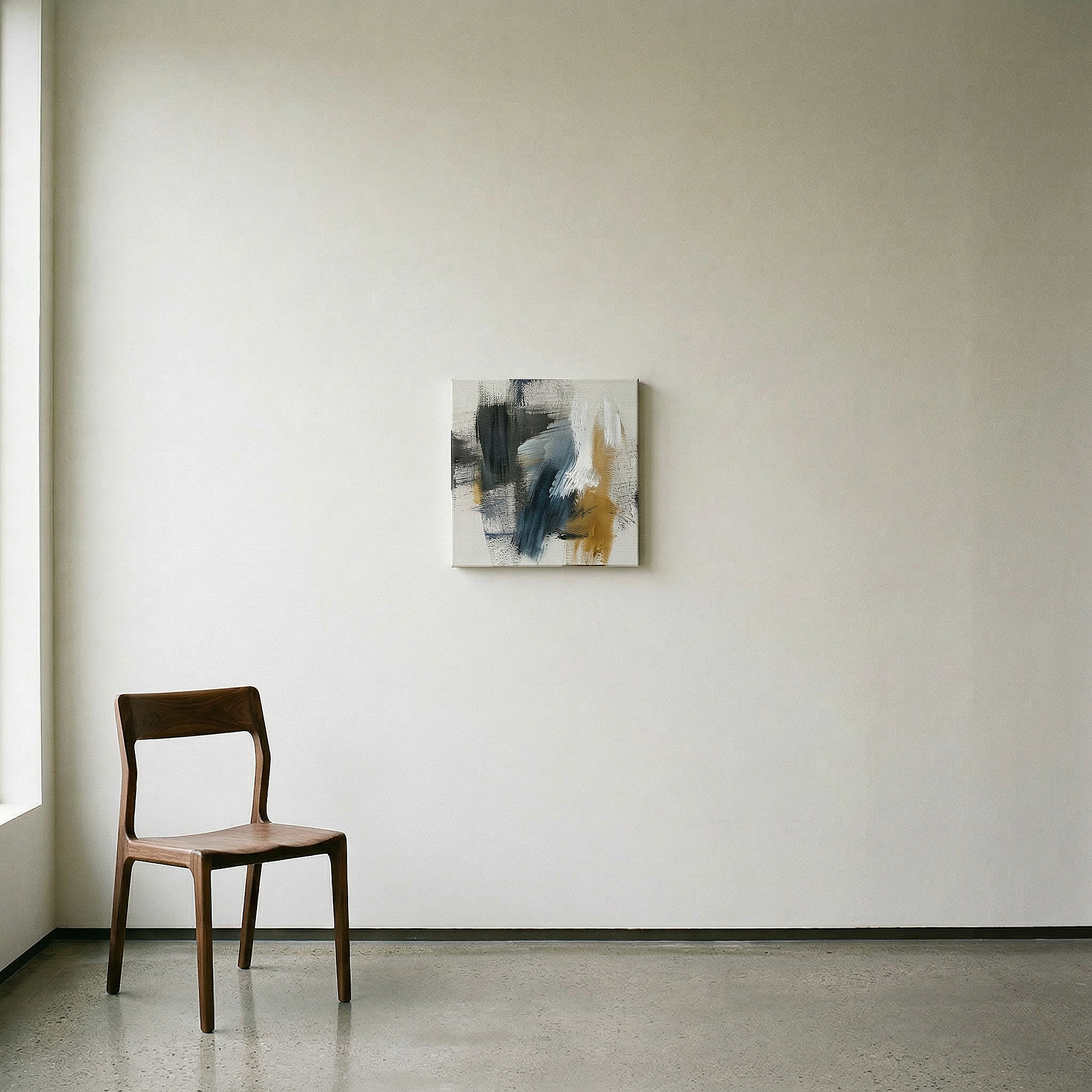
Recommend wall width ≥ 120cm for breathing room, especially in entryways and bedrooms.
LIGHTING NOTE
2700–3000K warm light calms the palette; indirect lighting preserves the work's soft temperature.
- Giclée canvas prints; color may vary by screen.
- Cancellation available before production starts.
- We collect order/contact data for fulfillment and support.
- Zero-tolerance for abusive disputes; evidence retained for claims.
.png)

100%
Scroll to zoom • Drag to pan • Click to close

Witness objects for life’s pivotal chapters
Each artwork is acquired once —
and archived as your next chapter.
Generative Arts
Loading recommendations...