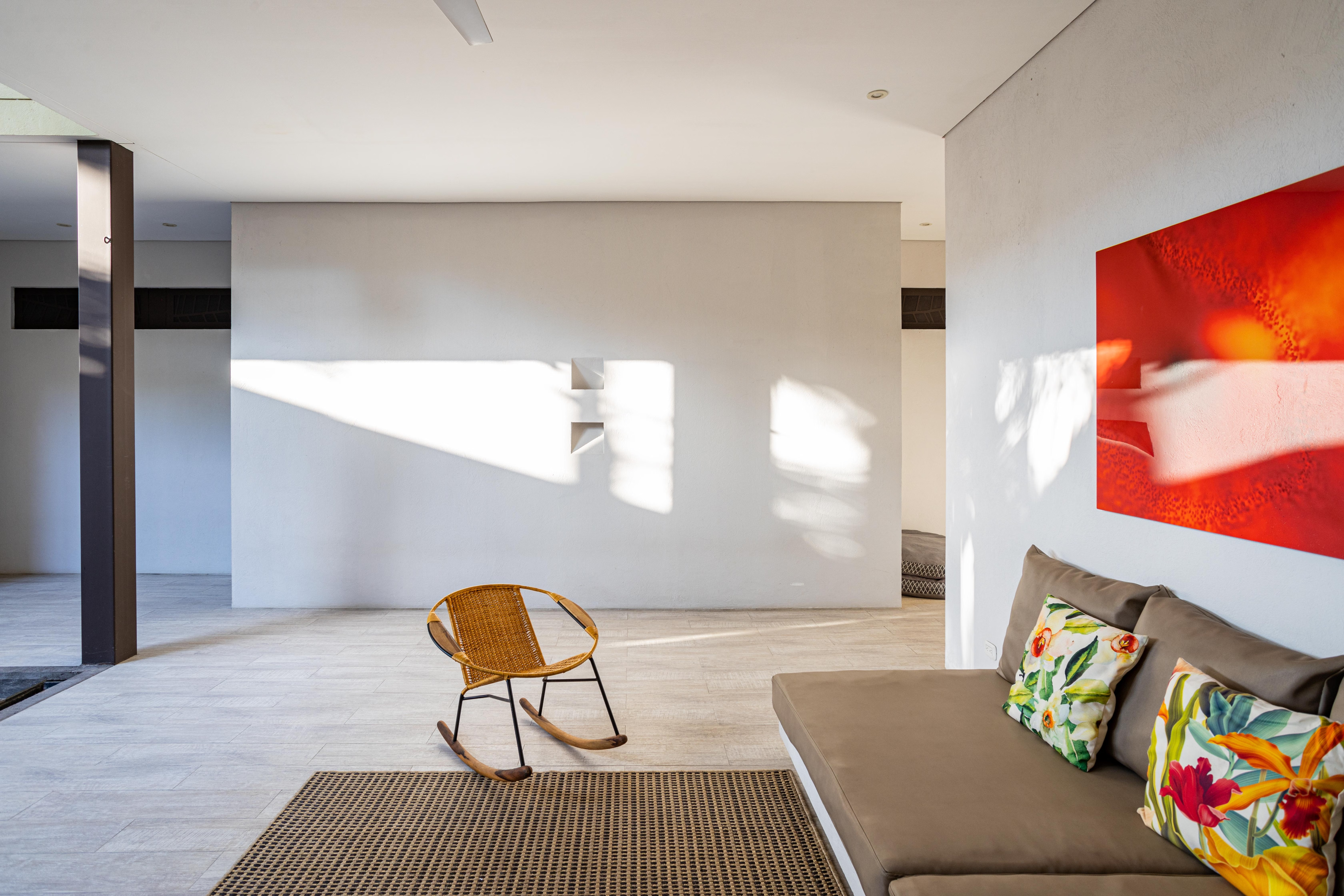
What Size Wall Art Works Above a Sofa? A Simple Guide for Getting the Proportions Right
Choosing wall art above a sofa is less about filling a blank wall and more about creating one calm visual conversation. Measure the sofa first, test the total span with tape, and let the room make the final adjustment.
Start with the sofa, not the empty wall
Choosing wall art above a sofa gets much easier once you measure the sofa, not the empty wall. A blank wall has a dramatic way of making every artwork look a little lonely, a little heroic, and occasionally the size of a postage stamp. The sofa is the real visual anchor: it tells your eye where the composition begins and ends.
That matters because the question is rarely just “Is this painting beautiful?” More often it is “Will this painting look right here?” People who ask for help with the decision tend to compare two sizes, wonder whether one piece needs companions, and worry about being too high, too low, or off-centre. One useful habit is to tape out two candidate sizes before buying or drilling, then step back from the doorway and let the room answer with its indoor voice.
The guide below is deliberately sofa-specific. It will not solve every gallery wall, desk nook, or grand staircase. It will give you a reliable way to decide whether the artwork above the place where people actually sit feels properly related to it.
A quick living room art size check
Measure the sofa from outer arm to outer arm. Multiply that number by 0.60 and 0.75 to get a working span for the whole composition. Treat the examples as a measuring aid, not a requirement to buy a ruler with a tiny tuxedo.
| Sofa width | Helpful total art span | What that can look like |
|---|---|---|
| 72 in / 183 cm | 43–54 in / 110–137 cm | One medium horizontal work, a diptych, or three compact frames. |
| 84 in / 213 cm | 50–63 in / 128–160 cm | One generous landscape work, a roomy diptych, or a three-piece group with measured gaps. |
| 96 in / 244 cm | 58–72 in / 147–183 cm | One large statement work or a wider grouped arrangement that reads as one composition. |
Why 60–75% is useful, even though your room did not sign the contract
Several sofa-art guides arrive at a similar practical idea: artwork tends to feel proportionate when its total span lands in a 60–75% starting range of the furniture below it. The word “starting” is doing useful work here. It gives you a scale to test without pretending that a low-backed sectional, a tall ceiling, or a very sculptural lamp has been erased from the room.
For example, an 84-inch sofa points to roughly 50–63 inches of visible art span. If the work you love is 40 inches wide, that does not make it a bad work. It simply tells you that the relationship may need help: a second piece, a wider mat or frame, a more deliberate cluster, or a different wall can all change the result. Proportion is about the conversation between objects, not the moral worth of the painting.
One piece, two pieces, or three? Measure the whole conversation
A single piece is the simplest route when you have a work that already reaches the useful span and its shape echoes the sofa. A horizontal artwork often feels especially calm above a long sofa because the two silhouettes speak the same language. A diptych or triptych can work just as well when the individual pieces are smaller, provided the arrangement reads as one intentional unit rather than three frames waiting for a bus.
The key detail is easy to miss: use the total span of a grouped arrangement, from the far outside edge of the first frame to the far outside edge of the last frame. The gaps belong in the measurement because your eye sees them too. Keep the group compact enough to cohere, then test it as one shape against the sofa rather than judging each frame in isolation.
Choose the arrangement that solves the actual problem
| If you have… | Try… | Watch for… |
|---|---|---|
| One artwork already near the target span | A single framed piece centered on the sofa. | A tall narrow work that leaves too much empty width on either side. |
| One smaller work you genuinely love | Pair it with a compatible second piece or a compact supporting frame only if the combined outer edges create enough presence. | Adding decorations merely to rescue a weak composition; sometimes a different wall is kinder. |
| Several related works | A diptych or triptych with deliberately even gaps and one overall centre line. | Measuring each frame but forgetting the gaps, which makes the group look smaller than it really is. |
| A very tall ceiling | Keep the sofa-based width check, then consider a taller format or a slightly larger total composition. | Stretching a tiny artwork up toward the ceiling just because there is white space available. |
The five-minute painter's-tape test before you make holes
A mockup is not a lack of confidence. It is how you let a real room vote before the drill gets a speaking role.
- Measure the sofaUse the full outer width, including the arms. For a sectional, use the portion that visually sits beneath the artwork.
- Mark the working spanCalculate 60% and 75% of that width, then tape a rectangle or the outer edges of a proposed group within that band.
- Count every gapFor two or three frames, tape the far outside edges and the spaces between them so you are judging the complete composition.
- Test from the places you actually useLook from the doorway, the opposite chair, and the sofa itself. A composition can look fine from six inches away and strangely shy from across the room.
- Adjust one thing at a timeIf it feels small, widen the overall span. If it feels detached, change the height. If it feels busy, simplify the grouping before buying more objects.
Then make the art belong to the sofa
Width gets most of the attention, but height quietly decides whether the arrangement feels grounded. Sofa-specific placement guides often suggest beginning with a modest gap between the top of the sofa and the bottom of the frame—commonly around 6–10 inches above the sofa—so the artwork reads as connected to the furniture rather than floating in a separate postal code.
Use that gap as a visual test, not a commandment. A very low sofa back, a tall floor lamp, exceptionally high ceilings, or a large frame can change what looks settled. Tape the bottom edge first. If the piece feels like it is drifting away from the sofa, lower it a little; if it crowds the cushions, raise it. The successful number is the one that makes the two feel intentionally paired.
Choose the size before you choose more things
If your tape outline looks calm and connected, you have done the hard part. Now you can shop with a useful filter instead of hoping the product photo has solved your room for you. If it looks undersized, decide whether the answer is a larger work, a grouped arrangement, or simply a different placement. Buying three extra objects to fix one unsure measurement is how a peaceful living room accidentally becomes a committee meeting.
Once the proportions feel right, you can browse Whispart's physical framed artworks with a clearer sense of the span and orientation you need. The collection is a next step, not a substitute for measuring your own room.
Questions people ask before they hang the art
Should the art be centered on the wall or on the sofa?
Start by centering the composition on the sofa, because the sofa is the visual anchor for this decision. Shift only when a strong architectural feature or a clearly intentional asymmetry gives you a better reason.
Can one small piece still work above a wide sofa?
Yes, when you deliberately build it into a larger composition or place it where a smaller focal point makes sense. By itself, a very small work often asks the empty wall to do too much flattering.
Do I have to use the 60–75% range exactly?
No. It is a practical starting point. Use it to create a mockup, then let ceiling height, nearby furniture, artwork shape, and the feeling of the room guide the final adjustment.