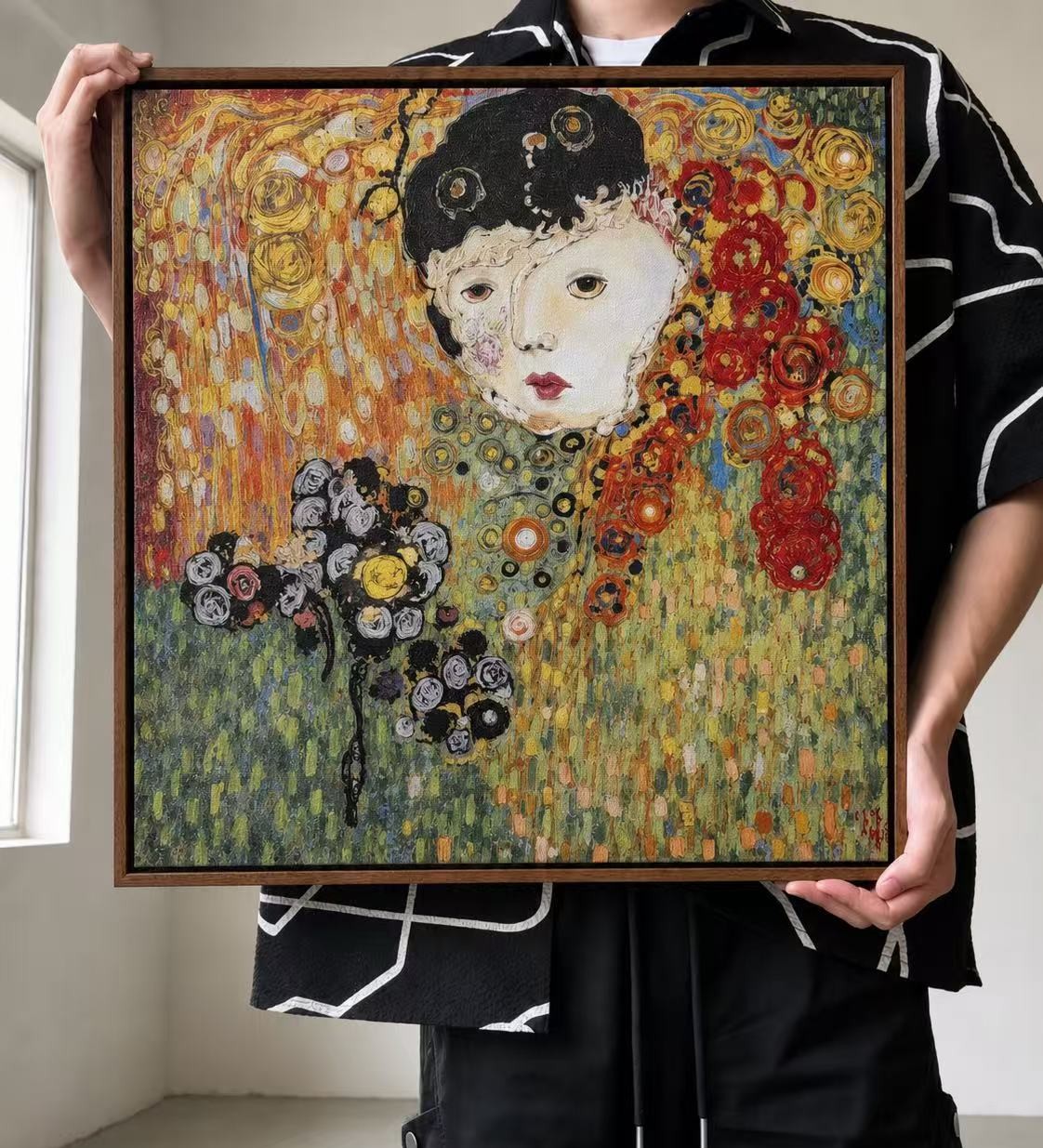
Is AI Art Worth Anything? A Buyer's Guide to Value Beyond the Image
The useful question is not whether AI can produce an image. It is whether this particular work has been chosen, made tangible, and described clearly enough to deserve a place in your home.
Start with the purchase, not the argument
When people ask whether AI art is worth anything, they are usually asking several things at once. Will this image still hold my attention after the novelty wears off? Is there a real object behind the product page? Is anyone making claims I can check? And, quietly, am I buying something I will later regret?
Those are buyer questions, not software questions. They cannot be answered by a tool label alone.
A discussion in r/artcollecting put the practical tension plainly: if a person can generate something similar, why pay for one version? The answers in that thread were sharply divided, but the useful tension remains. A file can be abundant. A work offered for a room can still be specific, selected, physically made, and responsibly described. The test is whether those differences are visible rather than merely promised.
This guide does not treat an AI label as a shortcut to either dismissal or praise. It offers a way to look at one proposed artwork and decide what kind of value it may have for you. That is a more honest question than asking it to prove a future resale price.
Four kinds of value that should not be confused
A work can succeed in one category and fail in another. Separating them keeps the buying decision clear.
- Visual valueDoes the composition reward another look? Notice balance, restraint, tension, color, and whether the image feels chosen rather than merely impressive on first glance.
- Domestic valueWill the work change the room you actually live in? Scale, light, framing, surface, and the relationship to nearby furniture matter more than an isolated screen image.
- Object valueCan you identify the physical thing being purchased: the material, dimensions, finish, edition terms, condition expectations, and what arrives at the door?
- Market valueCould it later be resold for more? This is the least predictable category. Treat it as separate from the value of living with a work, and be wary of anyone who blends the two.
A buyer evidence map
| What you need to know | A stronger signal | A reason to pause |
|---|---|---|
| Why this image? | A specific explanation of selection, editing, or the artistic system behind it. | Only vague language about innovation, speed, or endless output. |
| What is the object? | Clear dimensions, material, framing, and honest photographs or inspection details. | A polished mockup with no information about the physical work. |
| Who stands behind it? | A named studio or maker, reachable policies, and a consistent account of process. | No accountable seller, shifting descriptions, or claims that cannot be checked. |
| How is it identified? | A specific title or archive record, edition terms, and documentation appropriate to the work. | Artificial scarcity language without a way to identify the particular work. |
| What is being promised? | A claim limited to the work's appearance, object details, and process boundaries. | Guaranteed appreciation, museum status, or legal certainty that the seller cannot support. |
Three questions to ask before you buy
- 1. Could I describe this work without using the word AI?Try naming what you respond to in the image itself. If the answer is only that it was made with a new tool, you may be responding to novelty rather than the work.
- 2. What evidence would still matter once the screen is gone?Ask for the dimensions, materials, framing, production details, and the identity of the work. A responsible seller makes those things easier to inspect, not harder.
- 3. Is the seller making a proportionate promise?A careful studio can explain its process and the object it offers. It should not need to promise artistic consensus, investment returns, or a complete answer to every copyright question.
What the AI label does and does not settle
The label tells you something about a method, but it does not tell you whether the image is visually persuasive, whether the physical object is well made, or whether the seller is trustworthy. Christie's describes AI as one branch of the broader history of code-based generative art; that context is useful because it resists the idea that every algorithmic work is the same proposition. A work generated with a system is still a particular work that can be judged badly or well.
Copyright is also a boundary, not a universal quality badge. The U.S. Copyright Office publishes registration guidance and decisions concerning material generated with AI, including questions of human authorship.
For a buyer, the practical takeaway is modest: ask a studio to describe what it knows and controls, and do not mistake a sweeping legal slogan for evidence. If a legal right or chain of ownership matters to your purchase, seek advice appropriate to the transaction rather than relying on a blog post.
Transparency is valuable because it narrows the distance between a claim and an object. It does not turn an ordinary image into an extraordinary one. The work still has to earn attention.
The question is not whether a machine was involved. The question is whether this work becomes more particular when it enters a real room.
A buyer's test for art meant to be lived with
When it is sensible to walk away
Walk away when the images and description do not agree, when the work cannot be identified beyond a generic listing title, or when the seller will not say what the product physically is. Be especially cautious of listings that borrow the language of provenance, certificates, or one-of-one status without showing what those words refer to. General collecting guidance treats authenticity, ownership, condition, and documentation as parts of due diligence; the same habit is useful here.
Also pause when the offer asks you to buy a financial story instead of a work. No seller can honestly guarantee that an emerging contemporary artwork will appreciate. A better reason to buy is simpler: you have looked carefully, you understand the object and the terms, and you would still want it in the room even if it never became a market event.
Short answers for cautious buyers
Can AI-assisted art be meaningful?
It can be, but meaning is not granted by the tool. Look for a compelling individual work, human judgment, clear context, and an object made with care.
Does one-of-one automatically make a work valuable?
No. It identifies scarcity, not quality. The title, object record, and selection still need to make sense together.
Should I buy it as an investment?
Buy only if you would want to live with the work without a resale promise. Future market value is uncertain and should not be the reason a first-time buyer says yes.
What should a transparent studio be able to show?
At minimum: what the work is, who is offering it, how it is physically produced, the terms of the edition or identity, and the limits of what it is claiming.