How the Work
Takes Shape
From a selected image to a physical piece: the print, its surface, and the hands that finish it.
A work is not finished when the file is.
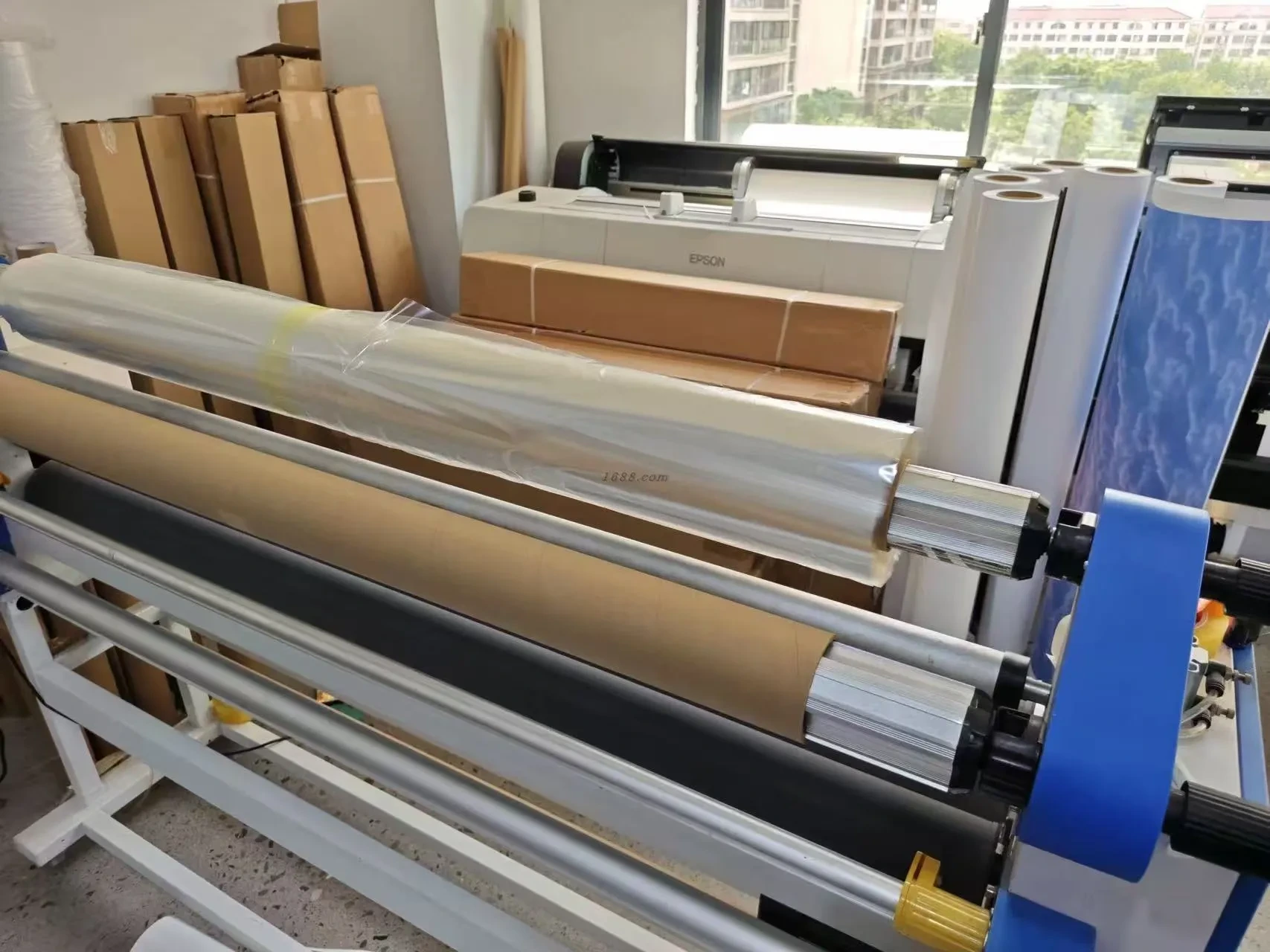
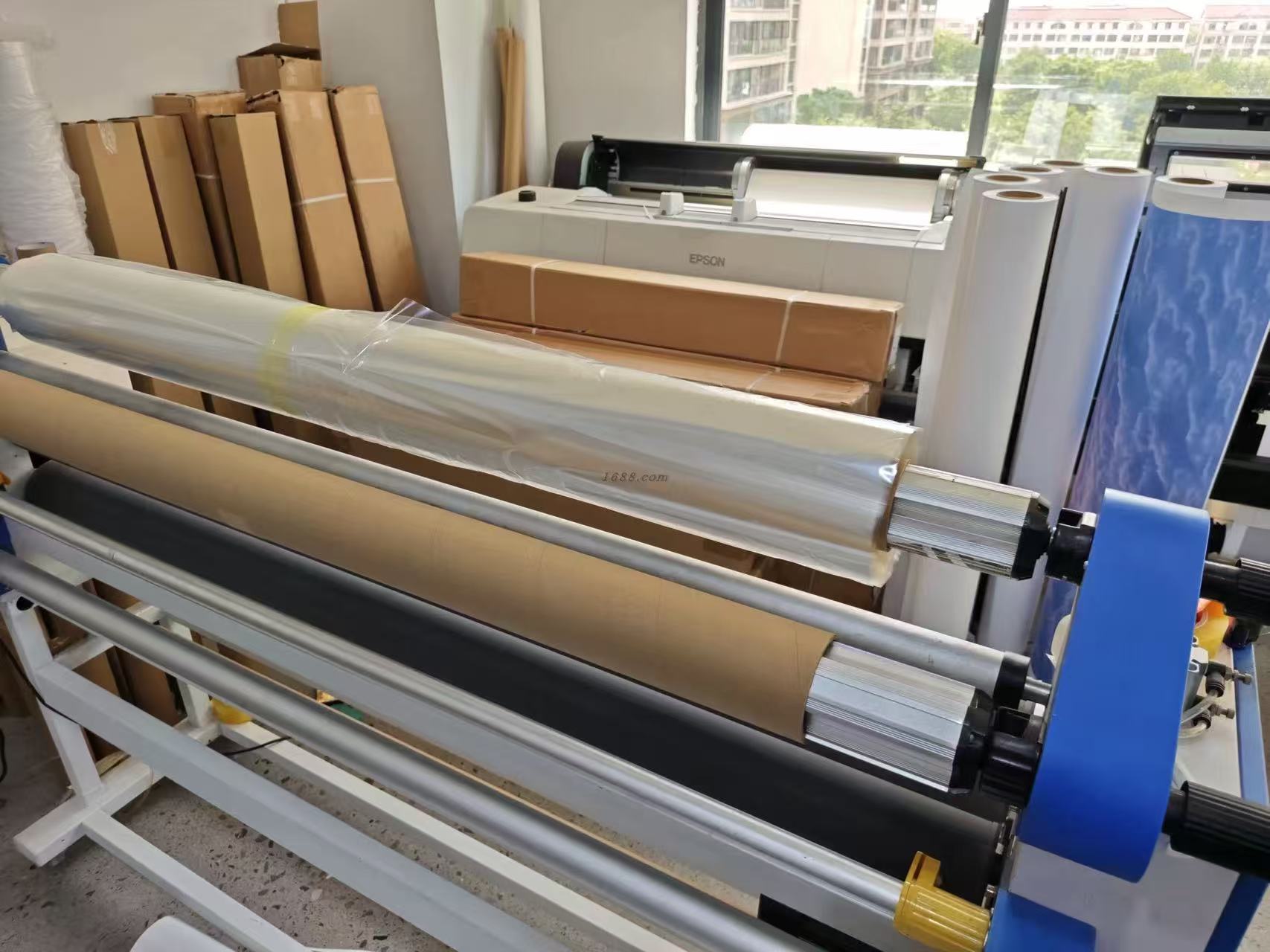
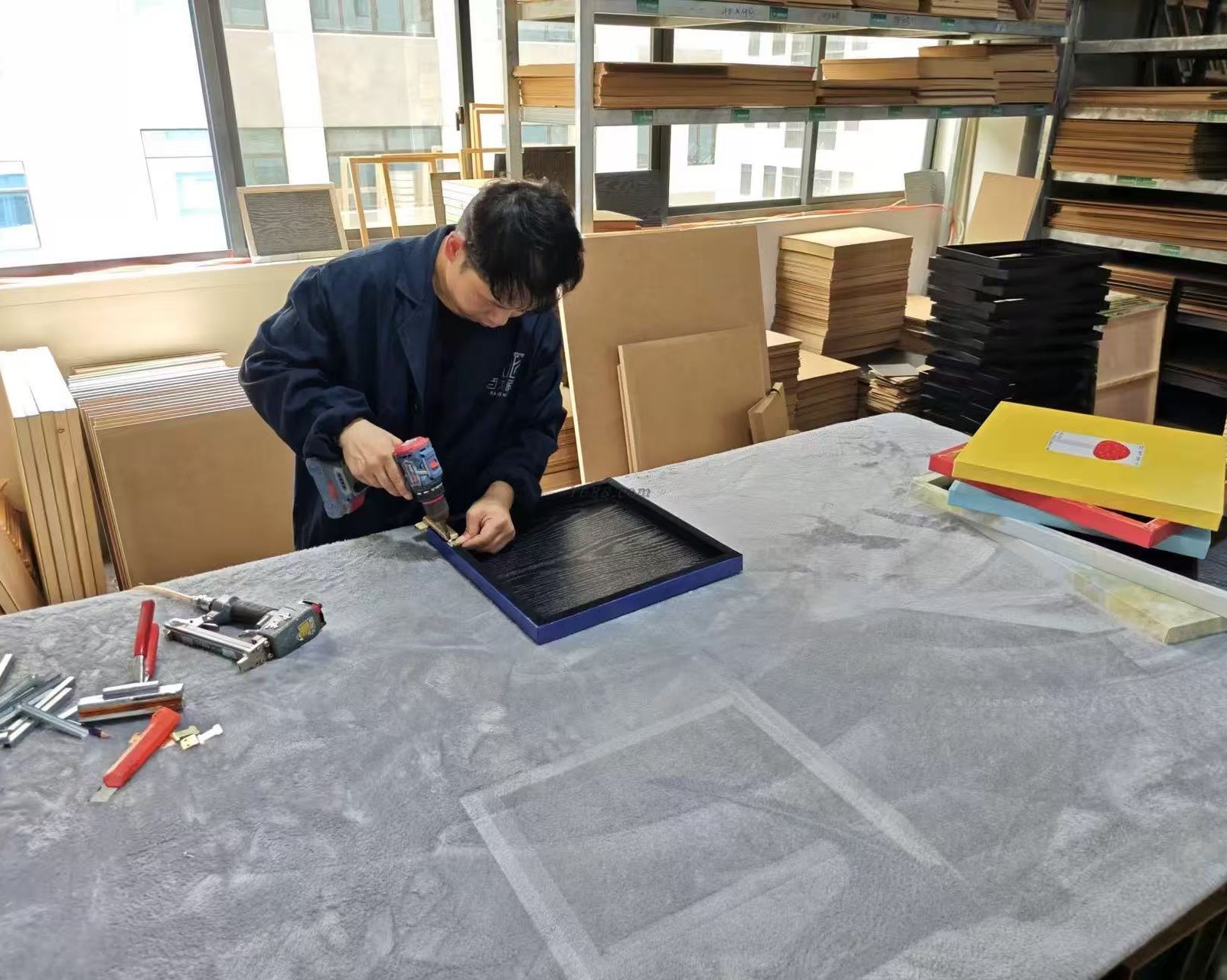
Our three-person team develops and selects the image in Kunming. A specialist production partner in Zhejiang prints it on textured canvas and completes the chosen framing; our team member in Guangzhou checks the finished work before dispatch. All four framing options use the same type of textured fine-art inkjet canvas, with different mounting formats and frame finishes. The photographs here show real workshop equipment, work in progress, and Whispart physical proofs. They document different moments of production, rather than pretending to follow one artwork through every machine.
From pixels toward a physical surface
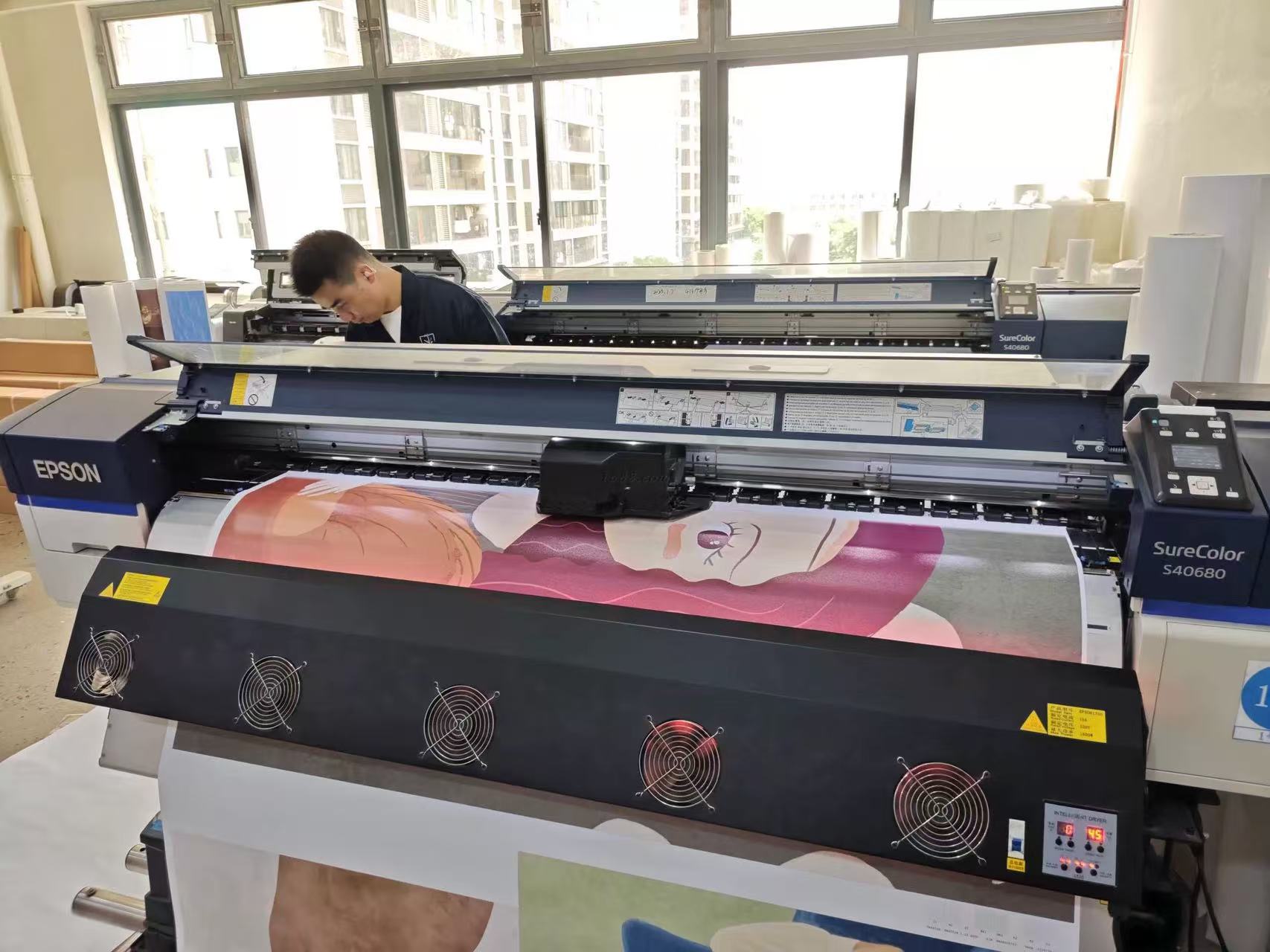
Among the workshop's equipment is an Epson SureColor S40680 wide-format inkjet printer. Epson specifies a print width of up to about 1.62 metres and GS3 solvent inks for this model. It shows the scale of the workshop's digital printing capability; it is not a claim that every Whispart piece runs through this machine.
Digitally printed art is often described in Chinese as yishu weipen (艺术微喷). The name alone does not specify the ink, the support or how a print will age. We judge the physical result instead, especially the fine marks and muted transitions that make an image worth keeping.
Look close, then step back
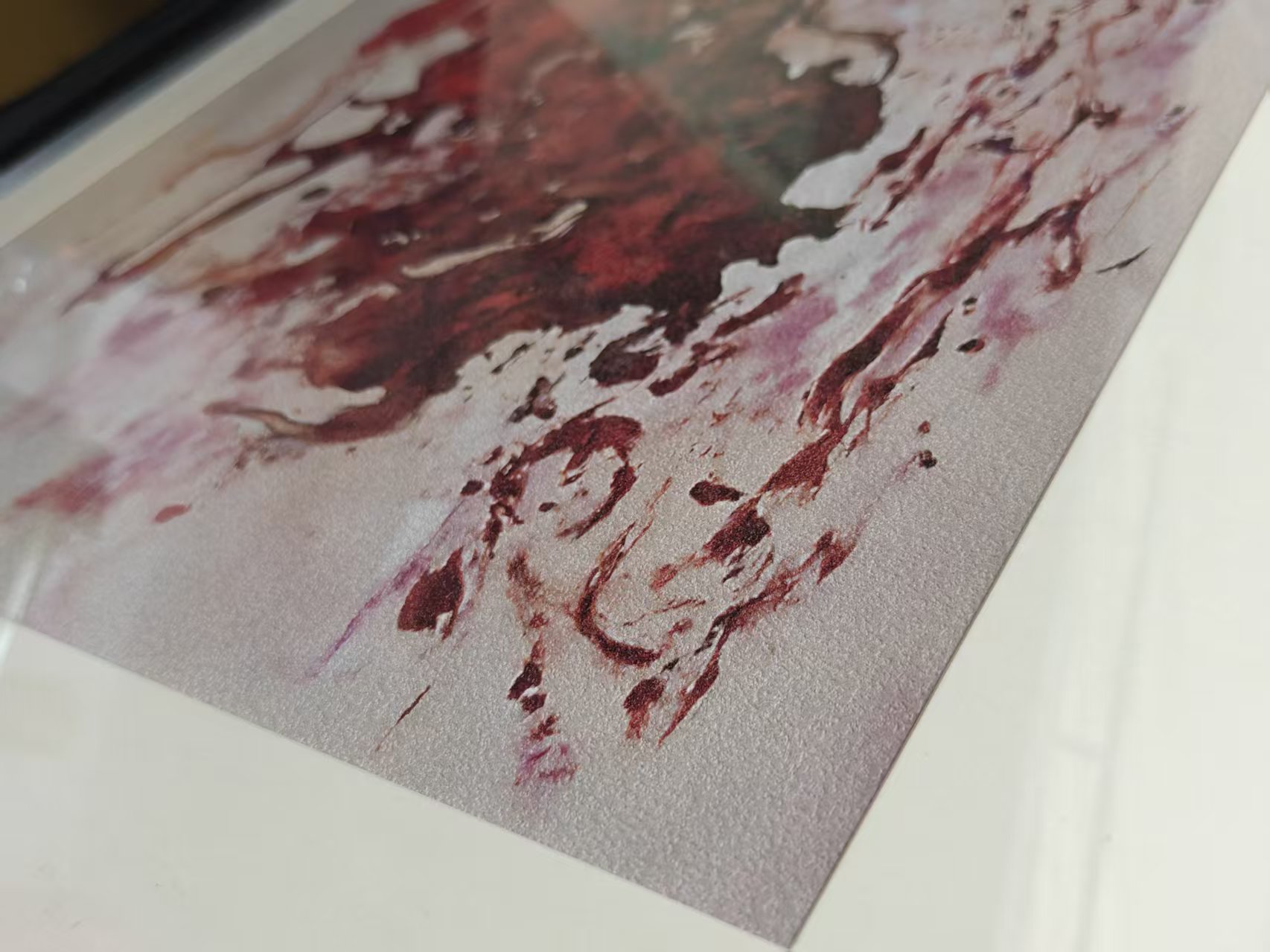
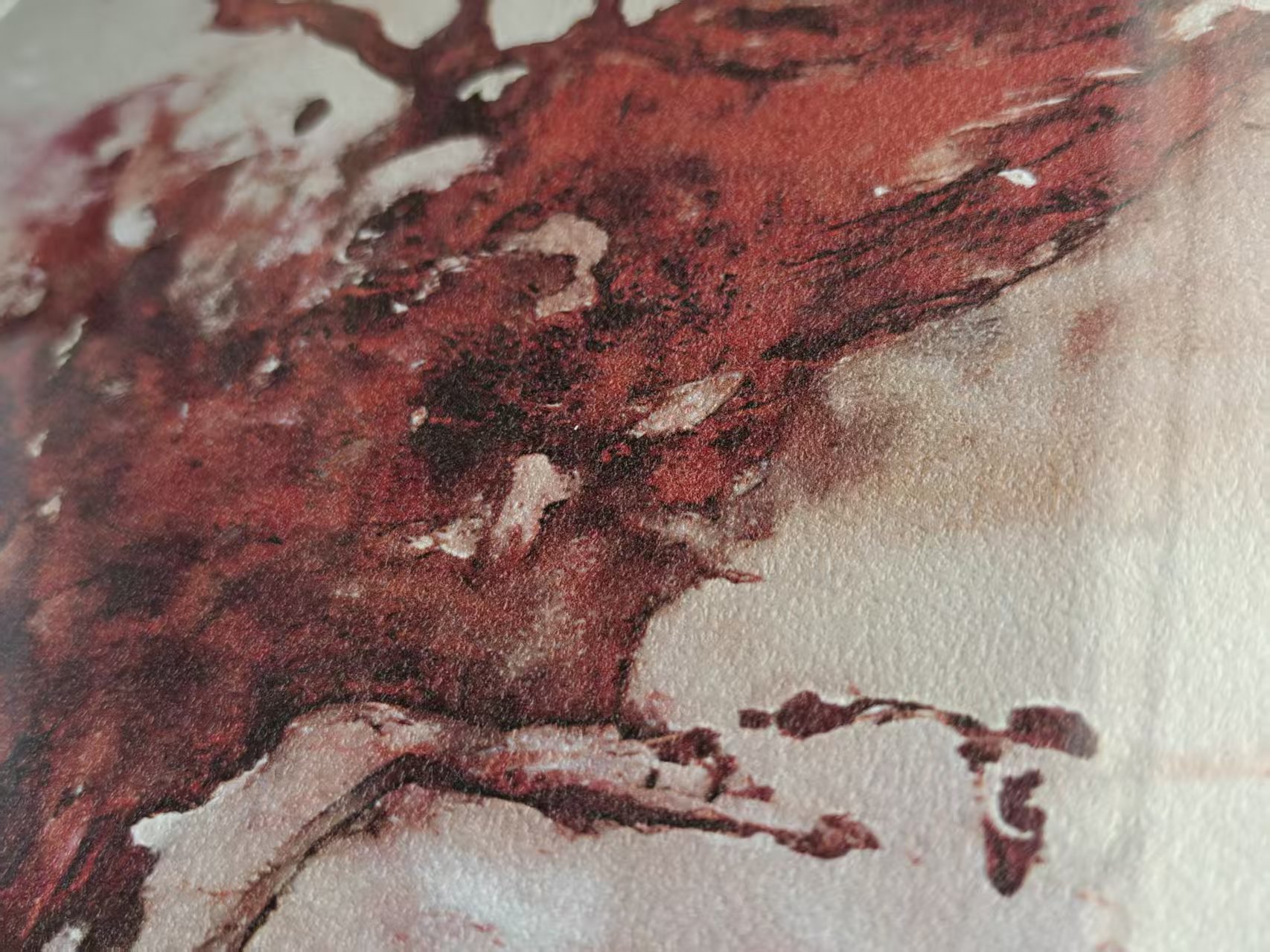
A screen hides what a material does. In a physical proof, we can inspect the print surface, edges and colour under ordinary light, then ask whether the image still holds together from across a room. A textured support can give a mark presence; it can also change a quiet passage. The decision has to be made in front of the object.
The support is part of the decision
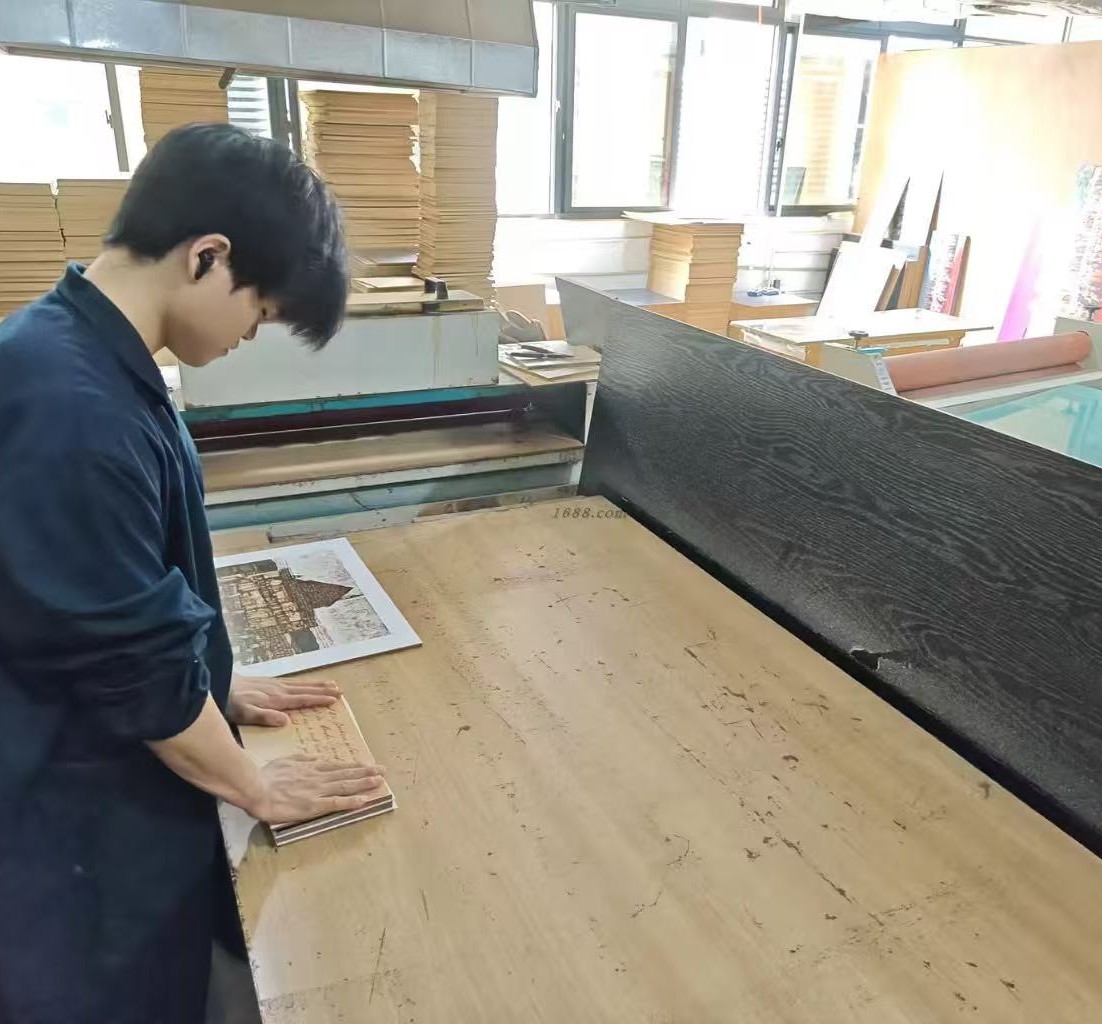
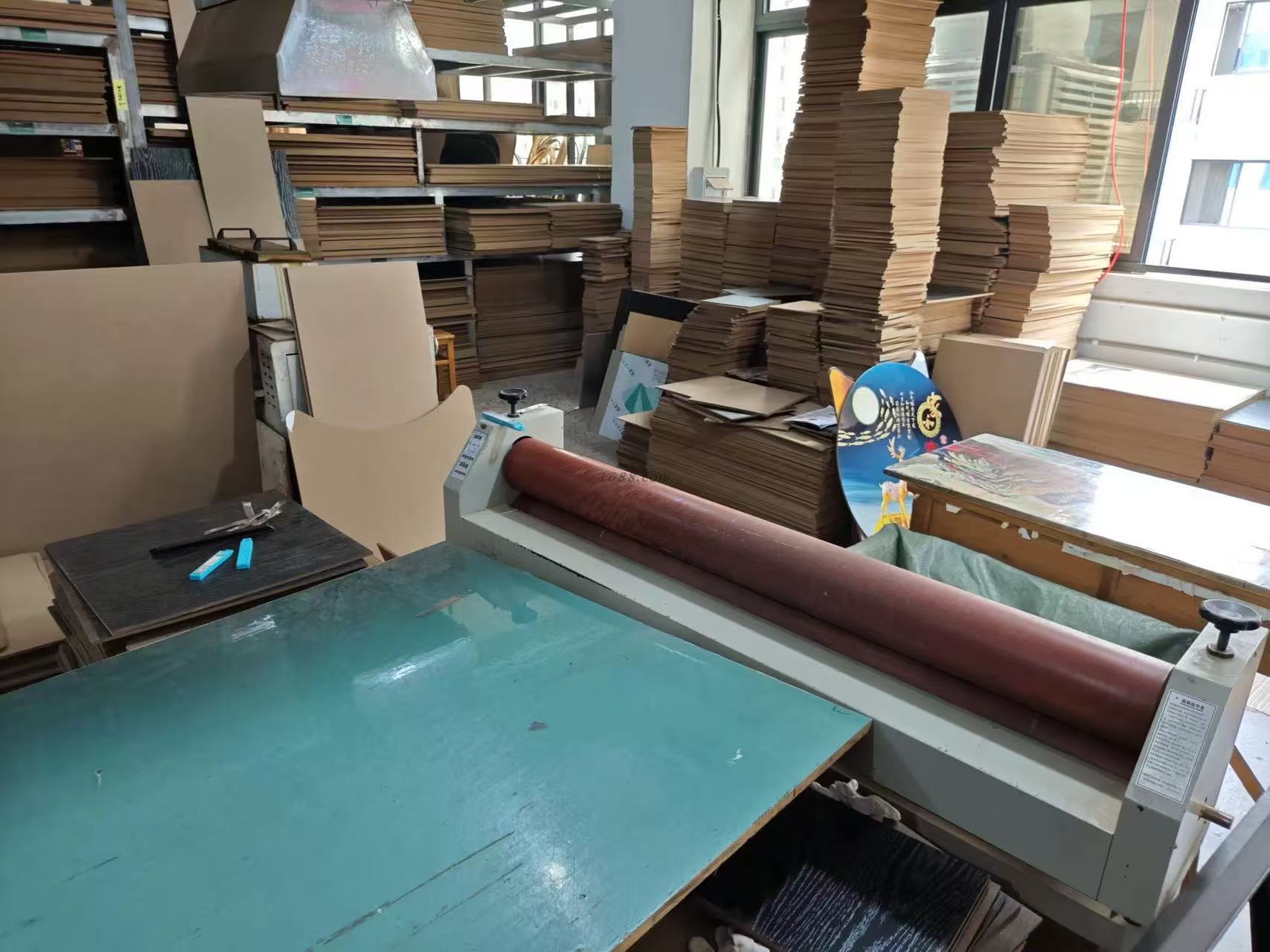
The workshop has equipment for surface finishing, adhesive application and cold mounting. These photographs show what the workshop can do; the treatment for a finished piece depends on its format. We do not treat a list of machines as a substitute for looking at the actual work.
A boundary that lets the image breathe
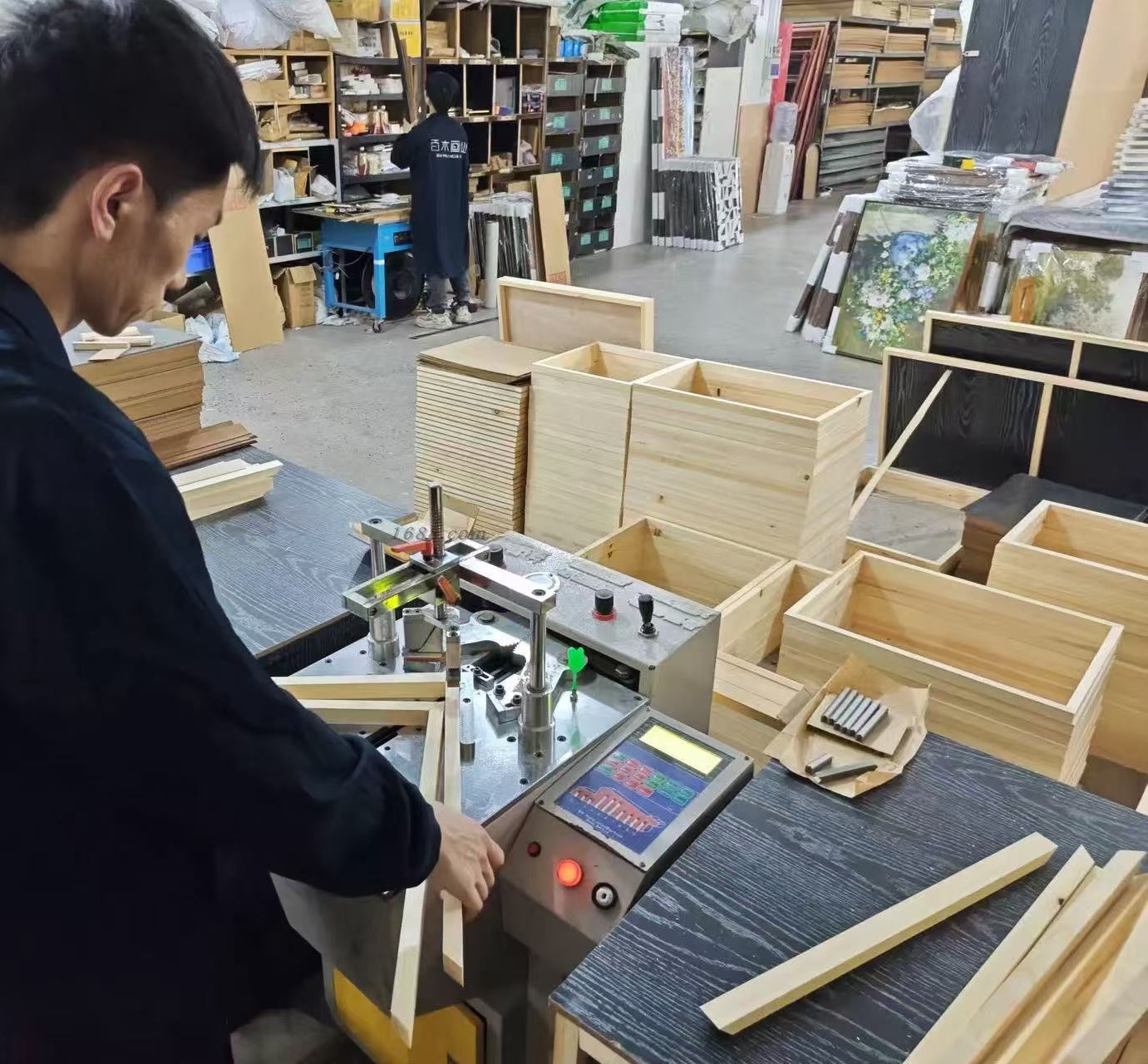
The frame is more than an edge. Its depth, the space around the image, and the neatness of each corner affect how the piece sits on a wall. At the workshop, a corner-nailing machine brings the frame sections together; the join still has to be checked as a visible part of the finished object.
The details you rarely see
Someone still sets and fastens the backboard by hand. This is the side that faces the wall, but it matters: the work needs a clean, secure finish on both sides. We ask how the object feels when handled, not only how it looks in a product image.
A work you can stand in front of
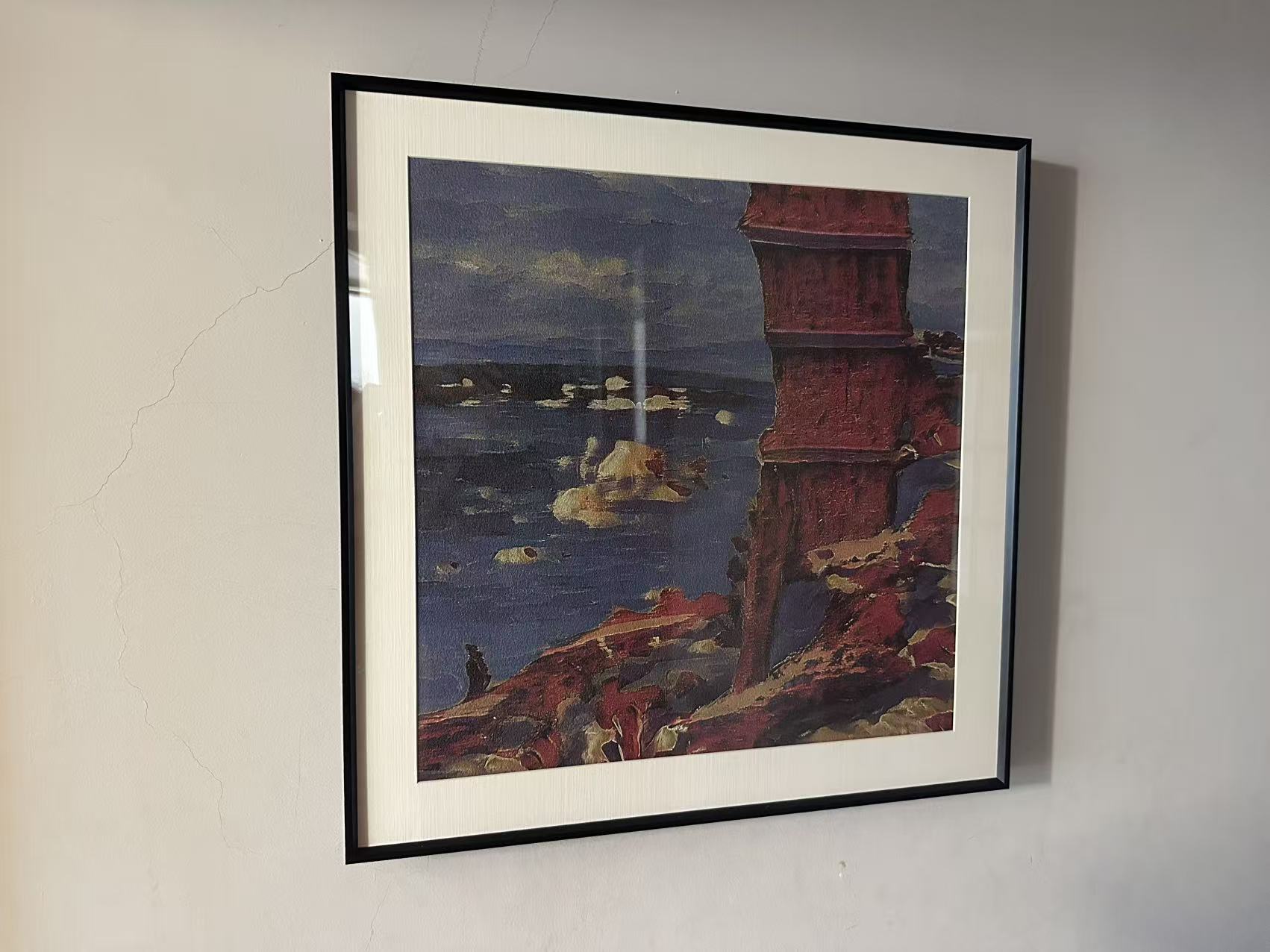
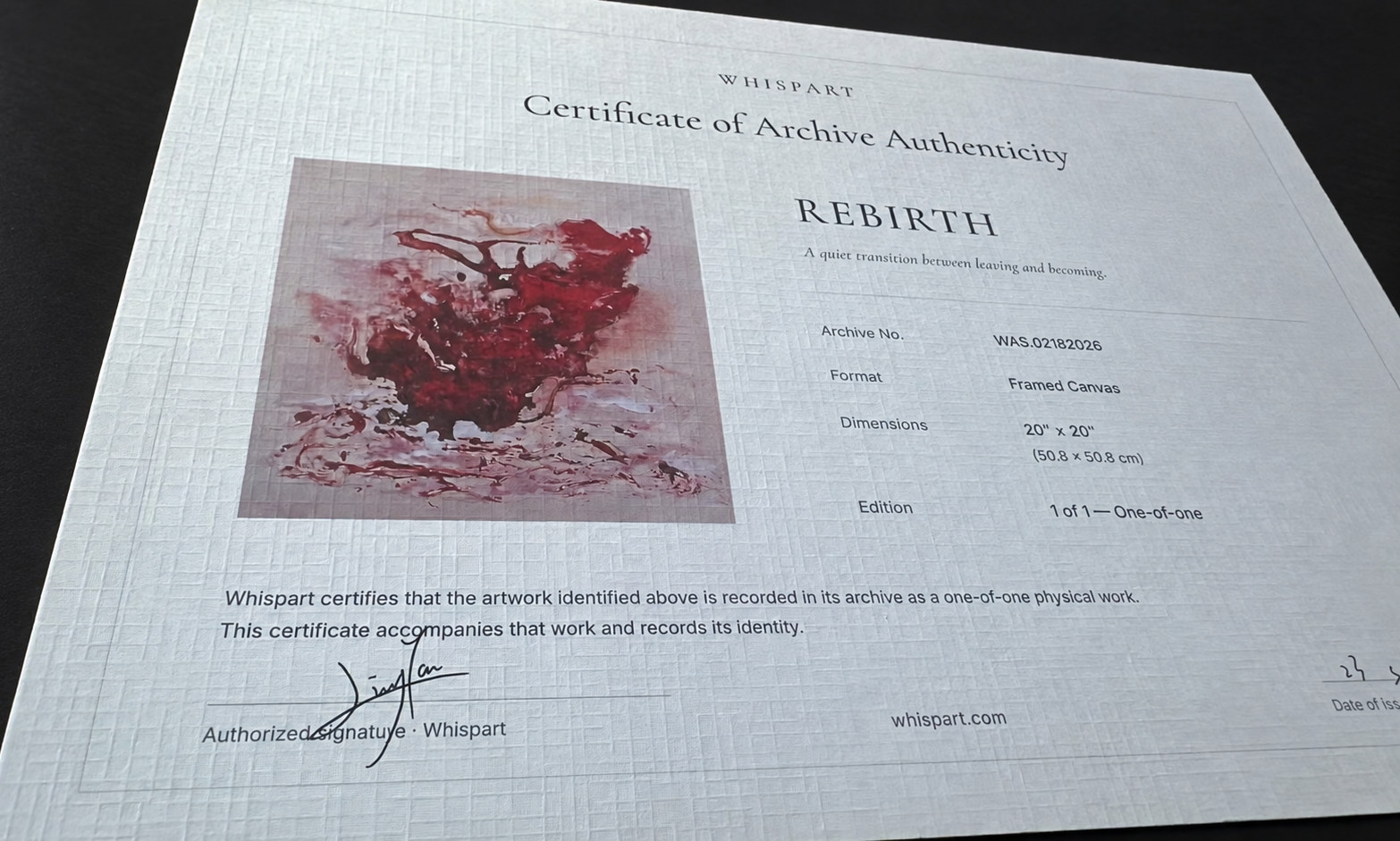
The photographs below are Whispart physical examples. One shows the work in its frame; the other shows the accompanying archive certificate for a separate piece. They are not a staged image of the production line. Together they show why our decisions extend beyond the screen: image, presentation, and identity all have to make sense as a real object.
Made to leave the screen
We begin with a strange, particular image. We finish by asking whether its printed surface, its frame and its presence on a wall are worthy of keeping. The workshop brings tools and practiced hands; our role is to keep looking until the physical piece feels as considered as the image we chose.