What We Keep
Looking At
How we choose images that hold a room without exhausting it.
The image that stops a scroll is not always the one you want to live with.
We make images with machine learning, but our most consequential work begins when we stop generating and start looking. This is an account of our taste, not a formula for everybody else’s.
A wall is a slower place than a feed
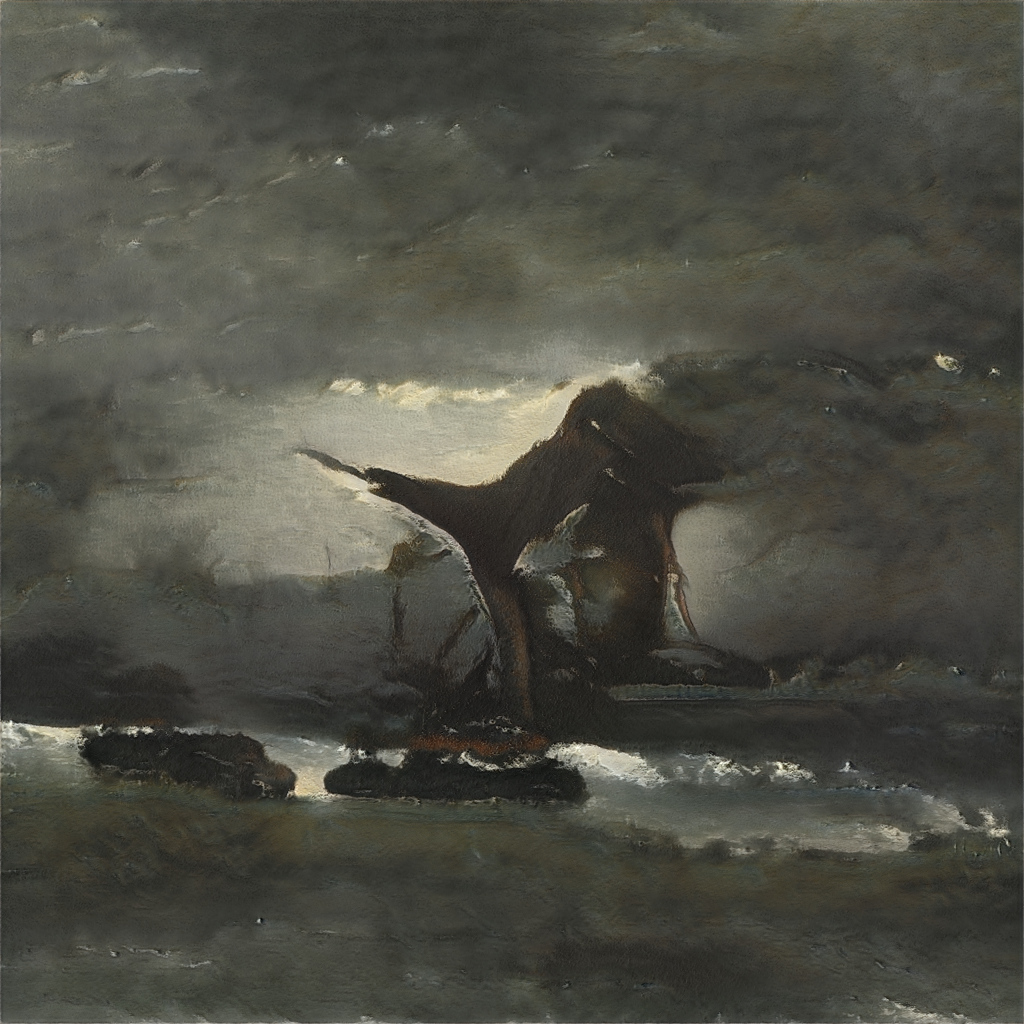
Pinterest is full of imaginative surreal images, and we find inspiration there too. But a small screen rewards an immediate jolt: intense colour, dense detail, an impossible object you understand in a second. At home, the same picture has to share space with daylight, furniture and the changing rhythm of a day. An effect that feels exciting for a moment can become insistent when it stays in view.
We look for tension with room around it. One strange shape may be enough if the surrounding light, intervals and colour let the eye move away and return. Quiet does not mean pale or empty. It means the work can be present without asking to win every glance.
Familiar, then strange again
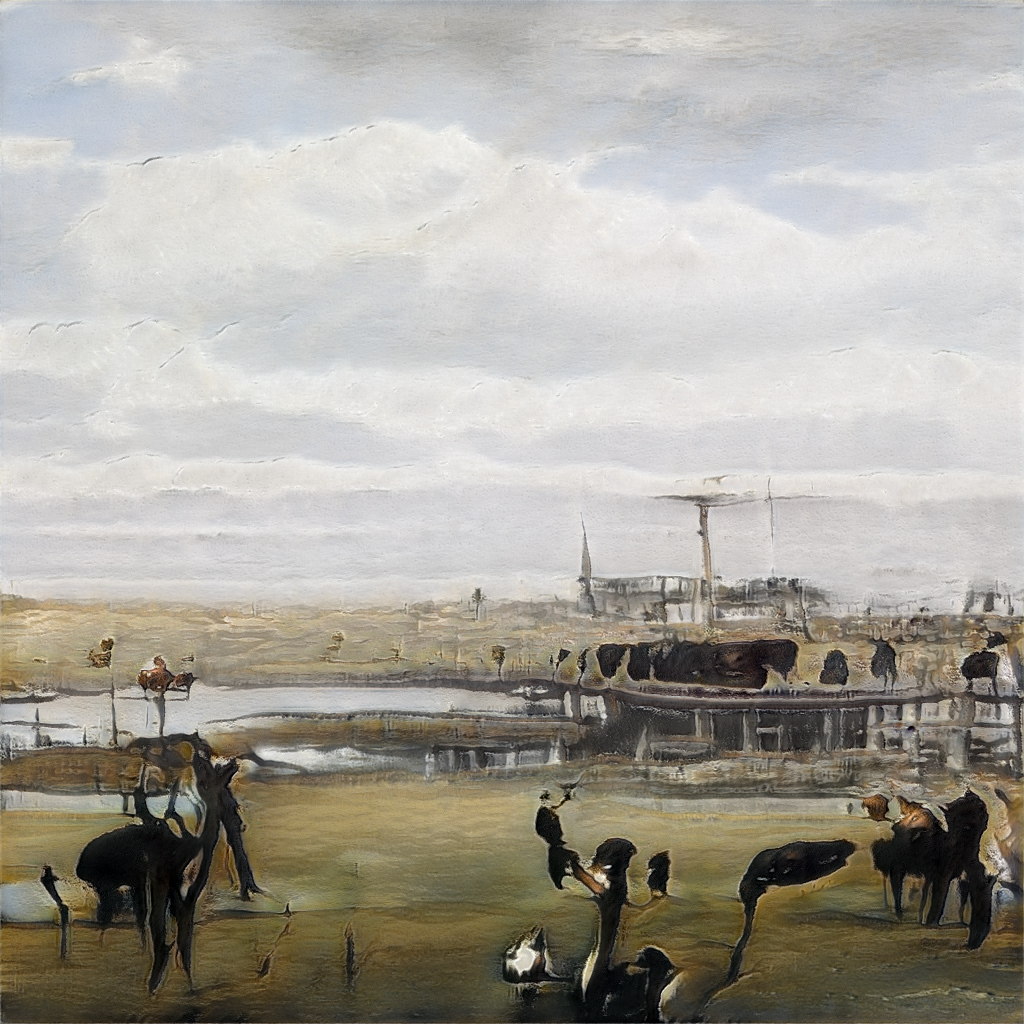
We are drawn to images in which recognition begins but does not quite finish. In The Far Side of Waiting, a pale sky and receding ground suggest a landscape. The dark forms below might be people, animals or something else. The scene has enough structure to invite you in, while its contours keep changing as you look.
Our GAN is not given a sentence describing this exact scene. It learns visual relationships from images and produces new arrangements. Sometimes a line or texture carries a trace of that process: almost a branch, almost a body, never fully resolved. We value that uncertainty when colour, weight and spacing still hold together. A malformed detail alone is not a reason to keep a picture; without a convincing whole, strangeness becomes noise.
The choice is visible in the alternatives
We compare model stages and many individual outputs, but more training is not automatically better art. Nor do we choose by finding a flaw in every rejected image. In one documented review set, we kept the branching scene on the left. Its dark verticals give the eye a path, while the pale openings between them keep the picture breathable. The alternative is compelling too; its trees collect into a denser, more enclosed centre. Someone else might prefer that weight. Showing both makes our preference open to disagreement.
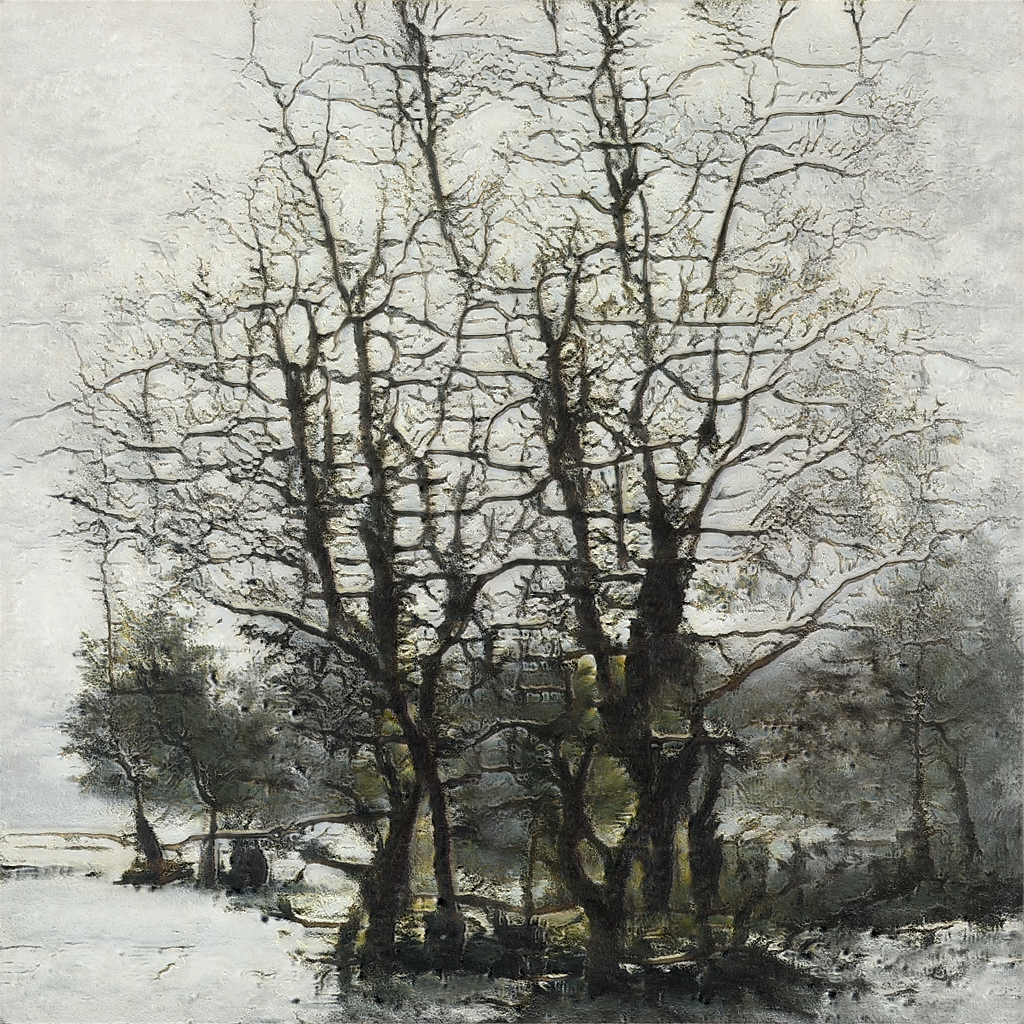
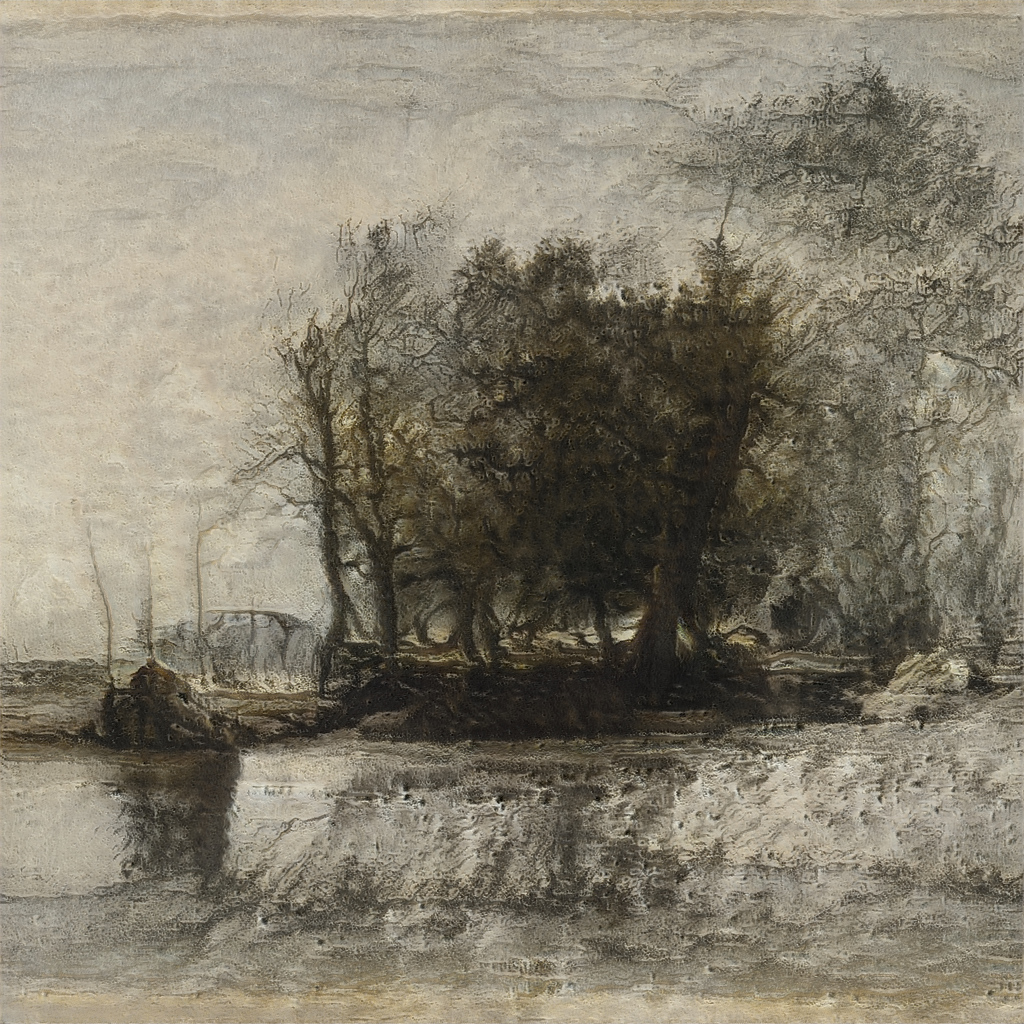
These are two outputs from one documented selection case, not a claim that every retained work must be airy or that the alternative is a failed image.
Then the wall has a vote
A file can tolerate endless zooming and a bright screen. A framed work asks different questions. Does its composition hold at a few steps’ distance? What happens to muted passages on a textured surface? Does the frame give it breathing room, or turn the image into an object that feels too loud? We examine physical proofs because colour, reflection, scale and material can change the answer.
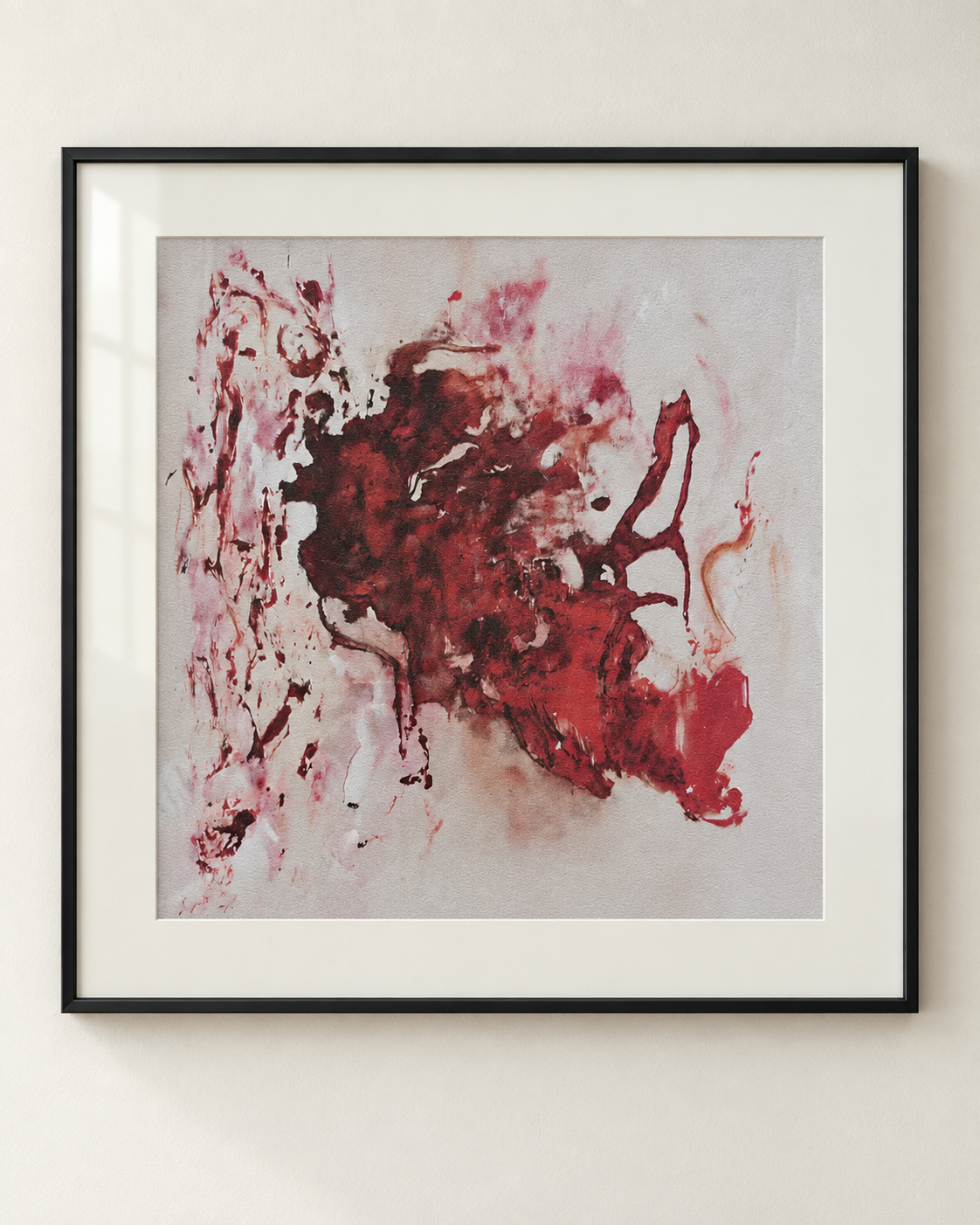
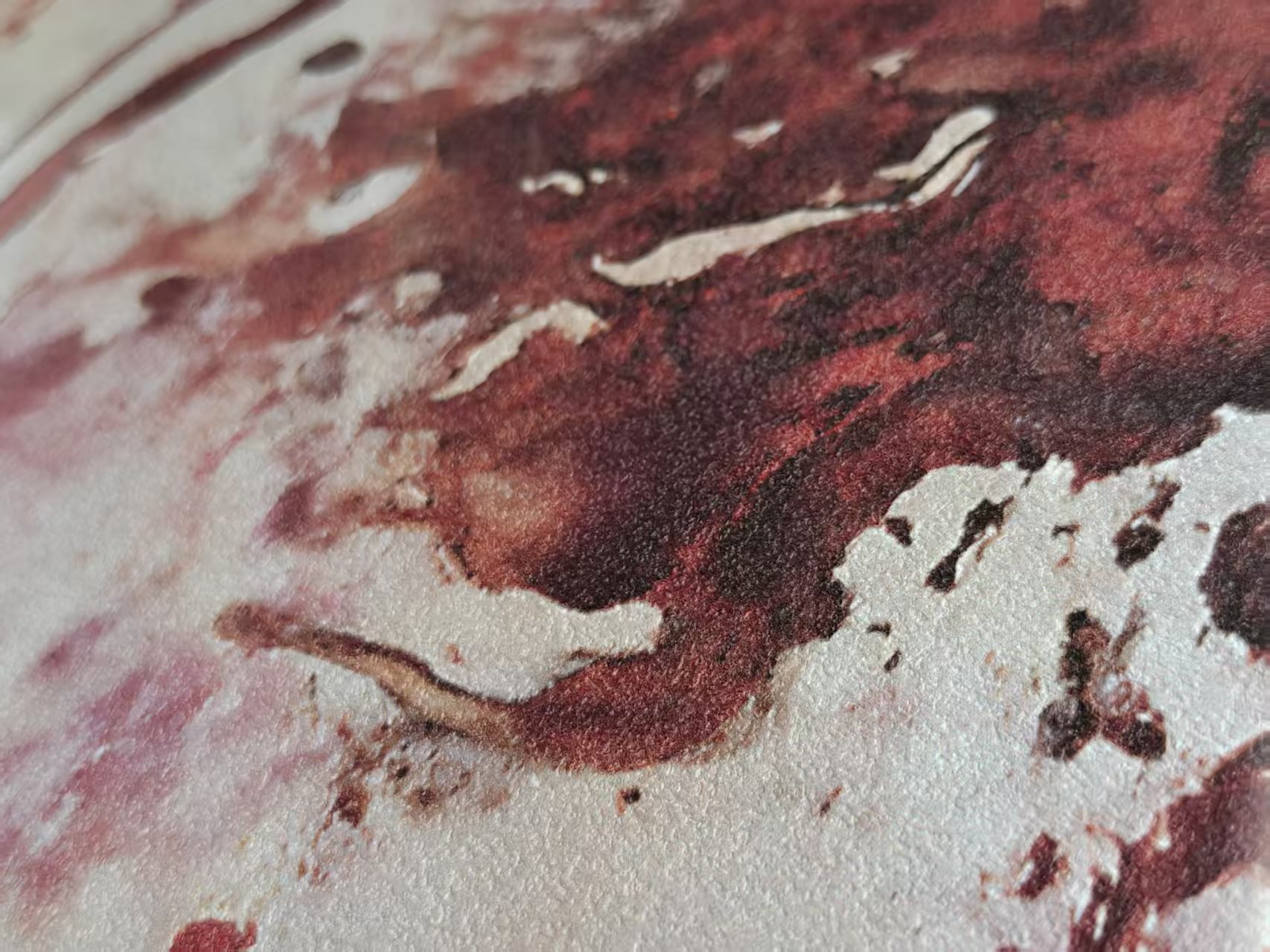
The photographs below show a separate Whispart proof object, not a print of either tree image above. Its red forms have force, but the light mat and dark edge create an interval before the surrounding wall. The close view also reveals details that a digital thumbnail hides. For us, the finished object is another stage of looking, not merely a file made larger.
What stays
We return to a candidate after the first surprise has passed. If it still gives us a reason to look, if its unresolved parts belong to a coherent image, and if it can hold its place as a physical work, we may choose it. The decision is subjective, and we want it to remain visible. We can explain why we kept this one. What you see in it next is yours.