
What Does a Certificate of Authenticity Actually Prove? A Buyer's Guide to Art Documentation
A certificate of authenticity for art can identify a claim about a particular work. It cannot make the issuer trustworthy, complete the provenance, or settle value by itself. The useful test is whether the paper, the seller, the physical object, and the records around them tell the same story.
The paper arrives when the questions should begin
A certificate of authenticity often appears at the exact moment a buyer would like uncertainty to leave the room. The artwork is beautiful, the seller sounds confident, and here comes a sheet of paper wearing its most serious face. That can be reassuring. It can also be the beginning of the useful questions, not the end of them.
In the collector discussions reviewed for this guide, the questions went beyond whether the paper had a border. Contributors asked who issued it, whether it matched the exact object, and which invoices, archive entries, exhibition records, or provenance could support the same story. One especially practical thread on how collectors verify a piece before buying kept returning to independent records and seller history rather than a single document.
So the direct answer is deliberately narrow: a certificate can record a named issuer's claim about a particular artwork. Its strength depends on whether that issuer has a credible relationship to the work and whether the details agree with evidence that exists beyond the certificate. Gold foil may be excellent at catching light; cross-checking has never been one of its core competencies.
Read the certificate through three nouns
Before counting seals, signatures, or impressive adjectives, find three things. If one is missing, the document has already told you where to look next.
- IssuerWho made or signed the claim, and why would that person, studio, estate, publisher, gallery, archive, or specialist know this work? An artist certifying a direct studio sale is not the same situation as an unrelated reseller printing a certificate years later.
- ObjectWhich exact physical work does the paper describe? Match the image, title, medium, dimensions, date, edition information, archive number, signature, labels, and frame notes where relevant. 'A rectangular artwork' is technically a description, but so is 'a vehicle with wheels.'
- ClaimWhat is the issuer actually asserting: authorship, edition membership, studio release, archive registration, or only that the seller believes the work is genuine? Precise language makes a document more useful because it keeps the promise at a size the evidence can carry.
If the certificate cannot name its issuer, its object, and its claim, the decorative border may be doing rather more work than the document.
When matching the object, separate the artwork from its presentation. In the real museum example below, the visible frame and the painted canvas have different boundaries.

The practical question is which boundary the record measures. A familiar image or artist’s name is not enough: compare the stated title, medium, dimensions, and identifier with the exact work offered.
One artwork can need several records because the records have different jobs
Practical guidance on certificate purpose and contents commonly emphasizes object details, issuer identity, and a signature or contact point. Those fields help connect a sheet of paper to a particular work. They do not quietly absorb the jobs of every other record in the folder.
Provenance is broader because it concerns ownership history and the supporting chain through time. An invoice records a transaction. A condition note records the observed state of the object. Listing photographs preserve what was offered. An archive entry may connect the work to a continuing record system. Expecting the certificate to replace all of them is like asking the restaurant menu to become the receipt, the reservation, and the health inspection because it was printed on nicer paper.
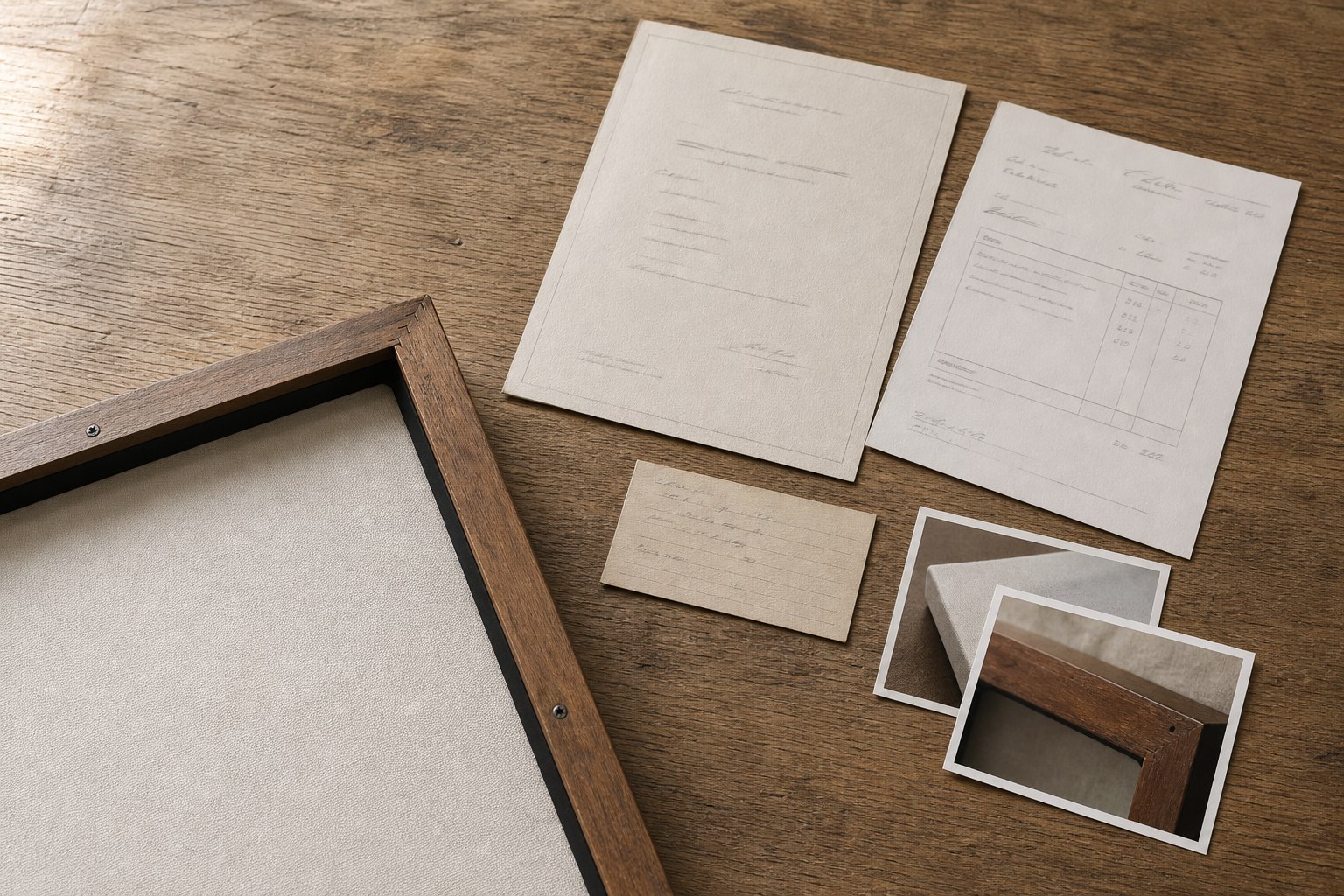
The art-document stack at a glance
Each record earns trust by doing its own job clearly and agreeing with the others.
On a narrow screen, scroll sideways to read all columns.
| Record | Its useful job | What it cannot settle alone |
|---|---|---|
| Certificate of authenticity | Attributes a stated identification claim to an issuer and a specific work | The issuer's authority, complete ownership history, condition, title, copyright, or market value |
| Invoice or bill of sale | Connects buyer, seller, date, price, and the described object in one transaction | Who originally made the work or whether every earlier transfer was legitimate |
| Provenance record | Documents known ownership, gallery, auction, exhibition, or publication history | The truth of every undocumented interval or every opinion about authenticity |
| Condition record and photographs | Preserve the object's observed appearance and state at a point in time | Authorship, ownership, or future condition |
| Archive, catalogue, estate, or publisher record | Provides an independently maintained reference where one legitimately exists | A universal guarantee that applies outside that record's stated scope |
A mismatch is a direction, not automatically a verdict
Buyer-facing due-diligence guidance is most useful when it turns suspicion into a specific check. A difference in dimensions might be a frame measurement, a transcription mistake, or the wrong object. The first response is not courtroom music. It is a precise question and a request for the record that could resolve it.
Suppose a COA says 12 × 16 inches while the listing says 16 × 20 inches. We would first ask whether the certificate describes the artwork and the listing includes its frame.

In this hypothetical case, the seller replies: “The image is 12 × 16 inches; the outside of the frame is 16 × 20 inches.” They supply matching measurements and photographs of the same object, and the buyer saves the reply with both records. The size discrepancy is now explained; the other checks still apply. If the title, image or edition number points to a different work—or the seller cannot reconcile the sizes—we would pause. A consistent packet is a reason to continue the checks, not an independent authentication verdict.
Use a three-level mismatch ladder
The goal is proportionate effort. A modest direct studio purchase and a high-value secondary-market attribution should not require identical investigations.
- Proceed when the records agreeThe issuer is identifiable, object details match, the invoice describes the same work, photographs are consistent, and the seller can explain how the records are maintained. Save the full packet, not only the certificate.
- Clarify when one detail is incompleteAsk about a missing date, a frame-versus-image measurement, unclear edition notation, or an old address. A useful seller should be able to answer plainly or explain the limit of what is known. Honest uncertainty is often more reassuring than a paragraph wearing twelve exclamation marks.
- Pause when the evidence resists contactSlow down if the issuer is unnamed or unreachable, details conflict across documents, the seller will not provide a transaction record, archive claims cannot be checked through an independent route, or sweeping promises replace specific evidence. None proves fraud alone; together they make confidence premature.
Paperwork is rarely charming, but it is wonderfully good at revealing which question should come next.
The same certificate means different things in different sales
Public discussions about COAs from living artists show why a universal ritual is unhelpful. The relevant authority, available history, and proportional level of checking change with the transaction. The paper does not become useless; its role changes with the distance between maker, seller, and buyer.
A direct purchase from a living artist
The maker is close to both creation and sale. A detailed invoice, exact object information, stable studio contact, and an archive record may provide strong continuity even when the certificate itself is visually modest. Ask how the studio records the work and what you should keep.
A secondary-market print
Edition details, publisher or printer information where relevant, dimensions, signature, catalogue references, and the seller's acquisition history matter more. A new certificate issued by the current seller cannot politely fill every missing year between publication and today's listing.
An inherited or older work
A missing certificate is not an automatic rejection, and a recent certificate is not an automatic cure. Gather labels, receipts, correspondence, older photographs, appraisals, exhibition records, and family history. When the stakes warrant it, use a qualified specialist rather than asking an internet checklist to grow a tweed jacket overnight.
The strongest paperwork does not demand belief. It makes the object easier to identify, the issuer easier to trace, and the next question easier to ask.
A practical collecting rule
Before the final checklist, look at the reverse of the same painting. It shows why a photograph of the back can add information that a front-view listing and a new certificate leave out.

For your own purchase, ask for clear photographs of existing labels and marks, and keep them with the invoice and correspondence. Getty’s work on painting versos explains how such clues can be cross-checked against other records. Do not remove or alter a label to investigate it.
A ten-minute check before you pay
You are not trying to authenticate the whole history of art before lunch. You are checking whether the offer remains coherent when its useful details meet each other.
- Name the issuerWrite down who issued or signed the certificate and the stated relationship to the artist or work. If the answer is vague, ask for one precise sentence.
- Match the physical objectCompare image, title, medium, dimensions, date, edition or archive number, signature, labels, and frame notes with the listing and photographs.
- Read the actual claimNotice whether the paper states authorship, studio release, edition membership, archive registration, or something much broader. Do not silently upgrade the wording.
- Request the transaction recordConfirm that the invoice or bill of sale will identify the same work, seller, buyer, date, and price clearly enough for your future self.
- Check one independent routeWhere appropriate, verify a studio, gallery, publisher, estate, catalogue, or archive using contact information not supplied only inside the sales message.
- Save the complete packetKeep the certificate, invoice, listing capture, correspondence, condition notes, and object photographs together, with a digital copy stored separately. Frames are excellent at framing; long-term records management is more of a side hobby.
Where this fits in a small contemporary studio
Whispart's studio approach describes individual archive identity as part of presenting a one-of-one physical work. That is a first-party practice, not a market-wide definition of authenticity. The useful buyer test stays concrete: does the archive identity match the titled object, does the transaction record describe the same work, and can the studio be reached later? Readers can review how Whispart describes its curatorial approach before treating any brand statement as evidence.
Certificate of authenticity questions buyers ask
Does a certificate of authenticity prove an artwork is genuine?
It records an issuer's claim about a particular work. Its practical weight depends on who issued it, how precisely it identifies the object, and whether invoices, provenance, photographs, archive information, and other records support the same account.
What should an art certificate of authenticity include?
Useful fields commonly include issuer or artist identity, title, image, medium, dimensions, date, edition information where relevant, a unique identifier, and a signature or reliable contact point. The details should match the offered object and transaction records.
Is a COA always necessary when buying from a living artist?
Practices vary. Direct contact, a detailed invoice, exact object information, stable studio records, and a reachable maker may provide strong continuity whether or not the paperwork follows one universal format. Ask what record the studio maintains and what you will receive.
What if an older artwork has no certificate?
Do not infer authenticity or inauthenticity from absence alone. Evaluate labels, receipts, correspondence, photographs, exhibition or publication records, provenance, the seller, and the stakes of the purchase. Seek qualified specialist advice when appropriate.

