Entry Wall Decor Ideas for a New Apartment: Art, Mirror, or Storage?
The first wall you see after moving to a new city can introduce the home you want to make. Give that wall one useful job before you choose an object: a clear visual welcome, a last-look mirror, or a working drop zone.
The short answer
First protect the door's full movement and the path into the apartment. Then ask what is actually missing. If coats, shoes and keys have no home, a suitable storage solution earns the wall before art does. If storage works but you want a last look before leaving, choose a mirror in a position you can use. If those needs are already handled, one image on the first uninterrupted wall can establish your new style without buying a complete decor set. A wall beside a moving door or crowded by a coat drop is rarely the best place to start a picture collection.
A World Market entryway guide sensibly presents mirrors, art, consoles and hooks as possibilities. A wall-art guide develops image style and size. The harder question in a small apartment is which of those objects wins when they cannot all fit.
Our view: We would give the entry one job before styling it. Once the door and everyday drop zone work, we prefer one personally meaningful image to a ready-made matching set: it can mark a new chapter without deciding the look of every room on moving day. If the route or storage still fails, we would let art wait.
Read the entry from the open door
Open the door as far as it normally goes and notice the wall you see first, the walls doors swing across, and the spot where shoes or a bag naturally land. This identifies a display wall rather than assuming that the largest empty rectangle is available. A resident in a new-apartment entry discussion wanted a console, mirror and art; follow-ups revealed several additional doors and a walkway too tight for a normal console. The practical constraint changed the answer more than the preferred decor style did.
| What is unresolved | Give the wall this job | Hold off on |
|---|---|---|
| Daily items pile at the door; no closet, tray or suitable storage exists. | A functional drop zone that does not obstruct the door or passage. | Art that hides an everyday problem. |
| Storage works; you actually use a mirror before leaving. | A mirror where you can stand and see it, subject to wall and lease conditions. | Putting it directly opposite the door solely to make the space look bigger. |
| Storage and mirror needs are met elsewhere; the arrival feels anonymous. | One image on a clear wall, chosen for the style you want now. | A matching gallery set before you know what belongs in the apartment. |
| No wall is suitable or mounting is not allowed. | Leave walls clear and use permitted, stable freestanding choices. | Assuming adhesive or door-mounted products are universally safe. |
In a studio-entry discussion, the original poster could not move a shoe rack without blocking the front door. Replies favored both mirrors and storage, but the poster's additional photos altered what seemed to fit. An online photo rarely settles the real door clearance; treat it as a question to check in your own home.
Three useful looks for the first wall
Art-led: one clear statement
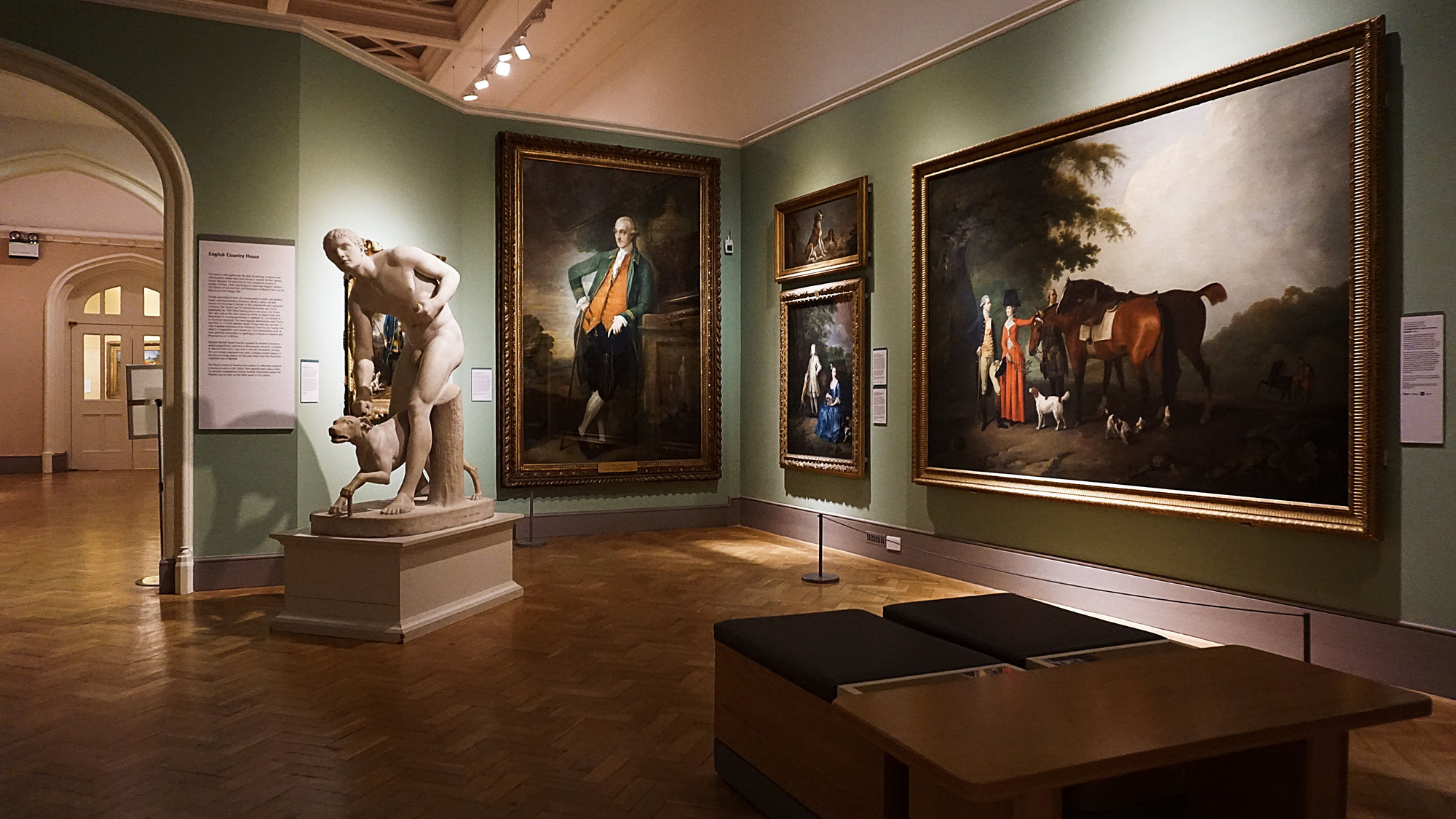
Choose a single image if the entry is functionally settled but still feels like the last apartment. The subject need not announce a rigid design label. A color, scene or visual oddity you want to meet each day can mark the change in place. Keep the surrounding wall quiet so the image is visible on arrival. The real apartment-hall photograph used as this article's cover shows how framed art can carry a narrow passage while storage is already handled; it is an example, not the illustrative room below.
Mirror-led: a useful last look
A mirror earns space if you use it before leaving or if its reflected view improves the particular entry. Check what it will actually reflect from the door and where you will stand. A mirror facing an awkward cluster of coats or a door is not automatically a better choice than a picture. One entryway commenter preferred art on the facing wall to being greeted by a mirror after work; that is a preference, not a rule.
Storage-led: make arrival work
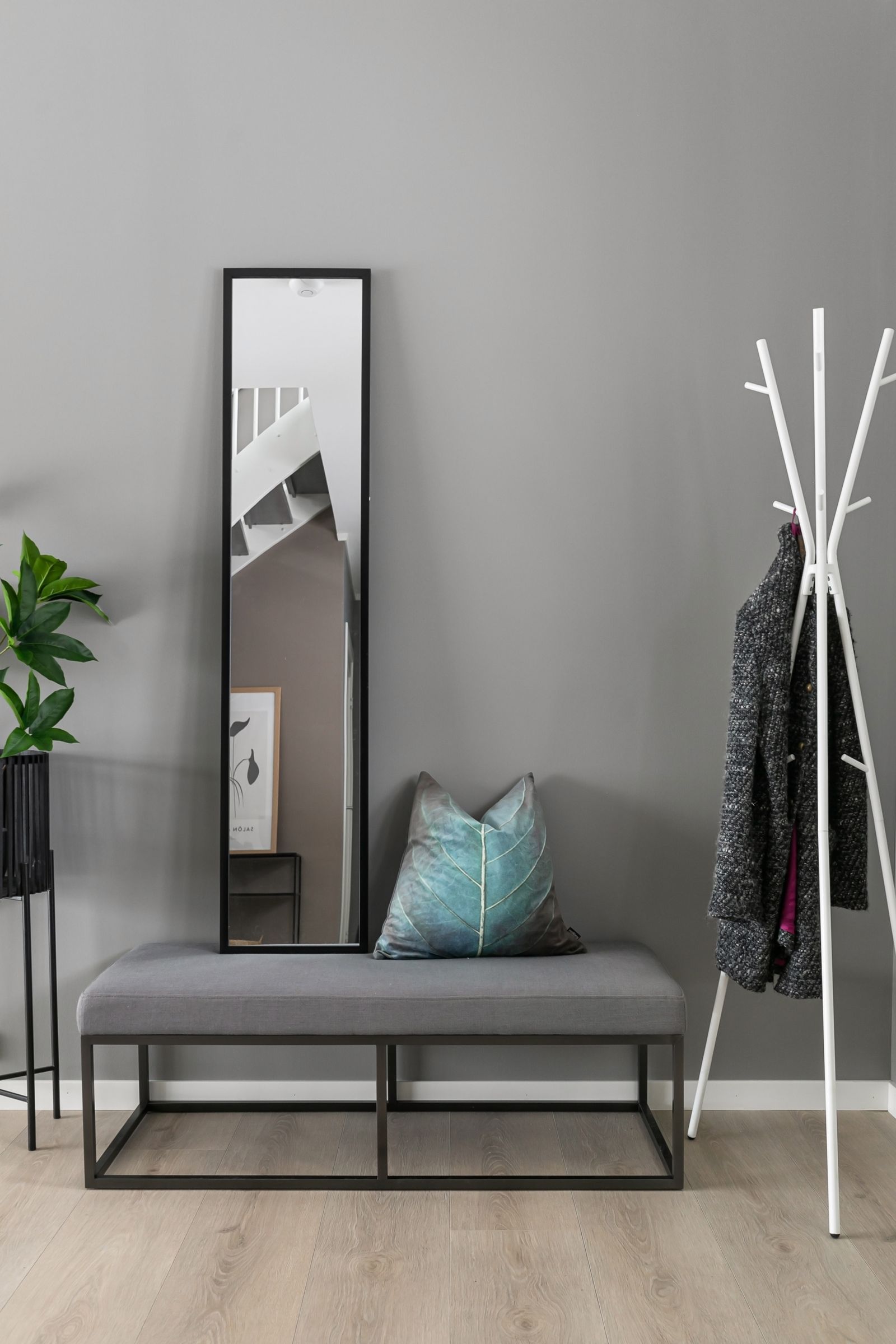
If shoes, coats, keys or mail lack a place, the most attractive object may be a compact organizer. But depth and position matter: do not add a console simply because an entryway photo includes one. In another narrow-hall discussion, the resident explicitly ruled out a table; when a commenter suggested shelving, the resident noted that mail already had a place and remained torn between shelving and art. Existing storage changed the job of the bare wall.
A completed choice for a new-city renter
Imagine a renter who has just moved to a different city. The apartment's entry is narrow, with a closet for coats and a small tray for keys. The front door swings across one short wall. A clear wall begins beyond the swing and is the first uninterrupted surface seen on entry. A console would crowd the route. The renter wants the place to feel different from the old rental but has not settled every room. This is a hypothetical decision, not a measured customer project.
We would choose one image on the clear wall. Storage is already handled, so hooks would duplicate a solved job. A console and mirror directly by the door would crowd the passage. One framed image on the uninterrupted wall communicates the resident's new aesthetic without committing the whole apartment to a matching theme. The renter can choose the subject from their actual taste rather than buy a set to fill every blank wall. Before hanging, they must check lease terms, substrate and suitable mounting instructions; if attachment is not permitted, the result changes to leaving the wall clear and considering a safely supported freestanding display elsewhere.
The choice has a cost: there is no last-look mirror at the threshold. If the renter regularly needs one and has a suitable wall farther inside, the mirror may become the better first purchase. If daily items start accumulating despite the closet and tray, storage takes priority. This is why the same entry cannot be solved by a universal picture size or an “art always first” rule.
Let a new style start small
A new home does not need to display every picture from the last one, nor does it need to discard them immediately. In a first-solo-apartment discussion, the resident wanted a different, whimsical mood while keeping spending down; replies disagreed about decorating now versus waiting for the layout to settle. For the entry, we would choose one visible cue the resident genuinely wants now and leave the rest of the apartment undecided. If your style changes after living there, moving one image is simpler than undoing a whole themed wall.
Once the object and wall job are settled, our first-apartment wall-decor guide covers paper-template placement and rental considerations. The present decision is earlier: whether the entry should hold art at all.
FAQ
Should I put art or a mirror in a small apartment entry?
Choose the mirror if you regularly use a last-look check and can position it without conflict with doors and storage. Choose one image if those practical needs are covered and the first wall should express your taste. If the entry lacks a working drop zone, solve that first.
What if there is no room for a console table?
Skip it. Check whether a closet, tray or existing furniture already handles keys and coats. If not, look for a suitable compact solution that preserves the door and route; a console is only one possible form.
Can one artwork establish the style of a new apartment?
It can give the arrival a clear cue without fixing every room to one theme. Choose an image you want to see often, leave breathing space around it and let other rooms evolve. The entry does not need a complete matching set.
What if my lease does not allow wall mounting?
Check the actual lease and surface rules rather than assuming an adhesive product is allowed. Leave the wall clear if necessary and use a permitted, stable freestanding solution in an appropriate location.
Sources and image notes
Inspected idea guides: World Market and ElephantStock. The linked Reddit discussions supplied individual constraints and contrasting preferences, not prevalence data. The renter and layout in the worked choice are hypothetical. Cover: real apartment hall photograph by Lisa Anna / Pexels. The body photograph is credited in its caption and both photographs are used under the Pexels License. Neither shows the hypothetical renter's home or a WhispArt installation.