Mounted Prints vs Canvas: Backing, Framing, and What Can Change
A mounted print is attached to a support; canvas names the material carrying the image. Canvas can be stretched over bars or mounted flat on a board. To compare the options, separate the image material, its support and the outer frame—especially if you expect to change the presentation later.
What does “mounted print” mean?
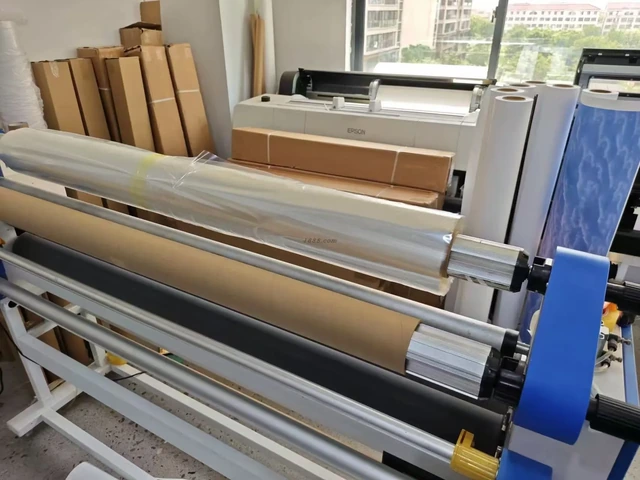
In many print-shop listings, it means a print fixed to a rigid backing, such as foam board or another panel. The exact materials and attachment method must come from the listing or maker. WHCC’s mounting overview, for example, describes several backing choices rather than one universal “mounted” construction.
The photograph below makes the rigid support visible at the edge. Its source identifies a foam-core print. It does not tell us whether a separate paper sheet was glued down, which adhesive was used, or whether the image could be removed.
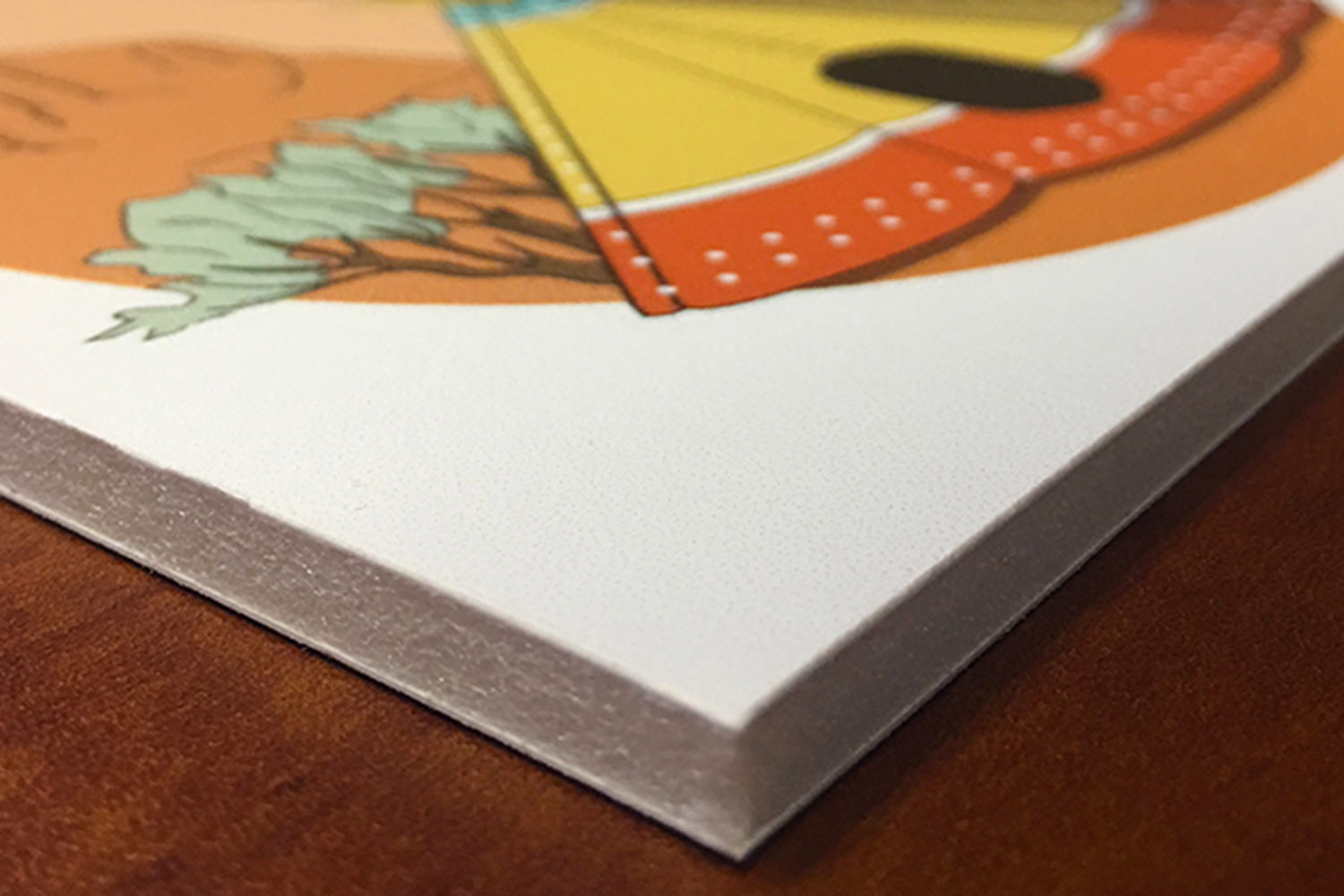
This distinction matters when comparing product photos. A clean, flat front can show the image well while revealing little about the object behind it. I would read “mounted” as a prompt to identify the support, not as proof of either superior quality or removable attachment.
Mounted is also not the same as matted. A window mat surrounds the image with a visible border. A backing supports the print. The two can be used together; our window-mat and float-mount guide explains the presentation choice.
What does the stretcher add to canvas?
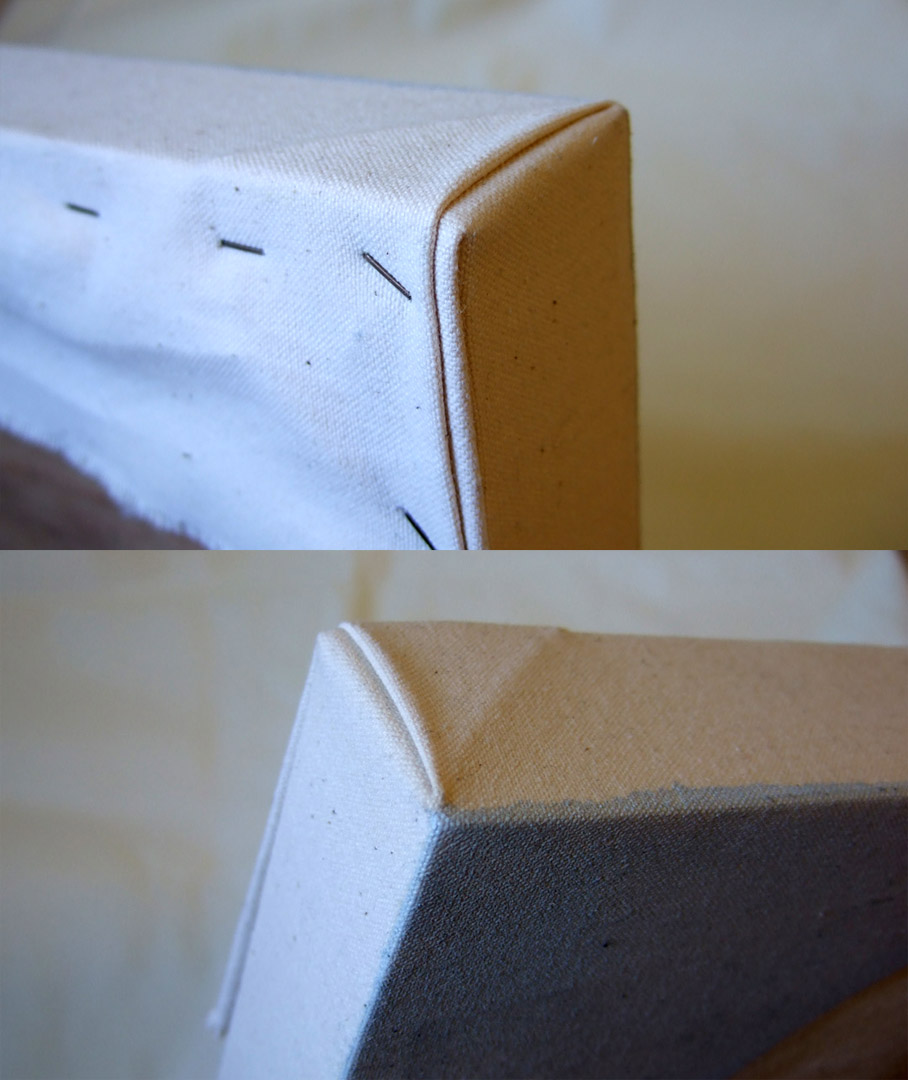
Stretched canvas has fabric carried over a framework of wooden bars. In this rear view, the folds and staples are visible. They explain the support more clearly than a front-facing artwork image could.
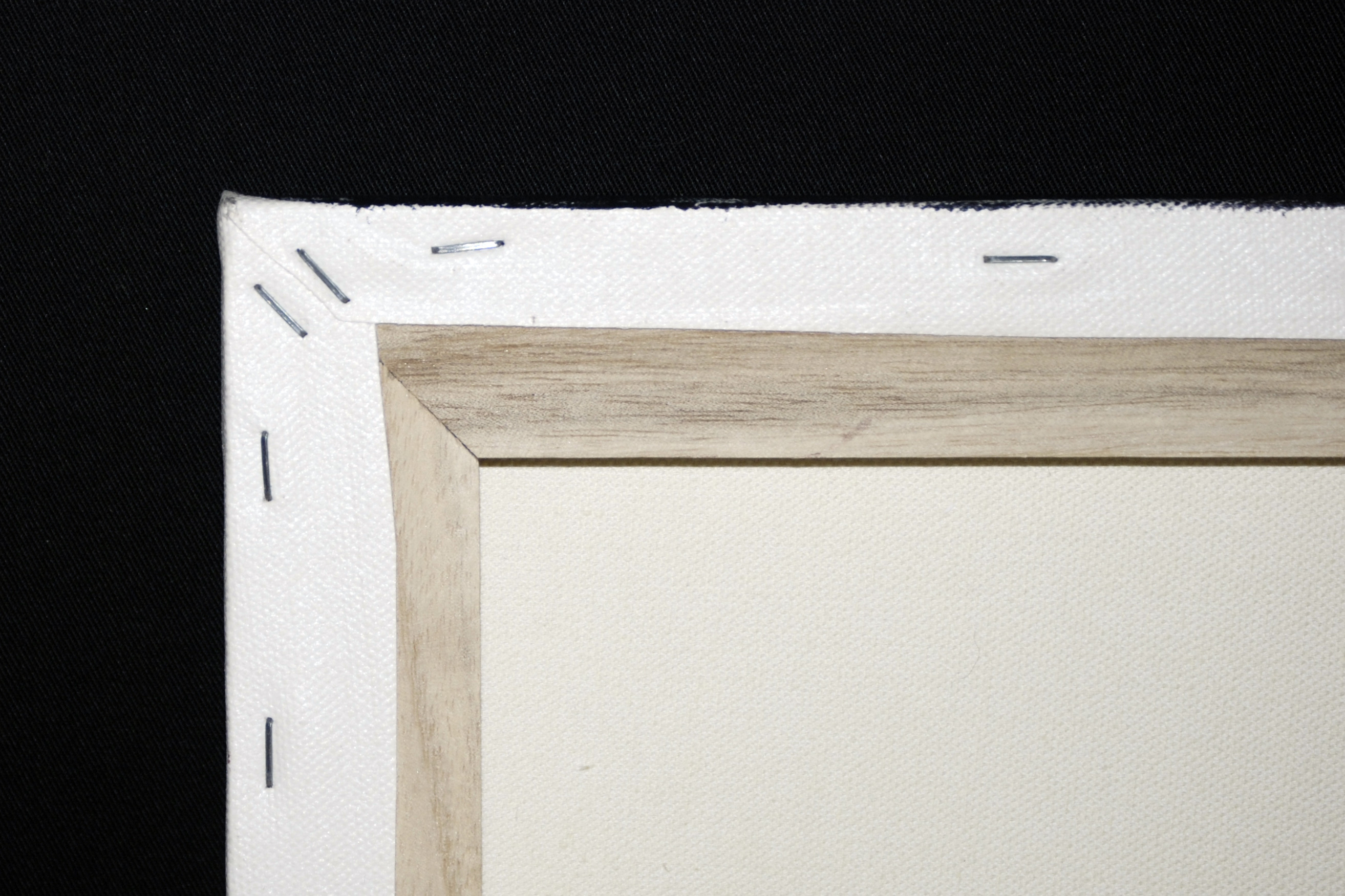
The fabric and stretcher belong to the artwork’s construction. A decorative frame placed around that assembly is another component. Changing that outer frame is therefore a different proposal from removing the canvas from its bars.
Canvas does not automatically mean this particular construction. FinerWorks’ explanation of canvas mounting styles describes both flat-board and stretched arrangements. The useful question is “What supports this canvas?” Our canvas-framing guide addresses frame choices once that construction is known.
A canvas print can also be a mounted print
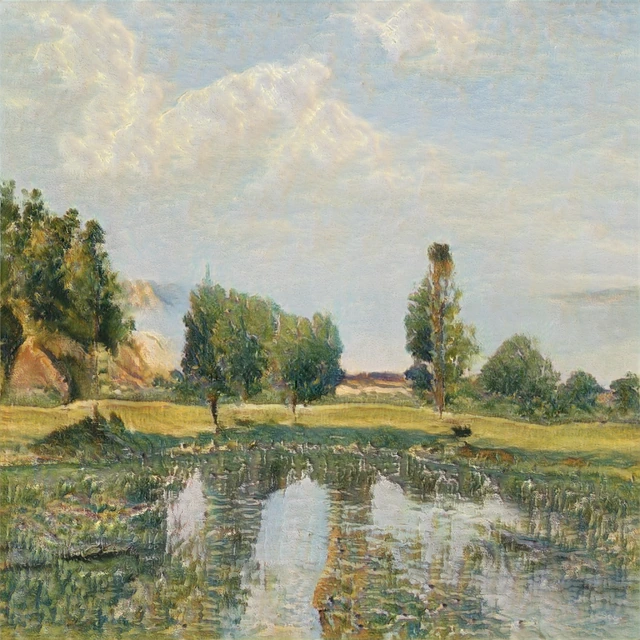
Whispart’s current The Quiet Augury, Black Aluminum Frame option lists textured canvas mounted flat, with a mat and acrylic glazing. It is a concrete example of why “mounted” and “canvas” are not mutually exclusive labels.

That specification tells us the image material and presentation. It does not identify the attachment chemistry or promise that the canvas can later be detached. I would leave that question open until the maker supplies the relevant information. An attractive front view cannot answer it for us.
Changing the frame is not the same as removing the backing
An intact mounted panel may be eligible for a different outer frame. Its dimensions, thickness, condition and the new frame’s capacity need to be checked. There is no need to recover a loose sheet merely because the surrounding frame changes.
Recovering the print from a bonded panel is a separate question. Do not assume that a permanently attached print can be peeled free without damage. A seller’s word “mounted” is not a promise of reversibility; nor does every mounting method have the same permanence.
For paper work where future separation matters, the Library of Congress’s matting and framing guidance describes approaches including nonadhesive corners or strips and appropriate hinges. That supports asking for a suitable attachment plan before purchase. It does not make removal of an unknown existing bond a do-it-yourself procedure.
If an already mounted work is valuable or damaged, have its actual materials and condition assessed before attempting separation. A photo of the back can help identify construction, but cannot certify safe removal.
A purchase where “upgrade to canvas” misses the point
Consider this hypothetical buyer: they want the image on paper now, and later want to change the mat while keeping the full paper sheet available. They are comparing three specified options:
- Paper permanently bonded to a board. It can be considered as a whole panel, but the promised construction does not satisfy the requirement to retain an available loose sheet.
- Stretched canvas. It changes the image material. It does not fulfill a request for a paper sheet, however appealing its finish may be.
- Loose paper with an appropriate framing and support proposal. This preserves the requested paper option, provided the attachment method is chosen to allow the intended later change.
I would choose the loose paper and confirm the mounting proposal before ordering. The tradeoff is that it still needs suitable protection and support now. Paying more for a permanently bonded panel, or changing to canvas, would not solve this buyer’s actual problem.
Change the requirement and the choice changes: if the buyer only wants a different outer frame later and accepts that the board will remain, the mounted panel becomes a possible choice again. A framer still needs to confirm fit and condition. The important distinction is what must remain changeable.
For the broader purchase—including finished size, detail evidence and terms—use our online wall-art buying guide. Here, the decision turns on backing and future changes.
FAQ
Is mounted better than canvas?
The labels describe different things. A mounted paper print and a stretched canvas have different constructions; a flat-mounted canvas combines both terms. Compare the actual material, support and intended presentation rather than ranking the words.
Can a mounted print be framed later?
Possibly. The intact panel can be assessed for a suitable frame by its dimensions, thickness and condition. That does not establish that the image can safely be separated from the panel.
Can I remove a mounted print from its board?
Do not assume so. The print, backing and attachment method determine the question, and permanent bonding may make separation damaging. Obtain the maker’s specification and appropriate professional assessment instead of testing an unknown bond by peeling it.
Does canvas need glass, and is it reflection-free?
Canvas alone does not specify the whole finish. Some presentations are open; others have glazing, as the flat-mounted example above does. Surface coating, glazing and lighting can affect reflections, so “canvas” is not a guarantee of zero glare.
Sources and image notes
WHCC and FinerWorks supply examples of mounting constructions, not a universal quality ranking. The Library of Congress supplies preservation guidance for paper. The current Whispart specification was checked on October 23, 2026; its front image is not evidence of adhesive type or removability.
Framing discussions about mounting methods and framed prints versus canvas helped identify practical questions. Individual experiences are not evidence that all mounts behave alike. The buying example is hypothetical; we did not run a comparative material or removal test. Cover: wrapped-canvas corner photographs by MrsScarborough, 2007. Public-domain image source.