How to Decorate Bedroom Walls: Choose Art, Size, and Placement
The hard part of decorating bedroom walls is rarely a lack of ideas. It is that every object can look good on its own, while the room still feels unresolved. Give the wall one clear job before choosing art, a mirror, or another treatment, and the next decision becomes much easier.
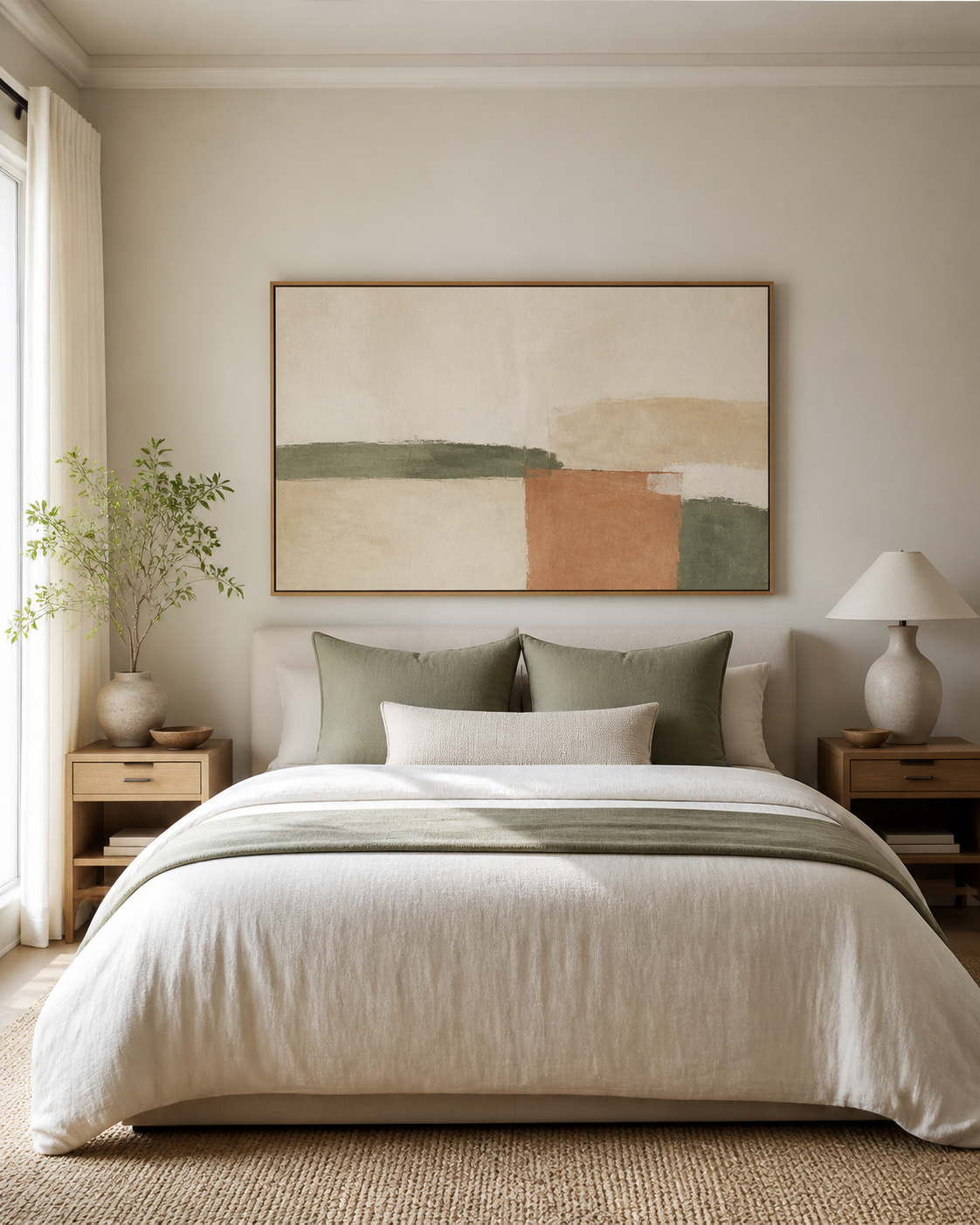
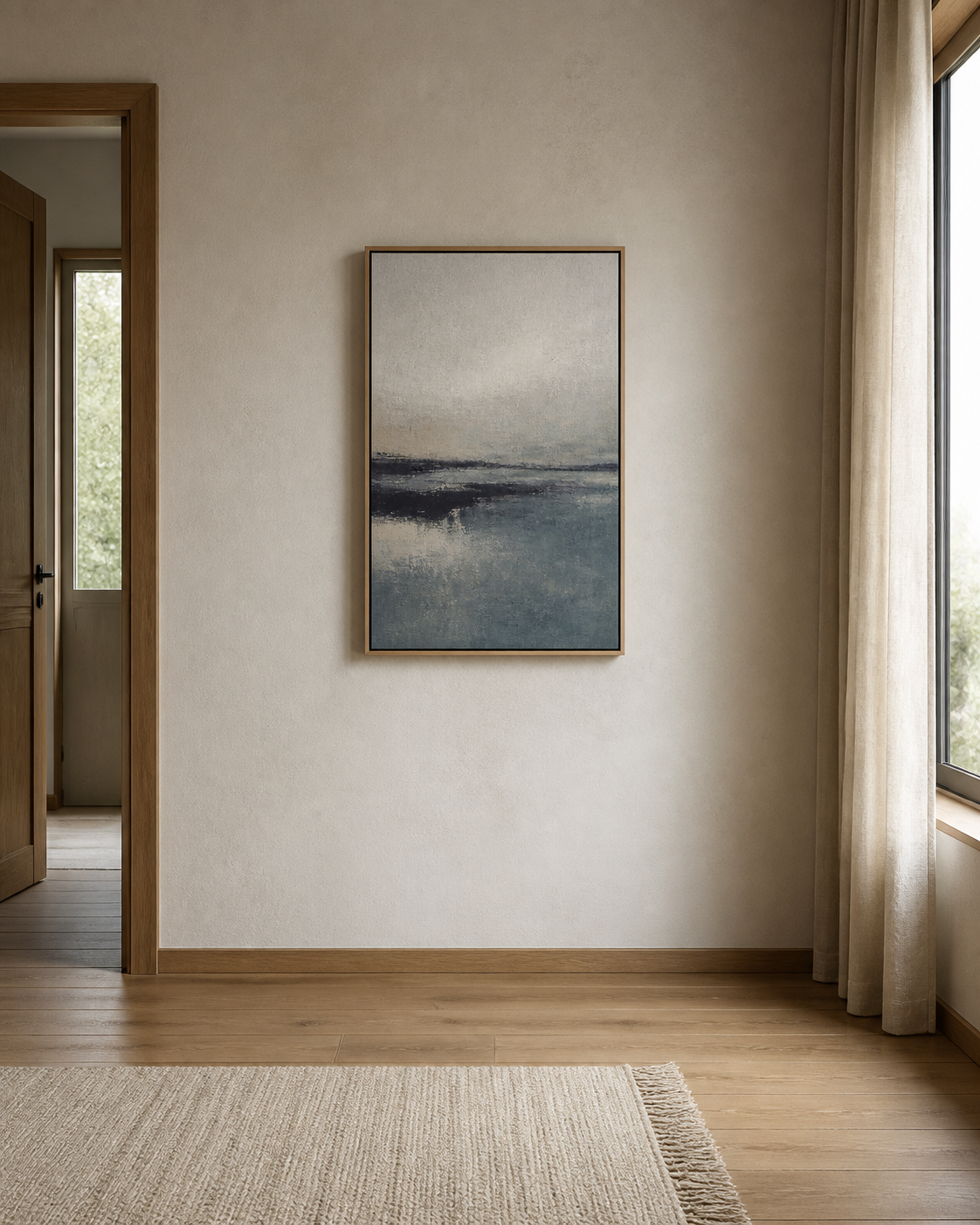
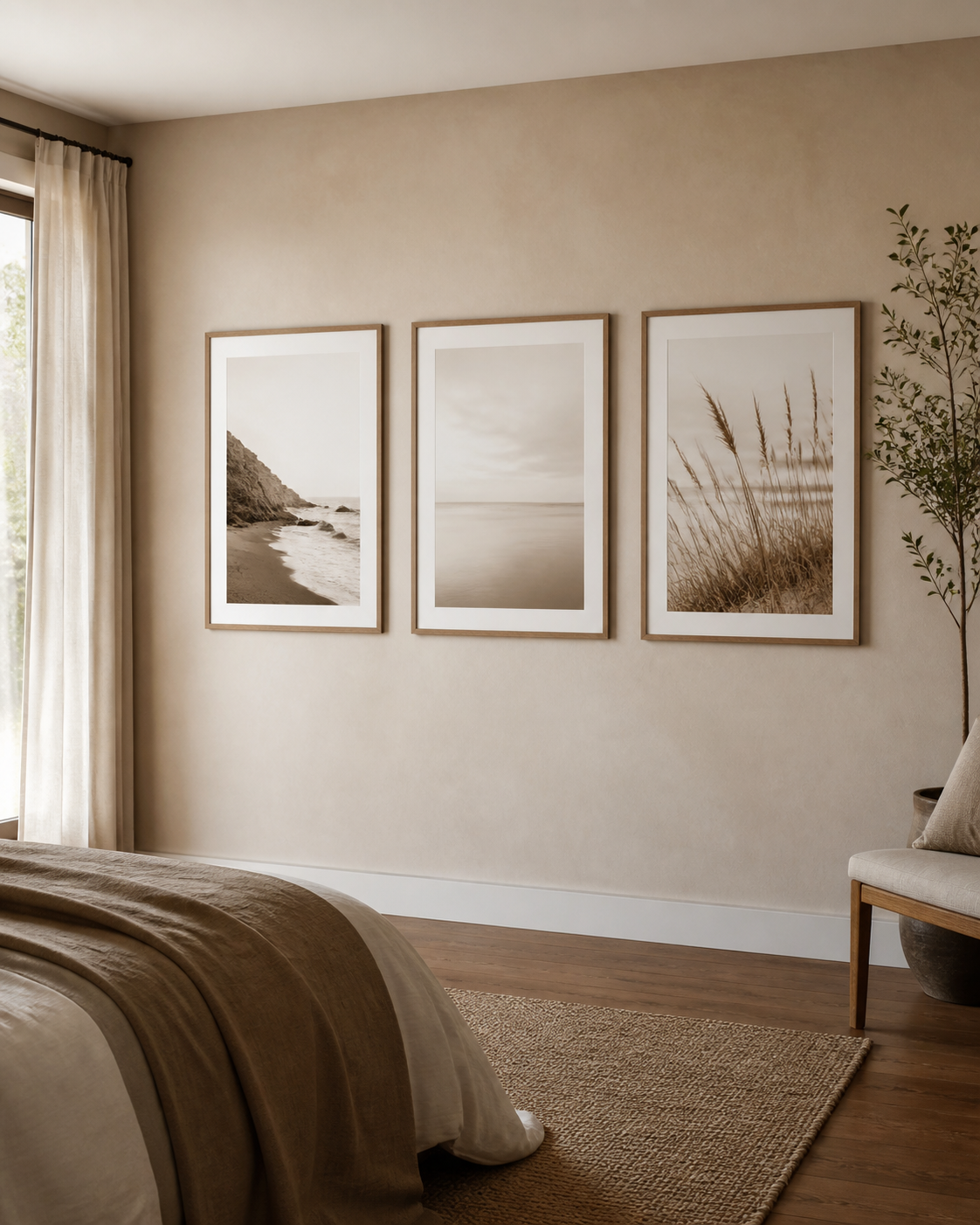
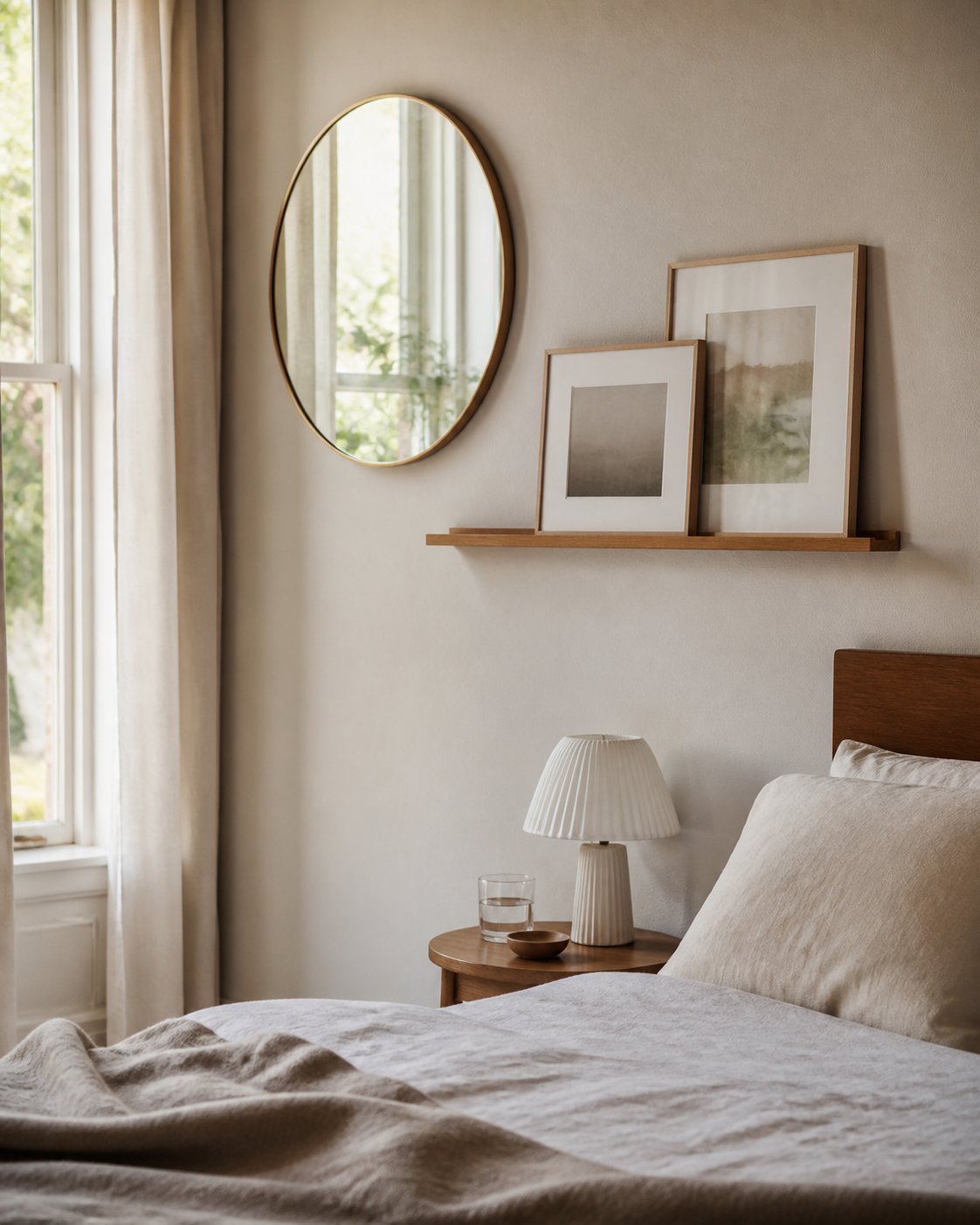
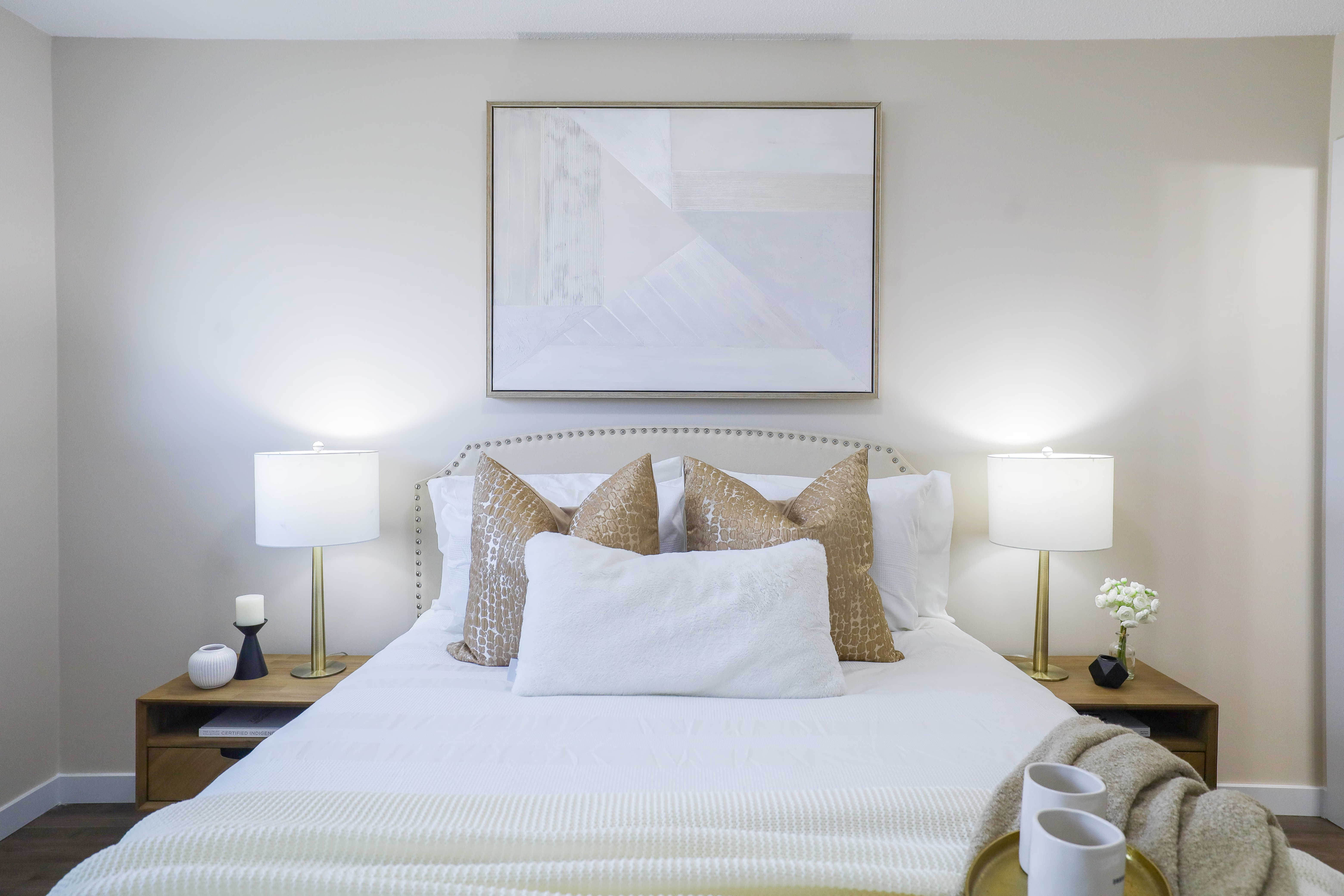
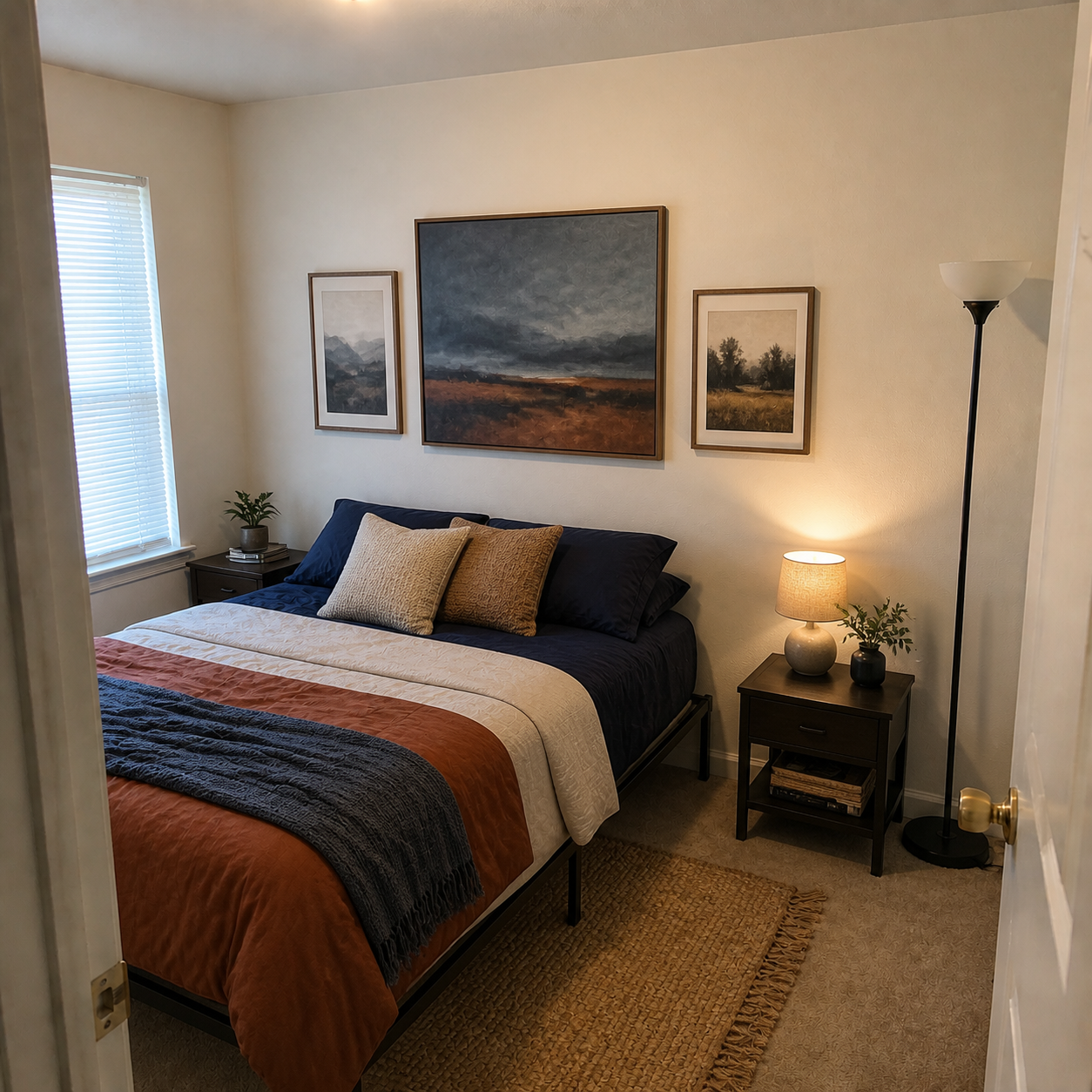
The four bedroom scenes above are AI-generated editorial illustrations, not photographs of actual rooms or measured layouts.
Do not start with a search for bedroom wall inspiration
People searching for how to decorate bedroom walls often do not lack options; they have too many. One picture, two pictures, a mirror, shelves, wallpaper, or a photo wall can all seem plausible. The usual result is a room full of liked objects that have never been asked to have a conversation with one another.
Ask a different question first: what does this wall need to do for the bedroom? Does it need to give the bed a visual center, make a blank wall feel ordered, reflect light, add storage, or reduce holes in a rental? Bedroom guides treat mirrors, paint, shelves, and art as different tools, not interchangeable versions of the same decoration.
Only when art is genuinely the right answer do you need to solve scale, placement, layout, and mood. That keeps you from turning every wall into a gallery wall—or buying a work you love online that feels too small, too high, or too loud once it is in the room.
Step 1: Give the wall a job
Different walls in the same bedroom should do different jobs. Name the job first, and the next choices stop competing with each other.
- Above the bed: make the bed read as one complete compositionThis is usually the room's strongest visual axis. Art should relate to the headboard instead of floating in the middle of the wall. One horizontal work or a balanced pair is often calmer than a crowd of unrelated small pieces.
- Beside the bed or on an unfurnished wall: give the room a place to landNotice what you see from the doorway, the bed, and a seated position. A vertical or medium-scale work can fit here, as can a tidy small grouping. Start at a common viewing height, then adjust for doors, windows, baseboards, and nearby furniture.
- Small, dark, rented, or function-first wall: do not make art solve every problemIf the primary need is reflected daylight, temporary display, or storage, a mirror, picture shelf, textile hanging, or movable solution may be more honest. Art can still appear, but it does not have to do work that belongs to something else.
Choose the treatment before you choose the object
How to decorate bedroom walls is a broader decision than choosing wall art. Decide what the wall needs first; if art is the answer, the size and layout rules in the next steps become useful instead of automatic.
| If this wall needs… | Start with… | Why this comes before art |
|---|---|---|
| A visual anchor for the bed or a blank wall | Art | Use the bed or visible wall to set the scale before you choose a subject or frame. |
| More reflected daylight or a lighter-feeling corner | A mirror | First check what the mirror will reflect; a picture cannot solve a light problem in the same way. |
| Texture or a softer background | A textile hanging or wallpaper | A textured surface can make one quiet artwork enough instead of asking several frames to create depth. |
| Architectural rhythm or depth | Paneling | Build the wall-and-bed relationship first, then decide whether the finished plane still needs art. |
| A place to display books or small objects | A shelf | Storage needs a mounting and visual-load decision before it becomes decoration. |
| Color without another object on the wall | Paint | Paint changes the whole field; choose art afterward only if the wall still needs a focal point. |
| A rental-friendly or low-risk solution | Lightweight or leaning pieces | Reversibility and safe mounting are constraints, not details to solve after choosing a heavy work. |
Step 2: Above the bed, measure from the bed—not the whole wall
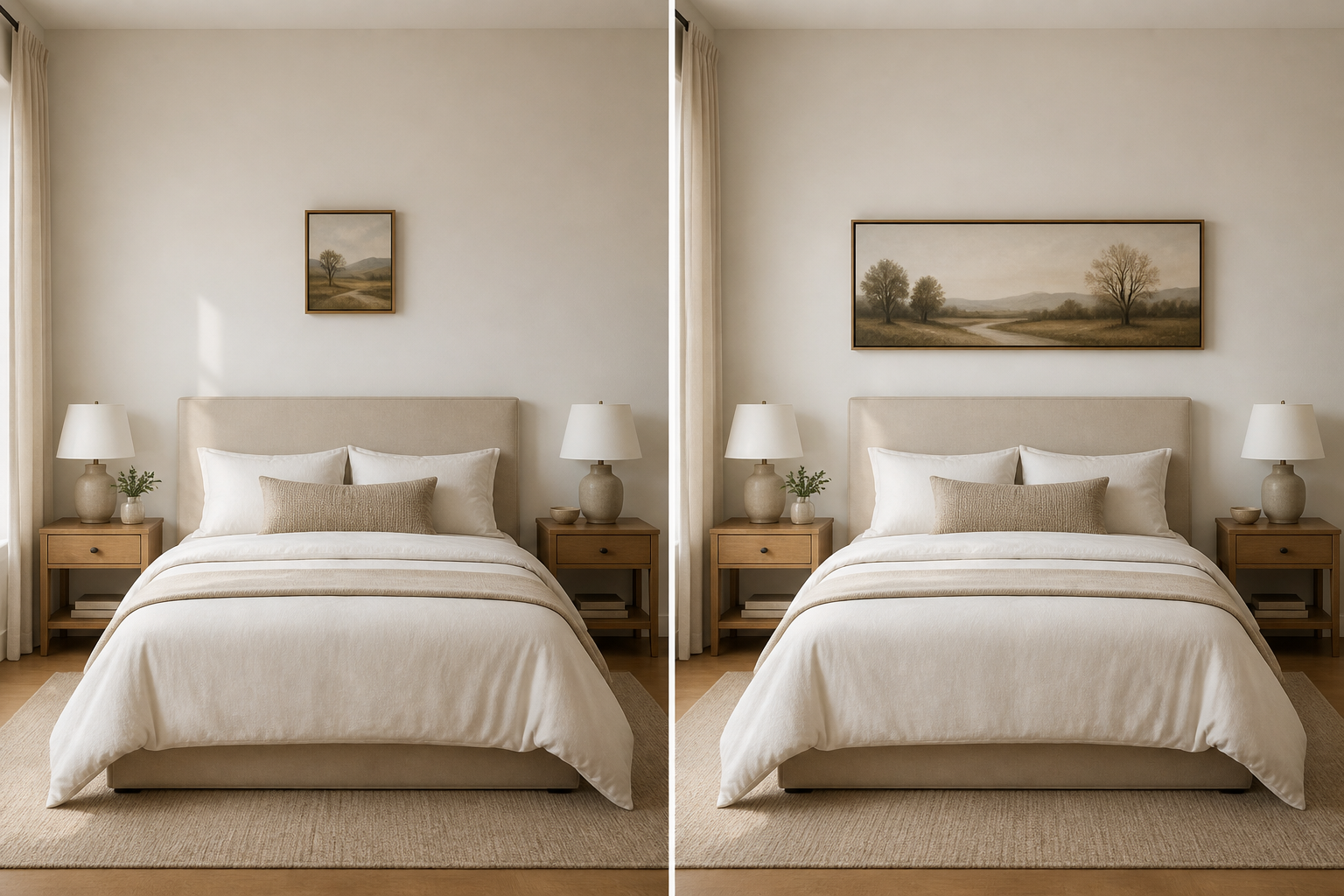
Art above a bed is easy to hang so that it has no relationship to anything: the work may be beautiful, but it can look postage-stamp small or borrowed by the wall because it is too high. Independent guides use the same starting point: aim for a visual width of about two-thirds of the headboard width. It is not a precise formula; it is a proportion that lets the art and the furniture below it read as one composition.
Height rules change with the setting. On an empty wall with no furniture beneath it, begin by judging the work's center at roughly 60 inches (150 cm) from the floor. Above a bed, though, it belongs to a furniture-and-art composition, so look at the lower edge in relation to the headboard. A common interior-design starting point is about 6–12 inches (15–30 cm) above the headboard, then adjust for headboard height, frame size, and room proportions.
That is where “it depends” becomes useful. If the work hangs above furniture, first ask whether it still belongs to the furniture's composition. If it hangs alone on a blank wall, first ask whether it belongs at a natural viewing height. Do not carry a rule from one scene into the other unchanged.
Step 3: One work, a pair, or a small group?
Layout is not a taste test. It decides how much visual volume you want this wall to carry.
| Option | When it fits | What it solves | Watch for |
|---|---|---|---|
| One medium-to-large work | You want the bed area to feel calm and clear, or the bedding and lamps already provide detail | Creates a distinct focal point and reduces visual fragments | Check that the width relates to the headboard; a vertical work above a wide bed can leave dead zones at both sides |
| A balanced pair | The headboard, nightstands, and bedside lamps already create an axis, or you do not want one work to carry all the visual pressure | Extends order and balance | Treat the frames, gap, and shared centerline as one composition |
| A tidy small grouping | You have a side wall, a passage wall, or a collection, and you are willing to lay it out on the floor first | Lets several works become one intentional shape | Find the center for the group as if it were one large work; avoid a noisy scattered arrangement directly above the bed |
Step 4: Bedroom style is not “the softer, the better”—it is about visual volume
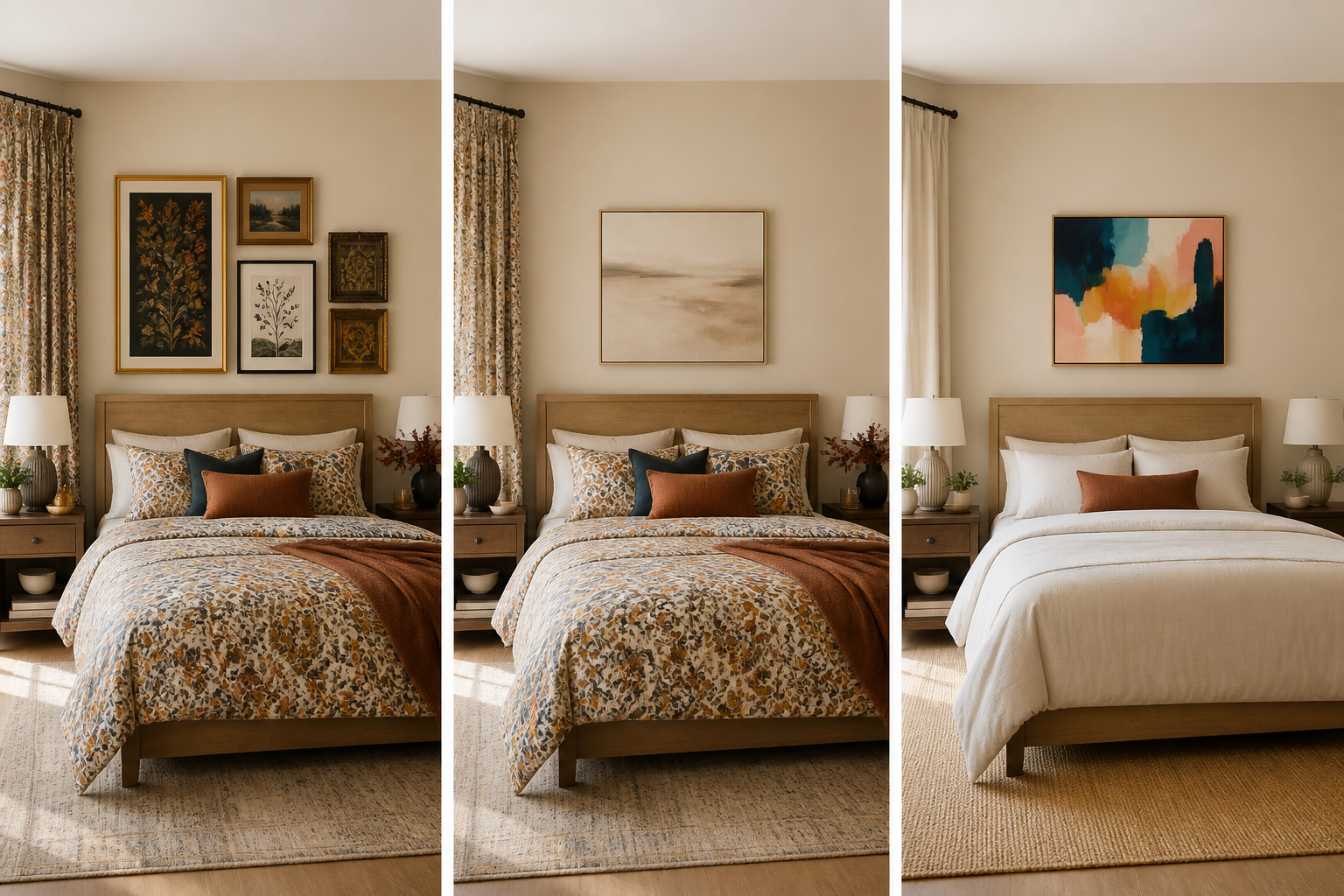
A bedroom is a room you see before sleep and when you wake, so the job of subject matter, color, and frame is usually not to demand attention. It is to give the room a stable mood. Nature, abstraction, low-contrast photography, or an image with real personal meaning can all work; the deciding factor is not the label on the subject, but whether it belongs with the bedding, wall color, and light.
A practical check: if the bedding, curtains, headboard, and rug already carry lots of pattern or high contrast, let the art gather the room rather than add another layer. If the room is very neutral, one work can carry the color or personality. You do not need to match every color; one relationship is enough—repeat a tone, echo a material, or keep a similar visual weight.
Use a photo of your own wall for an AI preview before you decorate
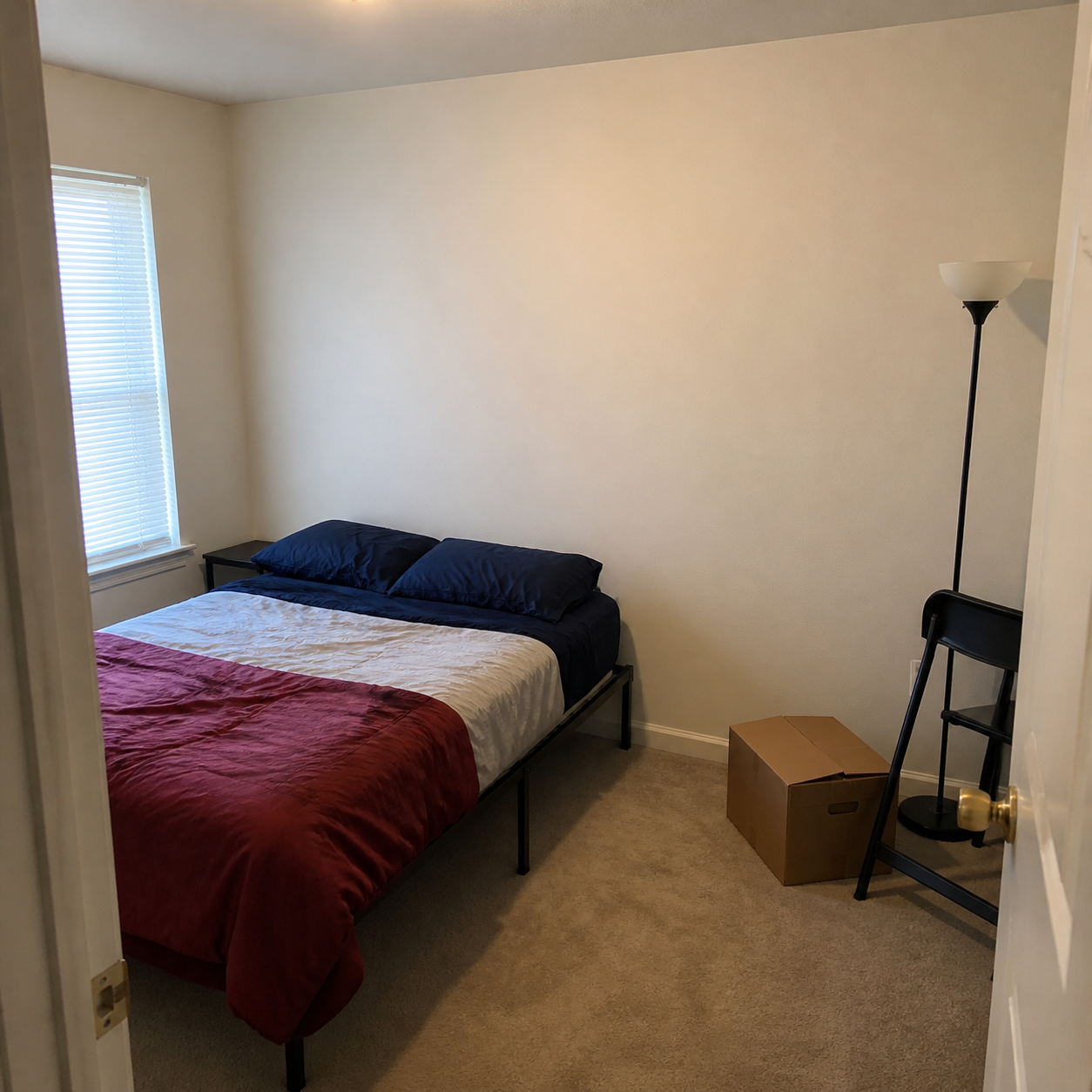
A just-moved-in bedroom is difficult because the bed, windows, lamps, and open wall have not formed a relationship yet. A product thumbnail cannot show whether a piece belongs in that room. Start from a photo of the actual wall after you have named its job and measured the headboard or visible wall.
ChatGPT Images can create new images and edit an uploaded image from a written instruction. That makes it useful for previewing bedroom wall decor on your own photo: ask it to assess the room first, then render one chosen direction. Treat the result as a visual option—not a measurement, load-bearing, or installation decision.
Keep the order straight: treatment first, proportion second, AI preview third, painter's-tape test last. AI is most helpful when it compares a decision you have already defined instead of inventing a new room for you.
Before you order or drill: do a five-minute painter's-tape test
Taping the outer frame onto the wall is almost always more honest than imagining the scale in a phone thumbnail.
- Measure the visible referenceAbove a bed, measure the headboard width. On a side wall, measure the visible area that doors, windows, lamps, and baseboards do not occupy. Do not measure the whole wall and stop there.
- Tape the outer frameStart with a version around two-thirds of the headboard width, then tape a larger or smaller version. Step back to the doorway, sit on the bed, and lie down once. The tape is there to discover what is wrong—not to prove that your first choice was right.
- Check relationships, not only centeringAsk four questions: Does it connect to the headboard? Is it interrupted by lamps, curtains, or a door frame? Do the side gaps have room to breathe? From the bed, does it feel too stimulating or too high?
- Confirm installation before ordering or drillingConfirm the wall type, artwork weight, rated capacity of the hardware, and the installation directions. Above a bed especially, installation conditions are a prerequisite. If it cannot be mounted securely, choose a lighter option or a different location.
Four common mistakes—and the correction for each
These problems rarely come from a lack of taste. They come from getting the order of decisions backwards.
- Buying the work before finding its placeCorrection: confirm the wall's job and tape-out scale first. Choose the work within those two conditions, not the other way around.
- Hanging art at a “safe height” instead of a furniture-related heightCorrection: use viewing height as a starting point on an unfurnished wall; above the bed, start with the lower edge's relationship to the headboard.
- Using lots of small objects to compensate for one undersized workCorrection: make the focal work larger or organize the small pieces into one unit before deciding whether the wall needs anything else.
- Treating safety as the last stepCorrection: verify the wall, weight, and hardware when you choose the location. Do not put an uncertain heavy object above the sleep area.
If you are buying art, make the work answer to the room
When you shop, look at the work as an object—its scale, framing, weight, and display images—not just its image content. Then return to the taped outline: does the work still make sense at this size? Does it make the room quieter and more centered, or is it only filling a blank?
Whispart's approach to art and studio context can be a starting point for learning about a particular work and how it is made. Wherever you buy, make the final choice against that exact work, its exact dimensions, and the mounting conditions in your room.
A wall does not need to be full. It only needs to complete one job clearly.
A bedroom-wall decision principle
Bedroom wall art FAQs
How big should art above a bed be?
Start with a visual width of about two-thirds of the headboard, then adjust for wall height, headboard height, and composition. Taping the outline on the wall is usually more reliable than applying a size chart directly.
How high should I hang art above a bed?
Treat it as a bed-and-wall composition, not an independent blank wall. A common start is roughly 6–12 inches (15–30 cm) between the lower edge and the headboard, then adjust for the headboard, work size, and overall proportion. The mounting must suit the wall and the artwork's weight.
Can a small bedroom take a large artwork?
Yes. The question is not whether the room is small, but whether the work is in proportion to the bed or visible wall. One work with a clear scale can sometimes make a small room feel more stable than lots of tiny fragments.
Do I have to hang art in a bedroom?
No. If the wall needs reflected light, storage, mobility, or texture more than art, a mirror, shelf, textile hanging, or paint treatment may be the better answer. Solve the wall's job before choosing the medium.
How do I keep bedroom art from feeling too busy?
Control visual volume through one priority. If bedding and the room are already complex, choose quieter art. If the space is very neutral, one work can carry color or personality. Check whether it still feels restful from both the bed and doorway.