Weird Art: How Familiar Things Become Strange
A pear becomes a nose. An eye becomes a balloon. A lush jungle becomes uneasy. Three real artworks offer different ways into the pleasure—and tension—of strange images.
The familiar part gives the strange part its force
“Weird art” describes a response, not a single movement. An image can feel strange because recognizable things are combined, an object takes on an impossible role, or ordinary forms enter an unsettling relationship. It does not have to be frightening, abstract or impossible to understand.
At WhispArt, we are drawn to images that let recognition start and then make it hesitate. A picture that gives us something to return to can be more interesting than one that delivers all its oddness in a single joke. That is an editorial preference, not a test every artwork must pass.
Instead of trying to decode a hidden message immediately, look first for what the picture changes. These three works make that question visible in different ways.
Arcimboldo: one image, two identities
Look at the whole face first. Then look only at the nose and cheeks. The portrait remains recognizable even as its parts become food.
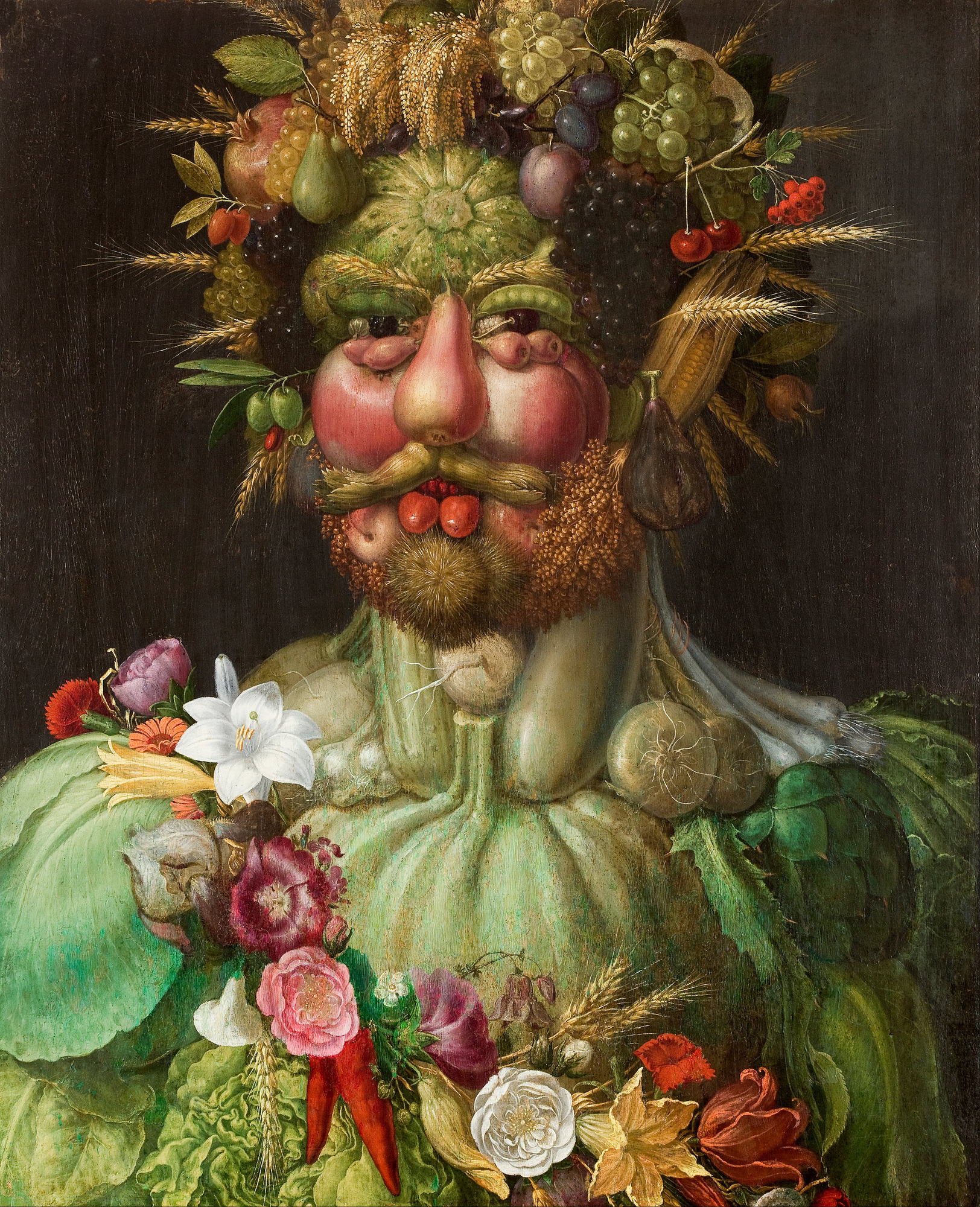
Giuseppe Arcimboldo’s Vertumnus, painted around 1590–1591, presents Emperor Rudolf II through an arrangement of fruit, vegetables and flowers. The Skokloster Castle account identifies the portrait and its association with Vertumnus.
A pear supplies the nose; rounded fruit makes cheeks; grapes gather into the head’s surrounding mass. Each item is painted with enough specificity to remain itself. Yet together the items hold the position and proportions of a face.
We find the repeated switch more compelling than the first surprise. At one moment we see a person; at the next we see a collection of edible things. The strangeness comes from two identities occupying the same shapes. You can find that witty, sumptuous or slightly disquieting without disagreeing about what is visibly there.
Redon: a familiar object takes an impossible role
Find the curved surface of the eye, then the fine lines descending below it. The drawing asks us to recognize an organ and a flying vessel together.
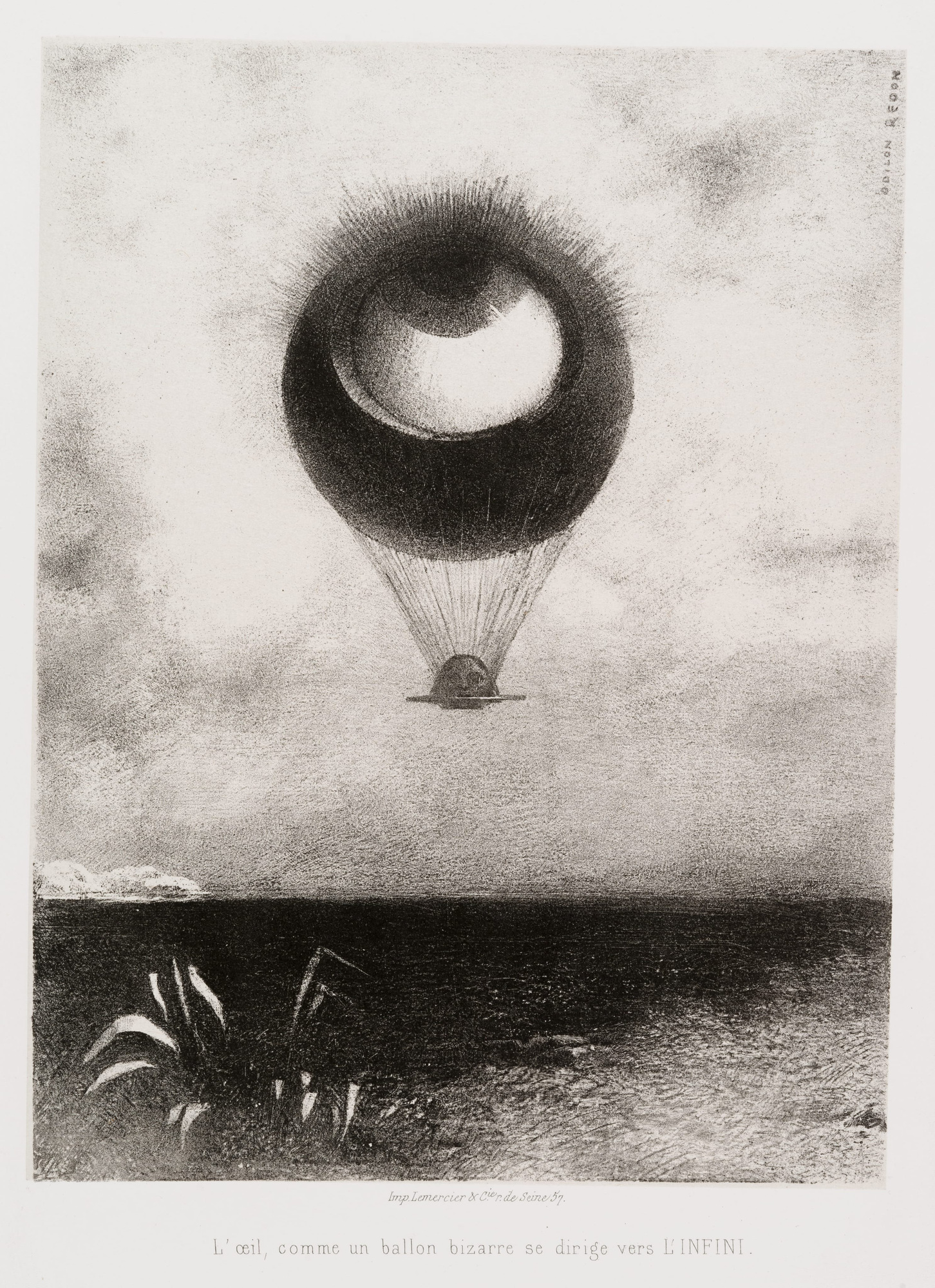
Odilon Redon’s 1882 lithograph The Eye, Like a Strange Balloon, Mounts toward Infinity places an enormous eye above a low landscape. The rounded outline can read as a balloon, while the iris and lashes keep it insistently bodily.
The material is monochrome, but the effect is not ordinary. Dark land below, pale space above and the suspended form give this impossible thing a setting. Our reading is that the landscape makes the eye feel more present: it has somewhere to rise from, rather than floating in an empty visual joke.
Here is a complete way to describe it without claiming to have solved it: “An eye occupies the role of a balloon above a landscape; the combination makes looking itself feel strangely mobile.” The first half names what is depicted. The second is our interpretation. Someone else might feel watchfulness, escape or unease. To claim Redon intended one specific meaning would require further evidence.
Rousseau: the whole scene changes the feeling
Let your eye move through the repeated leaves and large flowers. Then look toward the bottom centre, where the lion holds its prey.
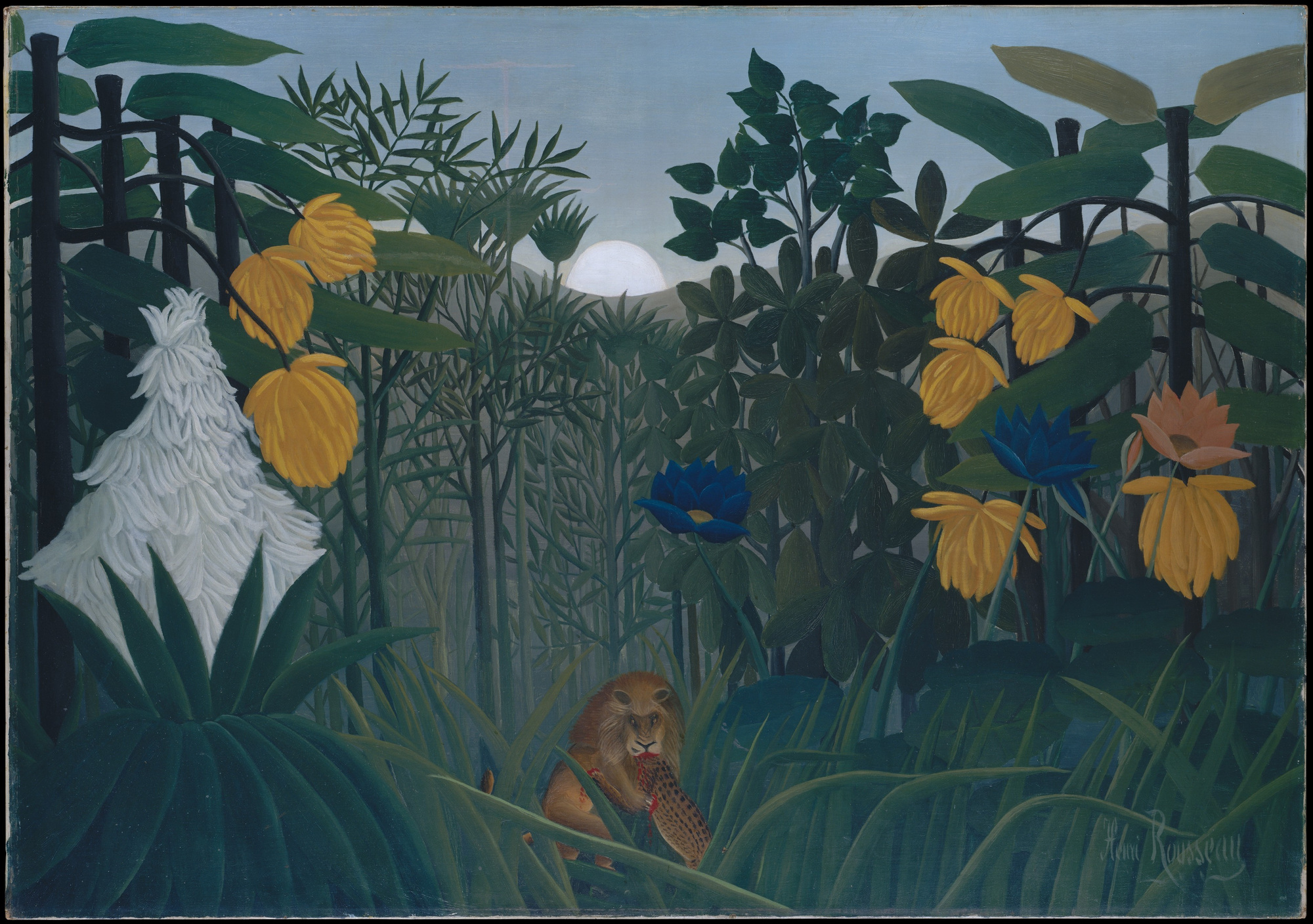
In Henri Rousseau’s The Repast of the Lion, about 1907, recognizable plants and animals fill the scene. There is no fruit-face transformation and no floating eye. Instead, the dense layers of vegetation, unusually emphatic flowers and small central act of predation create a world that feels carefully arranged and uneasy.
When we look at this reproduction, the foliage draws us in before the lion does. The repeated leaves offer an almost decorative rhythm; the animal below unsettles that first impression. The blue and yellow flowers remain beautiful, but we can no longer read the scene as merely lush.
Strangeness can come from relationships and visual emphasis, even when the individual subjects are recognizable. We would not call this a documentary account of a jungle. Equally, we do not need to assign every leaf a secret symbol to describe the tension we can see.
Strange, surreal and Surrealism are different claims
All three works above predate the Surrealist movement associated with André Breton’s 1924 manifesto. MoMA describes Surrealism through its historical engagement with the unconscious and methods ranging from automatic drawing to dreamlike scenes and unexpected combinations of objects.
Calling an image “surreal” in everyday conversation can describe an uncanny effect. Calling an artist a member of Surrealism makes a historical claim. An unusual subject alone does not establish that claim, and the movement cannot be reduced to realistic paintings of impossible objects.
A discussion about “surrealist” versus “surreal” art raised exactly this naming problem. We find it useful to keep three separate sentences available: what we can see, how it feels to us, and what the historical record supports. They can enrich each other without becoming interchangeable.
Abstraction is another question. If you are trying to distinguish recognizable subjects from more nonrepresentational forms, our visual guide to abstract art explores that distinction.
A contemporary example from our own collection
We use the same kind of looking with our A Wolf in the Chamber. Start with the orange face, then follow the red forms crossing the torso.
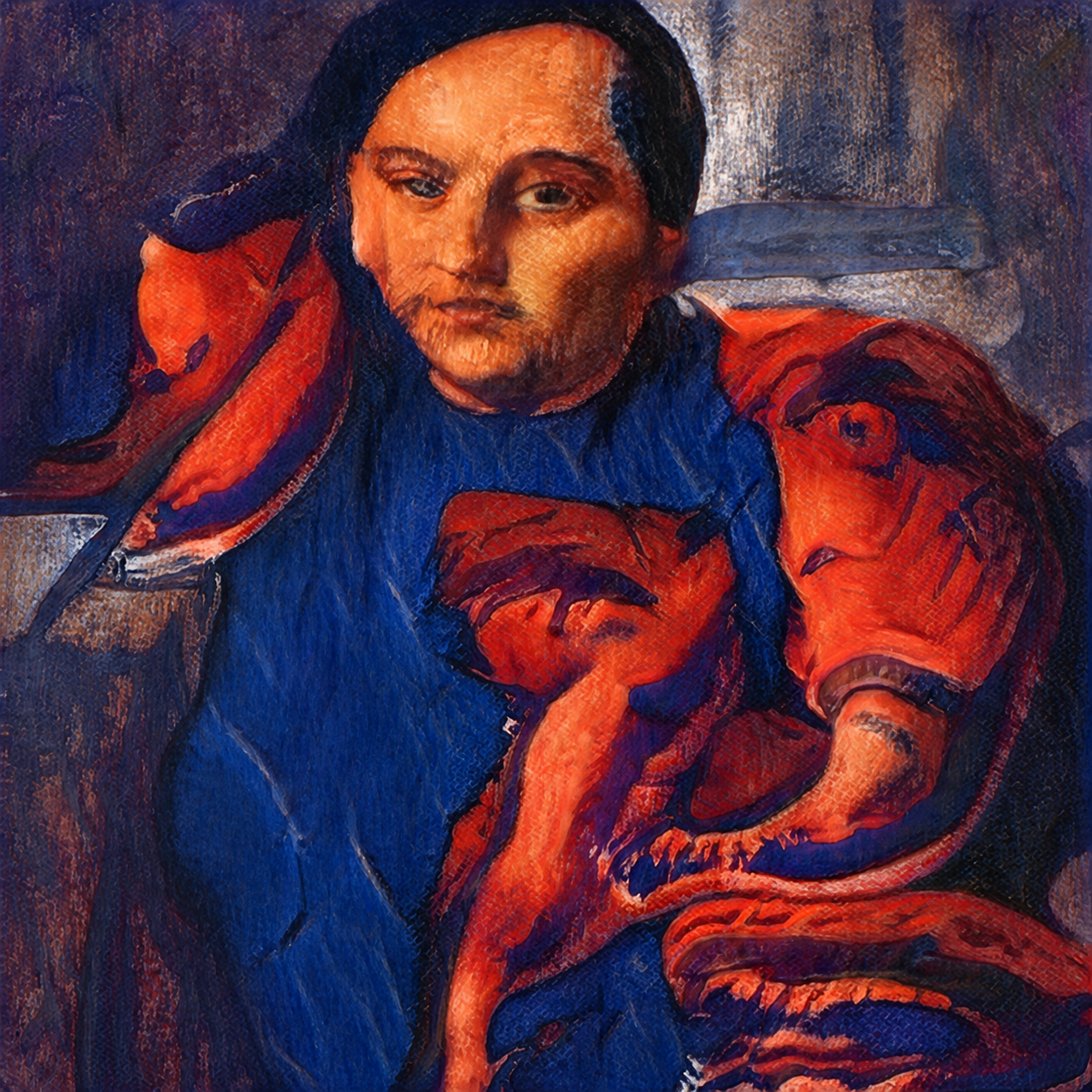
The face gives us an immediate point of recognition. Lower down, animal-like profiles and overlapping forms make the anatomy less settled. We prefer to leave that recognition open: the image can suggest several presences without requiring us to name each one conclusively. This is our reading of a contemporary digital artwork, not a claim that it belongs to the historical Surrealist movement.
That slight delay—seeing a figure, then wondering what else is there—is the kind of ambiguity we return to. It gives the eye another route through the work.
FAQ
What is weird art called?
There is no single formal name. Depending on the specific work and its history, terms such as fantastic, uncanny, grotesque or surreal may be useful. Start with the artist and object record rather than assume every unusual image belongs to one movement.
Does weird art have to be creepy?
No. Arcimboldo’s composite portrait can feel playful as well as unsettling. A strange image may produce amusement, curiosity, tenderness or discomfort; the visible construction does not dictate one emotional response.
Do I need to understand an artwork’s hidden meaning to enjoy it?
No. You can begin with a visible relationship: fruit forming a face, an eye functioning like a balloon, or patterned foliage surrounding a predator. Historical context may deepen that reading. Present your own interpretation as a possibility rather than an established intention.
Is all strange or dreamlike art Surrealist?
No. The three historical works shown here were made before the movement associated with the 1924 manifesto. “Surreal” can describe an effect in everyday language; “Surrealist” needs a supported historical context.
Sources and image credits
Skokloster Castle, LACMA and the Met supply the artwork records linked above; MoMA supplies the historical movement context. Our descriptions of the visible images and our preferences are editorial interpretations, not claims of personal acquaintance with the artists or physical examination of the originals. Image credits and reuse terms accompany each work. The cover is a real gallery photograph by Suzy Hazelwood / Pexels, used under the Pexels License. It is an independent editorial photograph, not a WhispArt installation. The WhispArt image is an artwork reproduction, not a photographed installation.