
Why Is Framing a Picture So Expensive? Revise the Quote
A custom frame pays for a complete fitted object and skilled work. The useful next question is which part of the proposal you actually want to change.
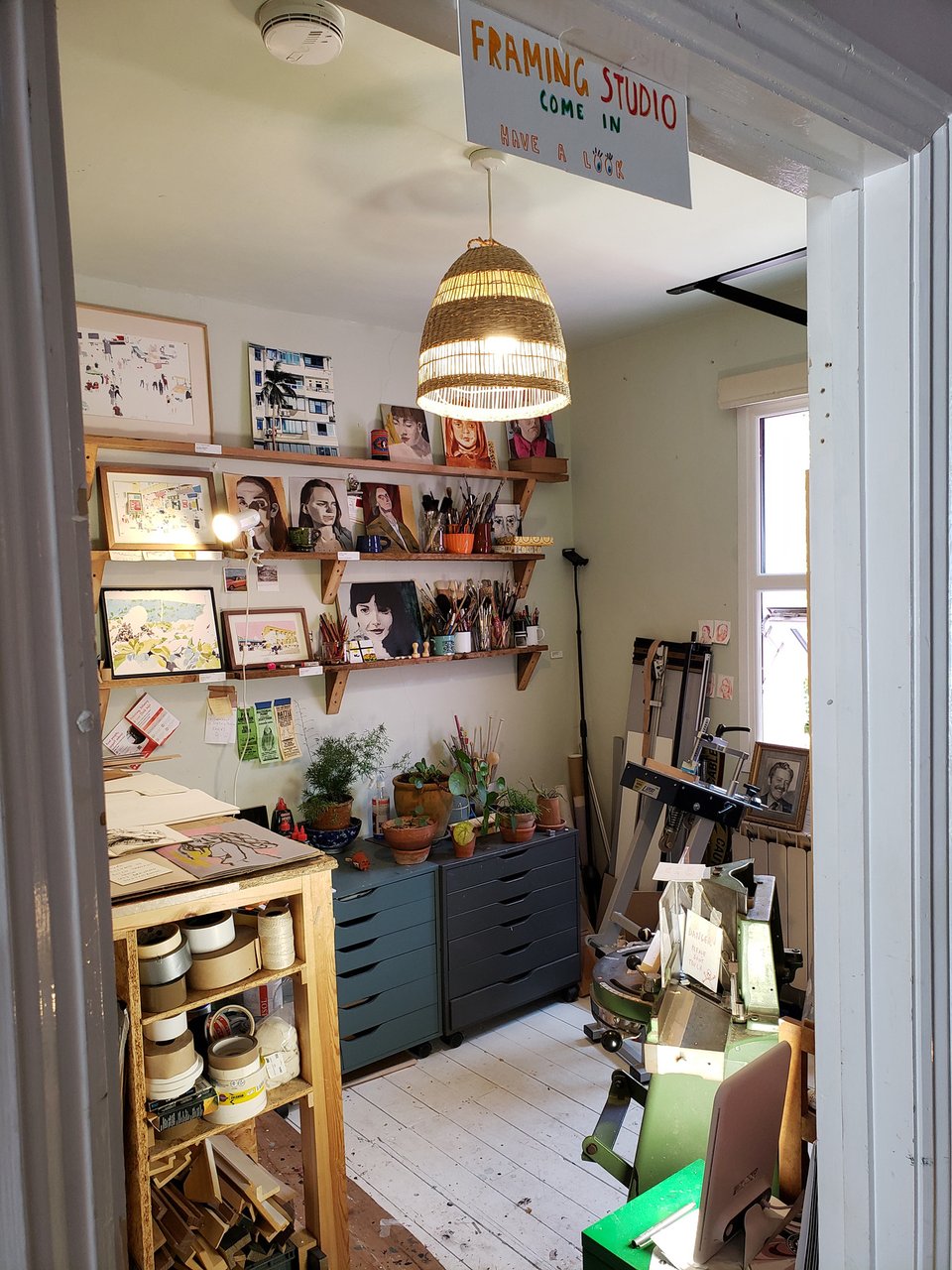
Custom picture framing can be expensive because the price covers more than four strips of molding. It may include a made-to-measure frame, mat, glazing, mounting, backing, hardware and the work of assembling them around your particular piece. Size, materials and handling requirements change that package.
If the total is uncomfortable, ask for a revised design before abandoning the artwork. We would first simplify an unwanted decorative upgrade, while keeping the fit and protection the work needs. The cheapest total is useful only if it still delivers the frame you mean to buy.
What you are paying for
A stock empty frame and a completed custom-framing service are different purchases. FastFrame’s account of its trade identifies materials, skilled labor, design time, size, complexity and shop overhead among the price drivers. That explains why an apparently simple design can still involve careful work; it does not tell you what any particular shop should charge. On a phone, scroll each table sideways to compare all columns.
| Part of the proposal | What changes the scope |
|---|---|
| Frame molding | The actual profile, material, finish and construction needed for the complete package. A narrow appearance does not establish that a frame is suitable. |
| Mat and presentation | The board, number of layers, openings and mounting arrangement. Decorative layers and the materials needed next to the paper are separate decisions. |
| Glazing | The named glass or acrylic product, its size and required properties. Reflection control and UV filtration are different specifications. |
| Mounting, backing and fitting | How this work is supported, separated from the glazing and secured in a frame deep enough to hold the package. |
| Service and operations | Measuring, cutting, joining, handling, assembly, equipment and the shop’s operating costs. Ask what is included rather than guessing a standard labor percentage. |
There is also a supply-chain cost to offering many combinations. In its framing-cost guide, equipment maker Logan describes how small shops rely on suppliers to hold a wide range of molding, mat and glazing options. It is one industry explanation, with a clear interest in do-it-yourself framing; it is not evidence that every shop has the same markup.
Large paper works need an especially specific quote. In one public framing discussion, a buyer’s two 40 × 55-inch prints prompted replies about oversized supplies, handling and construction. Those accounts identify questions to ask. Their prices and material thresholds are individual claims, not a national rate card.
A completed revision: $520 becomes $340
Here is an illustrative comparison for the same 13 × 19-inch signed paper print, in sound condition. The buyer has a $350 framing budget. A framer has inspected the work and confirmed a suitable mounting, backing and glazing arrangement. The buyer likes a simple surround and does not require reduced reflections.
Both glazing options in this example meet the same agreed UV-filtering requirement; one also has an anti-reflective treatment. That compatibility is a supplied condition of the example, not a claim about every glazing product. The following are invented, tax-inclusive quote amounts with local pickup, not current retail prices or savings you should expect.
| Same work, different design | Original | Revised |
|---|---|---|
| Decorative molding → simpler suitable molding | $160 | $85 |
| Double mat → one suitable conservation mat | $85 | $40 |
| UV-filtering glazing with anti-reflective treatment → compatible UV-filtering glazing without that treatment | $165 | $105 |
| Agreed mounting, backing, fitting and hardware, unchanged | $110 | $110 |
| Total, including tax | $520 | $340 |
We would choose the $340 revision. It saves $180 and leaves $10 of the stated budget. The buyer gives up the decorative second mat, the more elaborate molding and reduced reflections. The stated protective requirements and professional fitting stay in the order.
Suppose a third proposal is $290 but substitutes glazing that does not meet that agreed UV requirement. We would reject that proposal for this brief. Its extra $50 saving comes with a changed specification, so it is not the same job at a better price.
The decision reverses if reduced reflections are essential at the intended viewing position. Then the $340 revision no longer meets the brief: retain or reprice that feature, simplify another optional element, or wait until a complete suitable package is affordable. Do not call an unwanted reflection acceptable merely to make the arithmetic work.
Change presentation without casually changing protection
For paper art you intend to keep, ask the framer to name what will touch the work and how it will be mounted. The Library of Congress framing guidance calls for chemically stable package materials, separation between the object and glazing, and a frame deep enough for the complete package. Removing a decorative mat layer need not mean removing that separation; the revised construction must still provide it.
Ask for the exact glazing product and its stated properties, rather than treating “museum” as a complete specification. The Library’s paper-preservation FAQ also explains that UV filtering does not eliminate damage from light. Keep paper art out of direct sun; especially valuable or vulnerable originals may be better stored with a reproduction displayed.
This is a request for a suitable revised quote, rather than instructions to mount a valuable work yourself. Damaged paper, fragile media or uncertainty about the work’s condition needs the appropriate specialist assessment. For the separate visual decision, our guide to choosing a frame surround compares what the frame looks like. Our matting guide explains the window-versus-float decision.
Could a ready-made frame plus fitting work?
It is a route worth pricing when an available frame suits the actual work. Have the framer check its opening, usable depth, condition and the required complete package before you buy it. Include any replacement glazing, custom mat, backing and fitting in the comparison. A low shelf price does not settle that total.
With a used frame, check that the shop will accept it before committing. In a discussion about an oversized print, contributors suggested secondhand frames, while a self-described framer explained why their shop often declined damaged supplied frames. It is an alternative to investigate, not a guaranteed cheap service.
We would decline a ready-made option that requires trimming the print, hides an edge the owner wants visible, or cannot house a suitable package. If it passes those checks and the complete fitted quote costs less, compare that real offer with the revised custom quote. An unusual size can make full custom framing the more straightforward option.
When the shelf price stops saving money
Take a replaceable paper print with a 13 × 17-inch sheet and a centered 12½ × 16½-inch image. The 16 × 20-inch option of the Blick Chelsea Metal Gallery Frame is listed by the outside of the mat. Its supplied mat opens to 7½ × 9½ inches, which would cover much of this image. A new mat with an actual 12¾ × 16¾-inch opening would show the whole image and ⅛ inch of blank paper on each side, with another ⅛ inch of paper under the mat. Our guide to checking the sheet, opening, and frame shows how to separate those measurements before you ask for a quote.
If you already have the frame, bring it and the print to the shop. If you are considering a new frame, show the framer the exact listing before buying it. Blick lists 5/16 inch of rabbet depth, the recess that holds the assembly. If the agreed glazing, mat, supported print, and backing add up to ⅜ inch, this frame is too shallow. Even a thinner package needs to sit securely without pressure on the art.
For the price comparison, suppose the framer has checked the exact frame and confirmed that a suitable package with the desired opening fits securely. Both quotes provide that opening and the same level of protection. These are invented totals including tax with local pickup:
- Buy the stock frame and have it fitted: $30 for the frame plus $145 for the new mat, suitable glazing and backing, mounting, and fitting. Total: $175.
- Order a complete custom frame: $160 for the finished package, including the work of fitting it.
We’d choose the $160 custom quote. If you have to buy the $30 frame, the rest has to come in under $130 to save money. If you already own a suitable frame you would otherwise leave unused, the same $145 fitting quote saves $15. That’s when we’d reuse it, provided the framer confirms the fit and both offers still deliver the protection and presentation you agreed on.
Questions before changing the order
Should I simply ask for the cheapest glass?
Describe the work, its size and your display conditions first. Ask which named glass or acrylic options meet the agreed requirements, then compare price and reflection control. A cheaper component that changes a required property is a different offer.
Will a very thin frame always save money?
No. Choose from profiles the framer confirms can accommodate and support the package. Compare those suitable options; appearance alone does not establish their construction or cost.
What should I ask the shop to revise?
“Please re-quote this same work with simpler molding and a single suitable mat. Keep the agreed mounting, backing, glazing specification and fitting. Show the complete total, and identify anything else that changes.” Add reflection control to the requirements if it matters to you.
Method: source-backed editorial guidance for framing paper art. The quote, budget and choice are hypothetical; no Whispart customer project, frame-shop test or framing service is claimed. Original sources were checked on November 2, 2026; the Blick measurements were checked on November 17, 2026.
Cover: Picture Frame Profile Chevrons In Walnut, Art Graphics, CC BY-SA 4.0. Resized and compressed; the image remains under the same license. Display crops vary by screen.


