What Size Frame for an 11×14 Print? Start with the Whole Sheet
Keep the image you love intact by separating paper size, mat opening and the finished frame’s outside dimensions.
If the actual paper measures 11×14 inches, a nominal 11×14 frame may fit it without a mat. A 16×20 frame with a mat is a common alternative. Confirm the actual mat window, the frame’s package-fit dimensions and enough depth for the full assembly before ordering. If the print already has an 11×14 outside mat, the frame needs to fit that 11×14 package.
The important word is paper. A seller may use “11×14” for the printed image while leaving an additional border around it. That larger sheet needs its own measurements. Conversely, an 11×14 sheet can contain a smaller image that you want to display with some of its original paper margin.
We would settle those measurements before choosing a frame finish. If you are turning a favorite poster or print into a more deliberate, finished object, the fitting should preserve what made you like the image in the first place.
The frame label does not describe every boundary
In the US frame-size convention explained by Frame USA, the nominal size identifies the artwork size the frame is designed to accommodate. It is not the finished measurement across the outside edges of the molding.
For a matted paper print, keep these measurements separate:
- Sheet: the paper from edge to edge, including any border.
- Image: the printed picture within that sheet.
- Mat window: the opening through which the picture and chosen paper margin remain visible.
- Mat outside: the entire mat board that goes into the frame.
- Frame fit and depth: the dimensions and capacity needed for the complete package, including glazing and backing.
- Finished outer frame: the full object you will place on the wall.
A frame sold as “11×14 with a mat” can be intended for a smaller picture. Read the opening dimensions rather than assuming the supplied mat will show an 11×14 print. Frame Destination’s dimension guide also illustrates why a mat opening is typically smaller than the sheet it holds; the exact cut depends on the specified package.
Start with the condition your print is actually in
On a narrow screen, scroll sideways to read the whole table. Sizes below are package-fit choices, not finished outside measurements.
| What you have | Starting choice | Confirm before ordering |
|---|---|---|
| Unmatted 11×14 paper; compact display wanted | Nominal 11×14 frame | Actual fit, visible edge overlap and a way to keep paper away from glazing |
| Unmatted 11×14 paper; a visible mat wanted | Common option: 16×20 frame and mat | Mat outside 16×20; actual window preserves the intended image and margin |
| Print already mounted within an 11×14 outside mat | Frame that fits the 11×14 package | Package thickness, condition and sufficient frame depth |
| Only the image is 11×14, with extra paper around it | Measure the whole sheet first | Sheet, image, desired visible margin and the resulting mat/frame fit |
A larger mat is a presentation choice, not a requirement for every 11×14 sheet. If you want a smaller finished object, a framer can assess a more compact custom mat and package. The amount of surrounding mat will change.
A worked example that keeps the whole picture
Consider this hypothetical print: an 11×14 sheet with a centered 9×11 image. Its original paper border is 1 inch on each side and 1½ inches at the top and bottom. We want to retain the entire image, show some of that paper and add a visible mat.
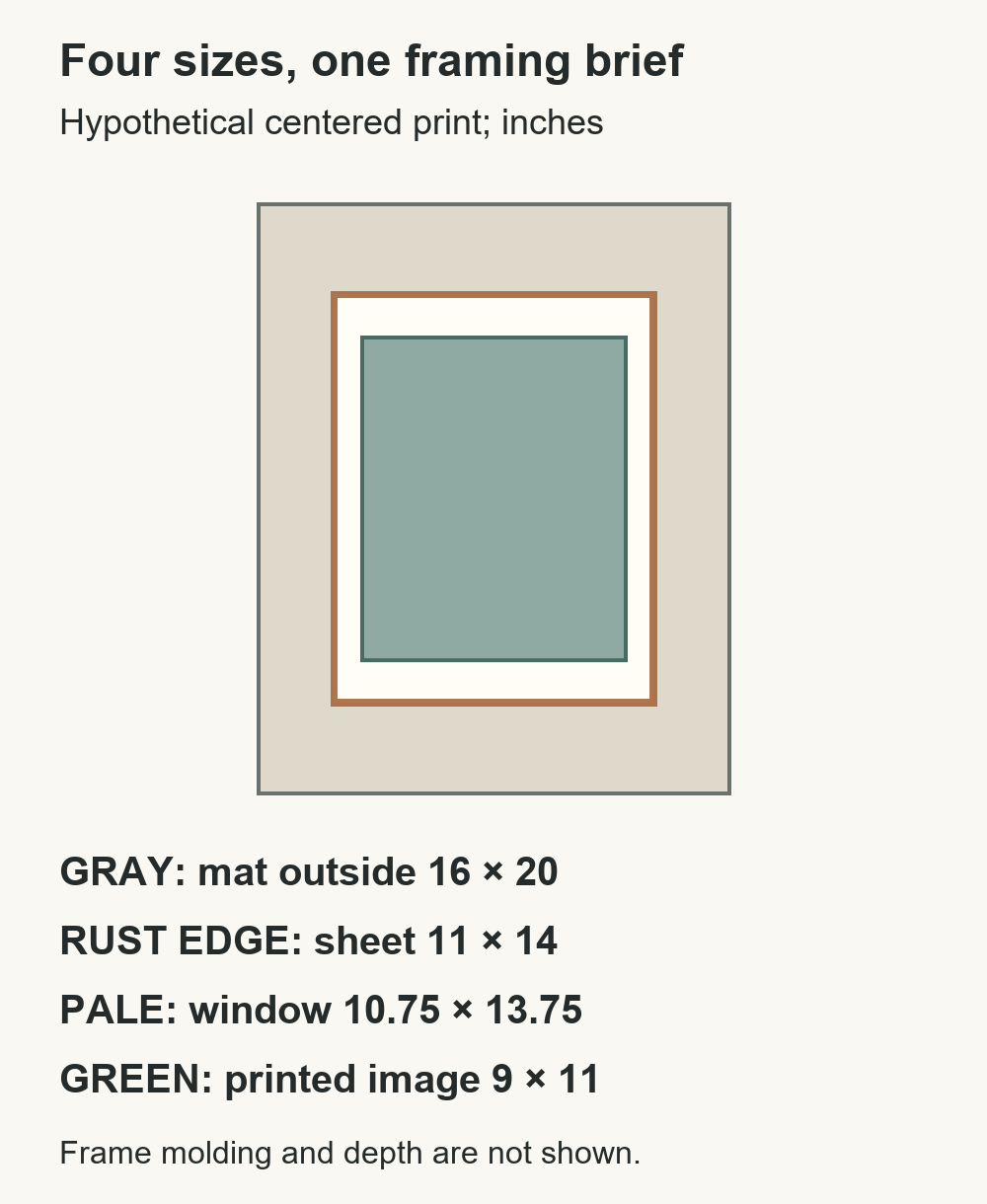
We would request a 16×20 outside mat with a proposed 10.75×13.75 window, then have the framer confirm the cut and fitting. This is a specified example, not a promise about a standard bundled mat.
That window overlaps the sheet by ⅛ inch at each edge: (11 − 10.75) ÷ 2, and (14 − 13.75) ÷ 2. It leaves ⅞ inch of visible paper beside the image and 1⅜ inches above and below it: (10.75 − 9) ÷ 2 and (13.75 − 11) ÷ 2.
The centered mat borders are different measurements again: 2⅝ inches left and right, and 3⅛ inches top and bottom, calculated from the 16×20 outside mat and its 10.75×13.75 opening. Paper border and mat border are separate parts of the display.
The larger package is the tradeoff. The frame must accommodate a 16×20 mat and the rest of the assembly, and its finished outside dimensions will be larger still. If compactness matters more, we would ask for a smaller package with a custom window rather than assume the largest standard option is best.
Why the supplied 8×10 mat would change this image
For that same centered 9×11 image, an 8×10 window falls inside the picture. It hides ½ inch of the printed image at every edge. A crop may remove a subject detail or a deliberate part of the composition, so we would reject that opening for this particular brief.
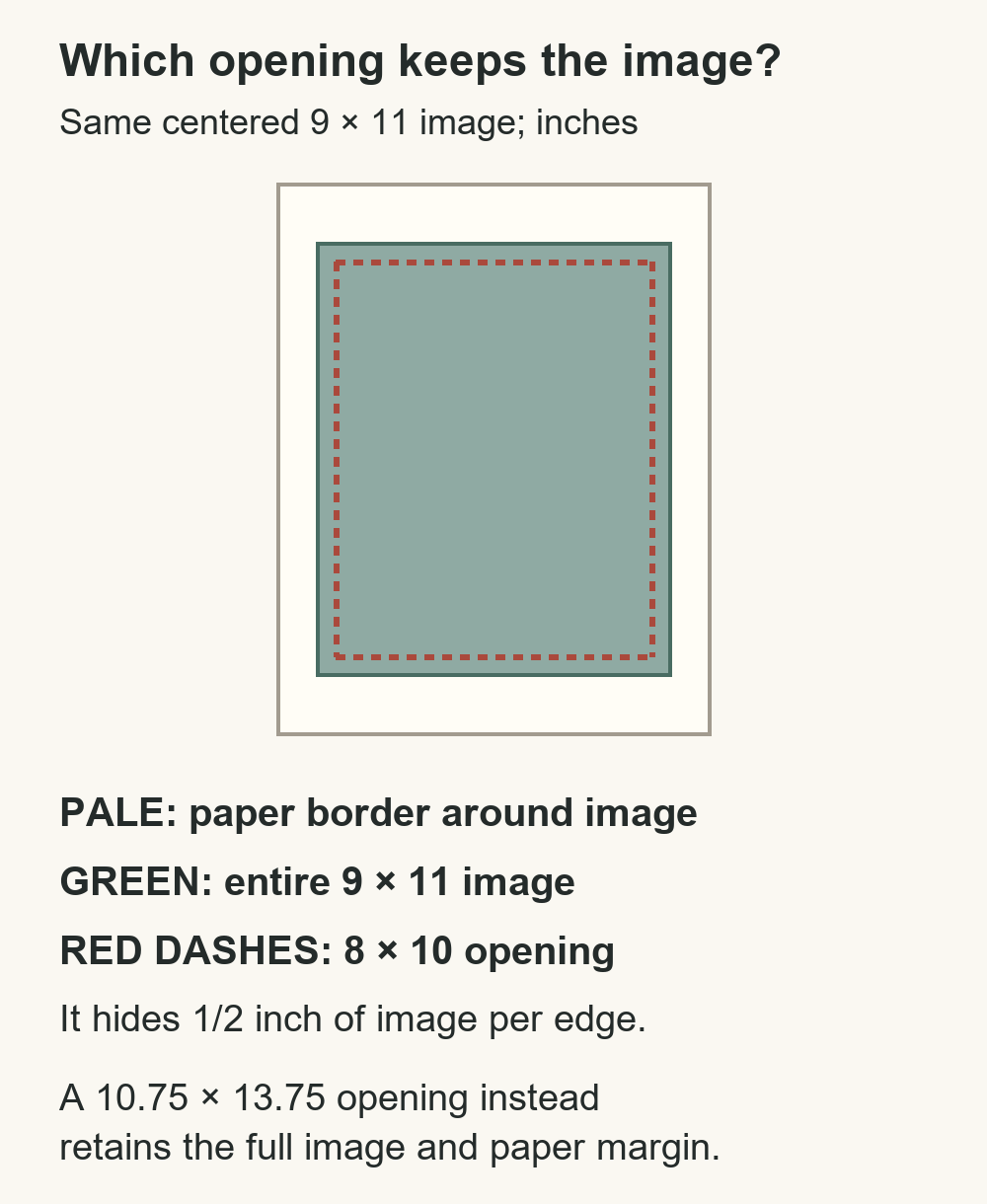
This distinction also appears in a framing discussion where a buyer learns that an 11×14 sheet contains a 9×11 image and questions an 8×10 supplied mat. The replies raise custom matting as an option. That individual case supports checking the actual image and window; it does not establish what all manufacturers supply.
Our 10.75×13.75 proposal keeps the centered image, but it still hides ⅛ inch of the paper at each edge. If a signature or inscription falls within that covered margin—or if you want to see the complete sheet edge—tell the framer. A different window or mounting approach may be needed. Do not trim the paper simply to make a convenient opening work.
Give the framer a complete request
For the worked example, this is the brief we would send for a quote:
“My paper measures 11×14 inches and the centered image is 9×11. I want the complete image visible with some original paper border. Please quote a 16×20 outside mat with a proposed 10.75×13.75 window. Confirm that the window keeps the image and any marginal marks I want visible, the frame fits the whole package with sufficient depth, and the paper remains separated from the glazing. Please give the finished outer frame dimensions and describe the mounting, mat/backing materials and fitting included before I approve the order.”
The filled measurements make this a usable request, while leaving the construction details with the person assessing the actual sheet. We would hold the order if the proposed opening crops the image, the package will not fit, or the glazing separation remains unresolved.

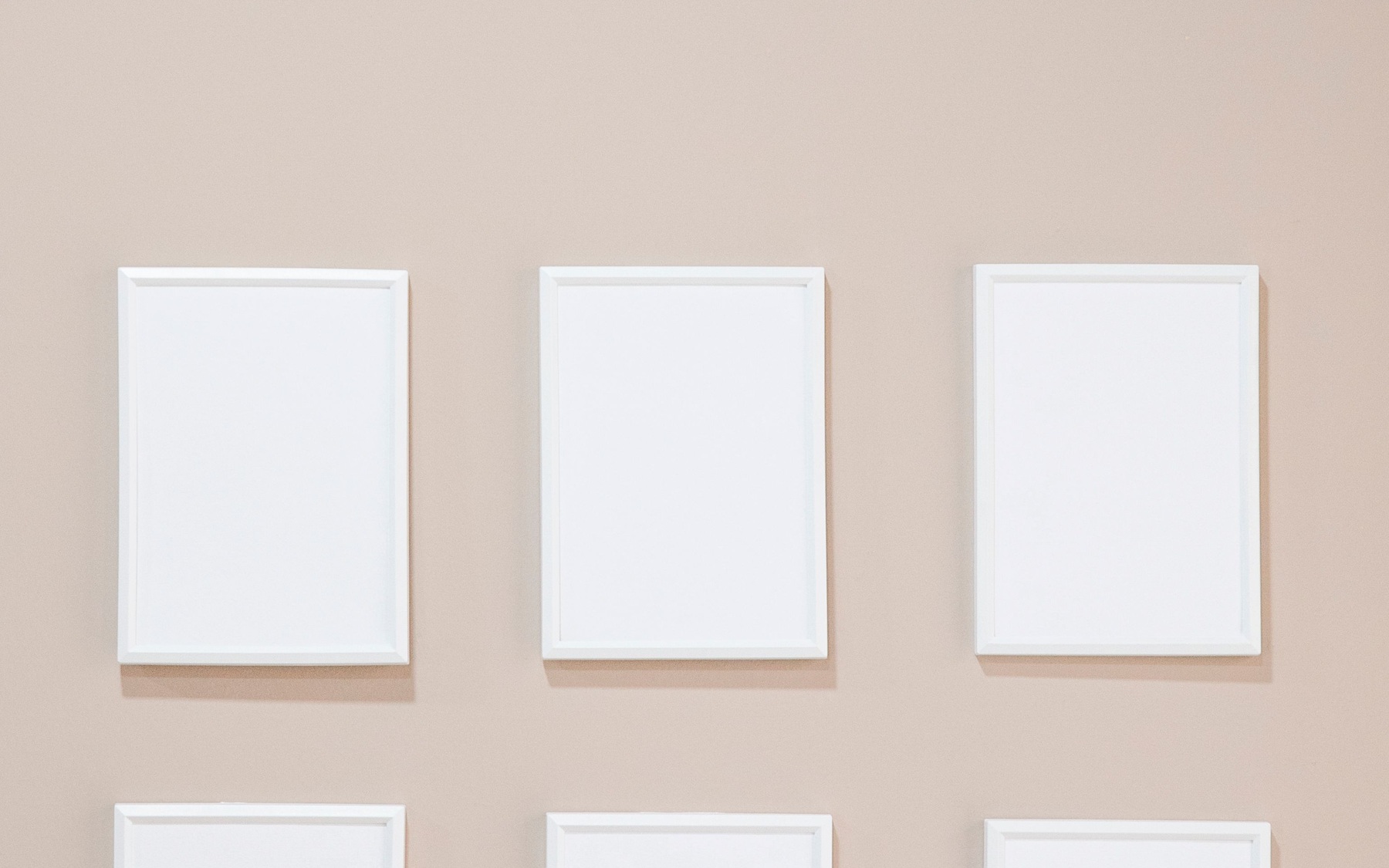
In the photograph, you can see separate boundaries for the images and the visible frames. It offers display context, not evidence of their hidden construction or dimensions. Your own finished outer measurements are what you need when checking the wall position.
The Library of Congress’s preservation guidance recommends keeping paper away from glazing, using chemically stable framing materials and providing enough frame depth for the complete package. A sufficiently thick window mat or suitable spacers can provide separation. Those requirements still matter when you choose a display without a visible mat.
If an old mat is glued to a fragile original, ask a qualified framer or paper conservator to assess it before alteration. Peeling, cutting or removing that mat can be a different task from fitting a new frame. Preservation framing limits risks; it does not make paper immune to permanent light damage.
For stretched canvas, use our separate canvas-framing guide. If you are still comparing the paper object itself, art print versus poster covers the material and format questions. Here, the outcome is a framing specification that keeps the image you have chosen.
Questions about framing an 11×14 print
Will every 11×14 frame fit an 11×14 sheet?
Do not assume an exact fit from the label alone. Confirm the inside package-fit dimensions, depth and visible edge overlap. If a supplied mat is present, check its actual opening separately.
Does a 16×20 frame always come with the right mat?
No. Check both the mat’s outside dimensions and its window. A bundled opening may differ from the image and margin you want visible. The 10.75×13.75 opening in our example is a proposed specification for the framer to confirm.
What if the print is already matted to 11×14?
Measure the outside of the existing mat and the complete package thickness. If that outside is 11×14, start with a frame that fits the 11×14 package. You do not automatically need to add a 16×20 mat around it.
Is 28×36 centimeters exactly the same as 11×14 inches?
No. At 2.54 centimeters per inch, 11×14 inches is 27.94×35.56 centimeters. The difference can matter in a close-fitting frame. Measure the actual sheet and confirm the frame’s fit rather than relying on a rounded listing.
Can I frame it without a mat?
Yes, if the actual sheet and complete package fit. Paper should remain separated from the glazing; ask the framer about suitable spacers and sufficient depth. A compact frame may cover some paper at the edges, so confirm what will remain visible.
Sources and approach
Size conventions and commercial examples were checked against Frame USA and Frame Destination. Paper-care limits come from the Library of Congress. The dimensions and diagrams form a hypothetical worked example; no frame was physically tested and no manufacturer’s bundled cut is implied.
Cover: Angela Roma, Empty White Photo Frames Hanging on Gray Wall. Pexels License. Composition crop of an external real photograph; no frame dimensions inferred.