Bar Wall Art Ideas for a Lounge: Choose the Wall Before the Image
The sofa wall is the biggest surface in the room. That does not make it the best place for art. Work through a small lounge bar and decide what the entrance, seated guests and evening light can actually support.
The short answer
Good bar wall art ideas begin with a job for the wall. A picture may give arriving guests a first visual note, reward someone seated for a long conversation, or document a local story. It may also be unnecessary. In the hypothetical lounge below, we would put artwork on the smaller entry-facing wall, not behind the sofa. If that entry wall must hold service information or fails the evening reflection test, we would leave both candidate walls clear rather than order a picture to fill a gap.
This is an editorial planning example, not a WhispArt installation or a universal bar layout. It is deliberately different from choosing an Art Deco-influenced work for a speakeasy booth. Here the style can wait: first we decide whether any artwork has a good place to be seen.
Three art ideas with different jobs
The shopping pages we inspected under this query offer plenty of cocktail illustrations, neon-look words, vintage signs and framed prints. That is a useful inventory of possible subjects. It does not tell a lounge operator which surface should carry a picture, or whether another sign would compete with the one already doing the work. We would sort specific image ideas by purpose before choosing a finish.
| Image idea | When it earns space | What to check |
|---|---|---|
| One asymmetrical abstract image: deep teal with a pale diagonal form | Its large shapes can provide a distinct first impression from the entrance without repeating the menu or logo. | Does the actual image hold its shape at door distance and in evening light, or collapse into a dark rectangle? |
| A credited night photograph of a nearby street or building | A real local connection matters to the venue and the picture can reward a closer, slower look. | Can the photographer and location be credited accurately, and are reproduction and display rights clear? |
| A commissioned line drawing of a distinctive architectural detail in the bar | The venue has a real detail worth noticing, beyond a second rendering of its name. | Would guests see the subject in the room, or would a decorative drawing tell a story the place cannot support? |
Typography and neon-look words can serve as signage, but we would not add them as a fourth art idea when the name sign and menu already do that job. A bartender asking about a bar's blank walls received suggestions ranging from local art and a mural to signs and different lighting. One operator's question has many possible answers; it does not establish a winning style. Our view is that a wall should not be asked to carry a logo, a menu, a photo opportunity and a contemplative picture all at once simply because it is empty.
Work the room: entrance wall, sofa wall, or neither?
Imagine a compact lounge. Guests enter opposite a short wall. A sofa runs along the left wall, so people sitting there face the bar rather than the surface immediately behind them. The service counter occupies the right side, and two bright pendants can reflect in a glazed picture on the sofa wall. A name sign and menu already have assigned places. The diagram holds this same room constant while we compare the two candidate art walls.
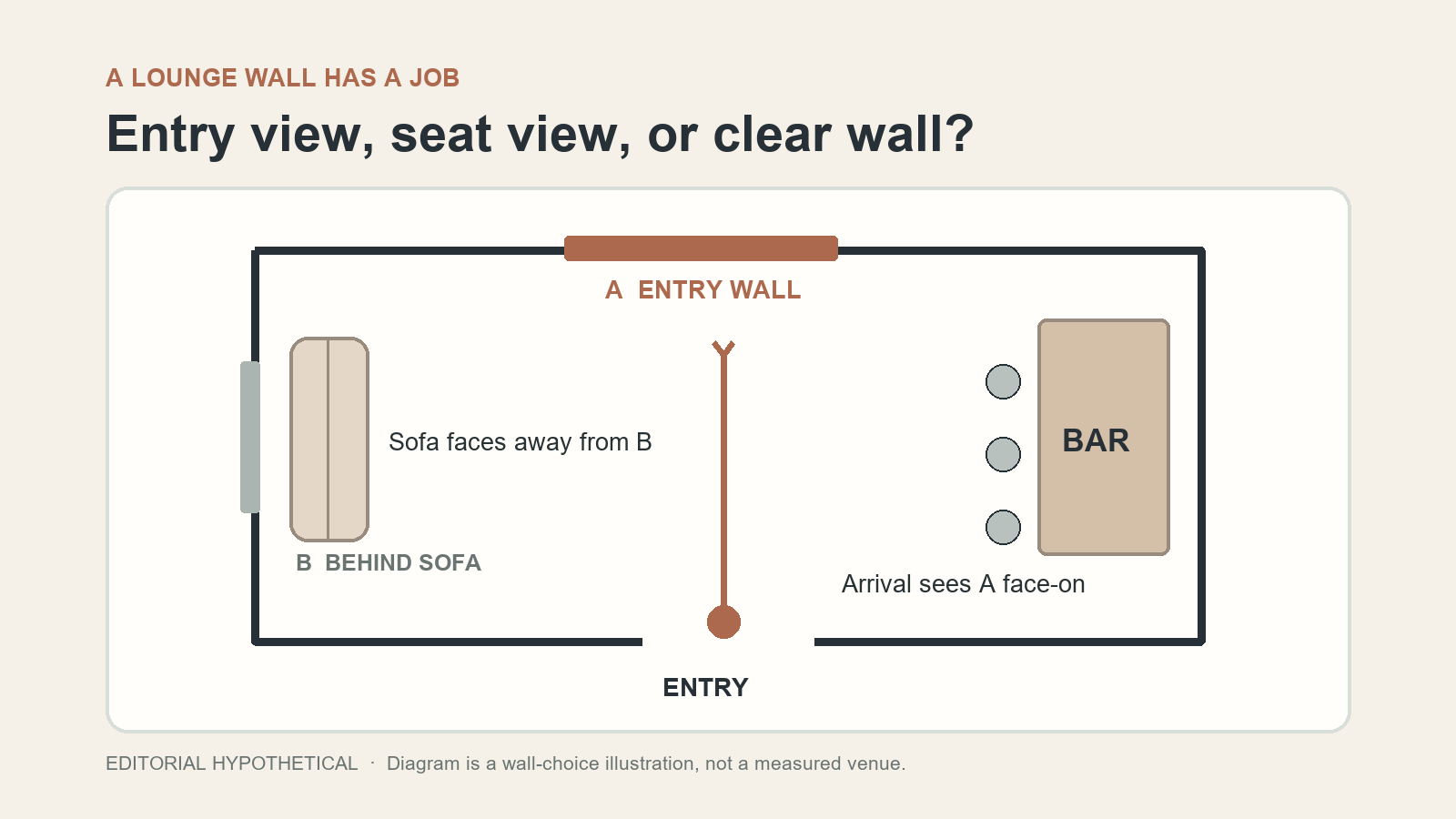
A, the entry-facing wall: It has less area, but guests can see it face-on as they arrive. In this version of the room, it does not interrupt the menu or queue. Of the three ideas above, we would provisionally choose the asymmetrical abstract image here: its pale diagonal against deep teal could register from the door without competing with the bar's existing words. The invented image in the viewing diagram below illustrates that kind of large-form contrast; it is not a product or an installed work. We would still test the actual candidate at framed size and under the room's lights. If its teal area turns into a dark block, the local photograph becomes a candidate only if its rights and story are verified; the commissioned drawing needs a real architectural subject.
B, the wall behind the sofa: It has more space, but seated guests are facing away from it. People across the room might see it, yet the pendant reflection could sit across the image from their angle. In this worked choice, its square footage does not make up for the weak view. Leave it calm.
Neither: Suppose A is needed for a menu board, its image would be blocked by a waiting line, or its glazing reflects an unavoidable fixture. Then neither proposed wall currently has a sound art job. A bare wall is a better result than a picture guests cannot see or service staff must work around. Revisit the art plan if the room layout changes. This no-art branch is a real choice, not a prompt to buy a smaller filler print.
Test the actual view after dark
Before ordering, cut a paper or cardboard template to the outer frame dimensions and place it at A. Walk in as a guest, pause where a queue forms, and sit at the likely viewing seats. Do those checks during the venue's normal evening light, with its actual menu and name sign in place. If a glazed frame is being considered, temporarily hold a safe clear sample at the intended position and inspect reflected lamps from those eye positions. Do not infer a reflection from a straight-on daylight mockup.
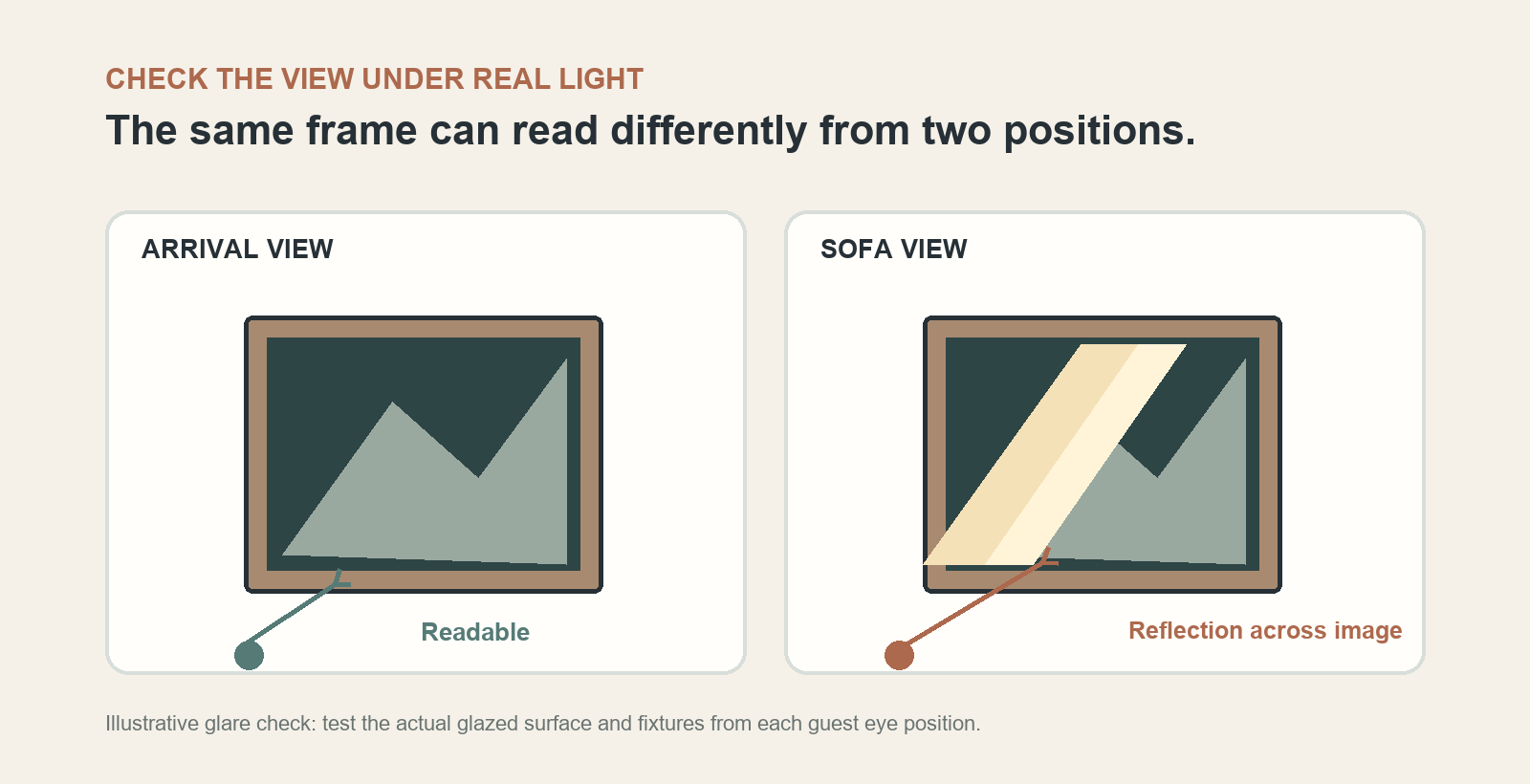
The Getty Conservation Institute's museum-lighting guide distinguishes direct glare from reflected glare and recommends testing reflections from expected visitor positions. A museum's conservation targets do not become bar-lighting rules, but that viewing test transfers well. The Illuminating Engineering Society likewise emphasizes checking off-angle views in hospitality display lighting.
Finish with the practical checks: can people and staff pass without touching the frame; is the fixing appropriate for that wall and the complete weight; are exits, accessibility, signs and cleaning routes clear; and does the operator have permission to make the installation? Have the responsible site professionals settle those questions. An attractive picture cannot answer them.
Our editorial rule for this room
We would rather give a modest entrance wall one clear visual purpose than spread “bar mood” across every surface. The point is not minimalism as a style. It is that the image gets a real viewer and the operational signs retain their own legibility. If the test says the entrance wall is occupied, the honest answer is to leave the artwork out of this round of work. That decision may change when the bar changes its light or layout; the drawing does not stand in for a visit.
FAQ
What should go on a lounge bar's blank wall?
First decide whether the wall must give information, carry an image or remain visually quiet. If it is visible from a natural guest position without competing with service signs, an artwork or credited local photograph can be considered. Blank space alone is not a reason to fill it.
Is the wall behind the sofa always best for bar art?
No. In the example here it is behind seated guests and may catch reflections from the bar. A smaller entry-facing wall is more useful under those conditions. Another floor plan could lead to the opposite choice.
Do all bars need cocktail or neon-style pictures?
No. Those are available subject categories, not a requirement. An image, a credited local story or no extra picture may serve a particular venue better. Keep practical signage easy to recognize.
How do I check glare before buying a framed work?
Use the intended lights at the time the room operates, hold a safe reflective sample at the proposed position, and inspect it from the approach and the actual seats. Change position or framing only after seeing where reflections fall; ask a qualified lighting or framing specialist for a difficult installation.
Sources and image note
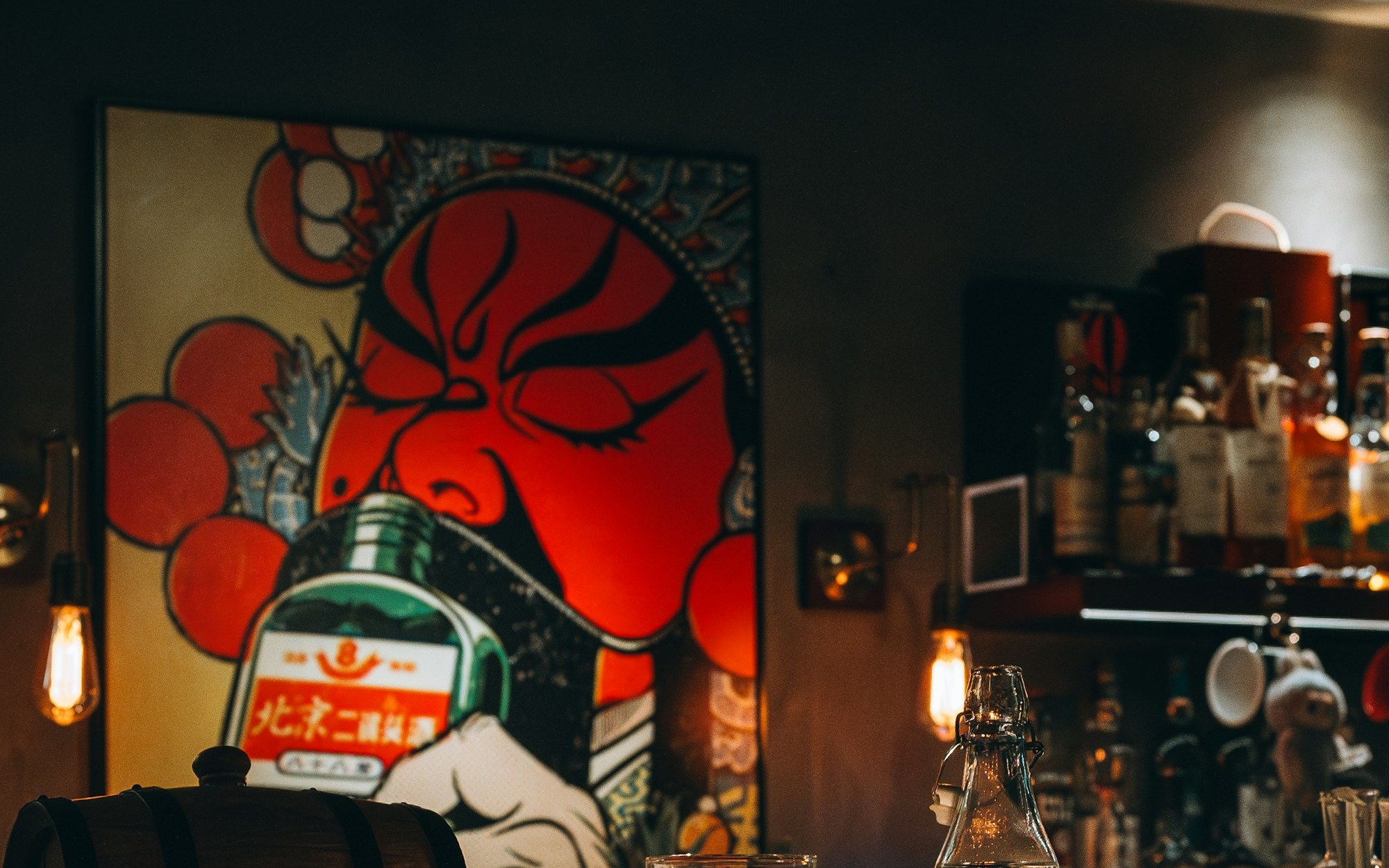
Search comparison: the observed first-page Google results for “bar wall art ideas” were primarily product collections, including Fine Art Canvas and iCanvas. Lighting principles: Getty Conservation Institute and Illuminating Engineering Society. Community questions: r/bartenders and r/BarOwners; individual posts are not a survey. The cover is a real bar photograph by Eric Nixon / Pexels; the in-article bar photograph is credited in its caption. These are independent editorial photographs, not the invented room or a WhispArt installation. Both diagrams are original WhispArt illustrations of the hypothetical layout and viewing test. No WhispArt product is shown.