Biophilic Art: Nature Images, Preserved Pieces or Living Walls?
See how a botanical image differs from a patterned design, then choose a physical format that fits the care your space can provide.
What is biophilic art?
Biophilic art explores our connection with nature through subjects, forms, materials or experiences. For an indoor wall, that might mean a landscape image, a design built from leaf shapes, a preserved botanical composition or a living installation. The visible nature reference and the physical object are two separate things to choose.
If a retreat wants a nature-related image but has no provision for plant care, a botanical or landscape reproduction is a practical starting point. A preserved piece needs its own material guidance; a living wall introduces a plant system. Choosing between them is more useful than treating every green wall as the same kind of artwork.
The term extends beyond interiors. Biophilic Cities’ art gallery includes moving images, performance and work made through a forest’s interaction with canvases. The three physical options below are a way to choose for a room, rather than a complete classification of the field.
Two ways nature can appear in an image
Start with what you can recognize. Anna Atkins’s Spiraea aruncus (Tyrol) shows pale leaves, stems and fine flower sprays against blue. Follow the serrated edges of the larger leaves, then the much smaller branching forms on the left.
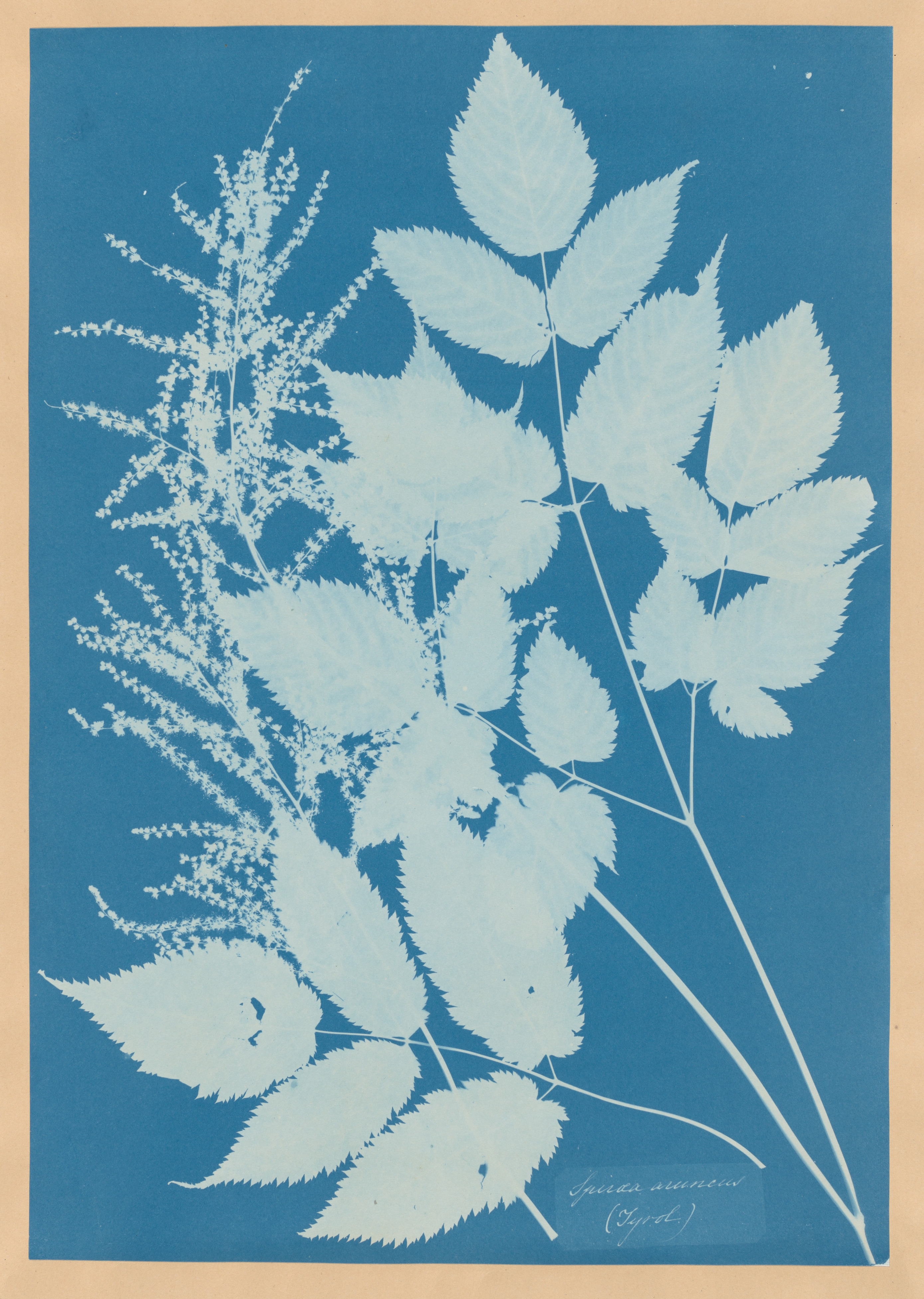
The plant remains identifiable even though the image does not reproduce green foliage. A blue botanical print can therefore make a direct nature reference. Color matching alone would miss what the subject is doing.
Now look at William Morris’s Willow Bough. The leaves are still recognizable, but their arrangement changes the experience: curved forms recur across the sheet, and brown stems cross between them.
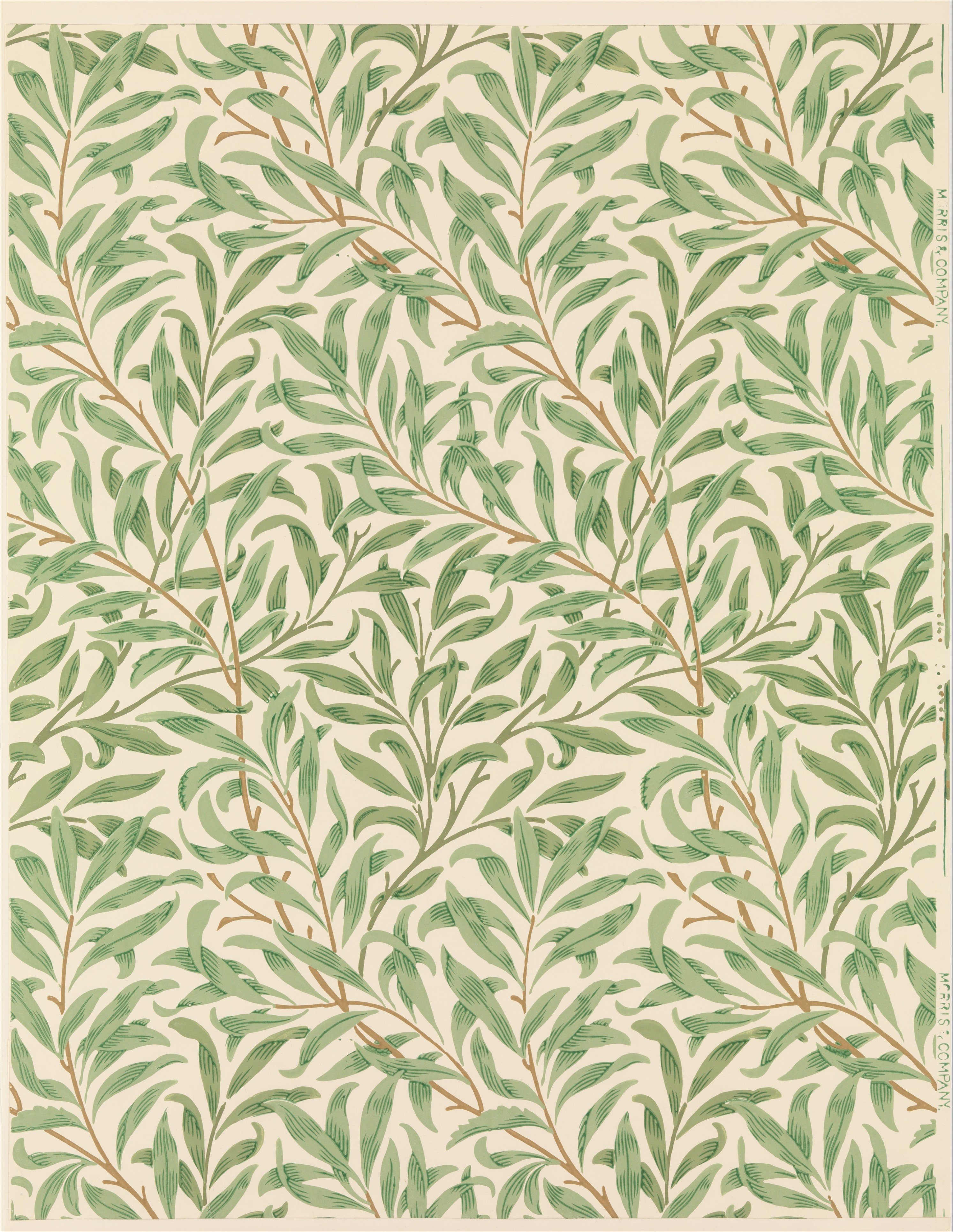
Here, nature supplies a repeating decorative design rather than an isolated specimen or a view into a landscape. This is stylized foliage, not a nonobjective abstract painting. For a picture with a more indirect nature reference, you might instead look for branching lines or flowing shapes whose maker describes a natural starting point.
These historical objects help us see two visual approaches. Showing them here does not place their makers in a modern “biophilic art movement,” and neither image establishes how a guest will feel. Choose the kind of looking you want to invite: noticing a particular plant, following a pattern, or exploring a view.
Choose the object as well as the image
| Option | What brings nature into the work? | What to resolve |
|---|---|---|
| Painting, photograph or print | A depicted place, plant or nature-derived form | Medium, display conditions and the actual frame or surface care |
| Preserved botanical composition | Physical plant material treated for display | The maker’s material identity, indoor conditions and care instructions |
| Living wall or planted artwork | Plants that remain alive and change | Site suitability and responsibility for a functioning plant system |
A print of moss and a piece made with preserved moss may share a subject while being very different objects. A photograph cannot tell you whether an unfamiliar green installation is alive. Read the material description before deciding how it should be used.
Manufacturer Garden on the Wall explains that its preserved moss is real natural material that is no longer living. It says not to water or mist it, and specifies suitable dry indoor conditions and gentle care. That is guidance for its preserved systems, not a cleaning recipe for every botanical artwork.
Living walls require a different discussion about light, water and ongoing plant care. Preserved material also should not be assumed to last forever or suit any room simply because it needs no watering. Ask the actual supplier what conditions and maintenance apply to the complete piece.
A completed choice for a retreat pause area
Imagine a small retreat choosing one work for a dry indoor pause area. The team wants clearly visible plant forms, does not want to add a horticultural service, and is choosing a picture rather than redesigning the room. These are hypothetical editorial inputs, not a client case.
| Candidate | Decision | Reason for this brief |
|---|---|---|
| A reproduction of Atkins’s botanical cyanotype | Choose the image format | Distinct plant forms answer the visual request without adding living plants |
| A textured preserved-moss composition | Keep as a conditional alternative | Physical texture could be desirable, but the exact maker’s care and location requirements are not yet known |
| A living planted wall | Do not select for this brief | The team has not provided for the plant system it would introduce |
Choose the botanical reproduction for this brief. Keep the complete plant image, identify the maker and work, and obtain the reproduction’s actual material and display guidance before ordering. The choice is about a new reproduction; it does not propose placing the museum’s original cyanotype in a retreat.
A finished selection note could read: “Botanical image with clearly visible leaves and flower sprays; no living plant installation. Retain the complete composition and source credit. Confirm the reproduction medium, finished size and suitable display conditions with the supplier.”
The tradeoff is straightforward: the picture has no physical foliage and will not grow or change. If the team instead wants tactile plant material and can meet a specified preserved piece’s conditions, that alternative may better serve the brief. If living growth is essential and a suitable site and maintenance service are provided, reopen the living-wall option.
For the separate question of what art should do across reception, corridors and lounges, see our hospitality design concepts guide. Here, the finished decision concerns one artwork’s format.
The useful question behind “maintenance-free”
Real discussions show how easily the categories become confused. In one workplace project question, the poster had been told to mist a proposed preserved wall. A longer moss-art discussion mixed concerns about dust with assumptions that the material was growing. These are examples of uncertainty, not technical instructions or a survey of retreat operators.
Translate the concern into a specific supplier question: “What exactly is this material, and what care does this finished piece require in this location?” Keep the written answer with the selection. Do not infer air-cleaning, acoustic or therapeutic performance from the word “biophilic” or from a photograph of greenery.
FAQ
Does biophilic art have to be green?
No. Atkins’s blue botanical cyanotype makes its nature reference through recognizable plant forms. A landscape, leaf pattern or nature-derived abstract work can use a different palette.
Can abstract art have a biophilic connection?
Yes, when natural forms or processes are part of its subject or stated approach. Look at the work and the maker’s explanation. A flowing shape alone does not prove a particular influence; Morris’s example above remains recognizable patterned foliage.
Is preserved moss the same as living moss?
No. Preserved material and living plants are different physical options. Confirm the supplier’s description and follow the guidance for that exact piece rather than applying a generic watering routine.
Which option suits a space without plant-care provision?
For the hypothetical retreat here, choose a botanical reproduction. It meets the image brief without adding a living system. A preserved piece remains an alternative only after its own conditions are checked.
Will biophilic art guarantee relaxation?
The label does not guarantee an individual response. This guide demonstrates an art-format choice, not a measured health effect. Consider the actual image and the intended use of the space without promising a therapeutic outcome.
Sources and image notes
The linked Biophilic Cities page supplies a broader view of the art field; the Met records identify the two historical examples. Material guidance is attributed to its manufacturer. The selection exercise is WhispArt’s editorial synthesis.
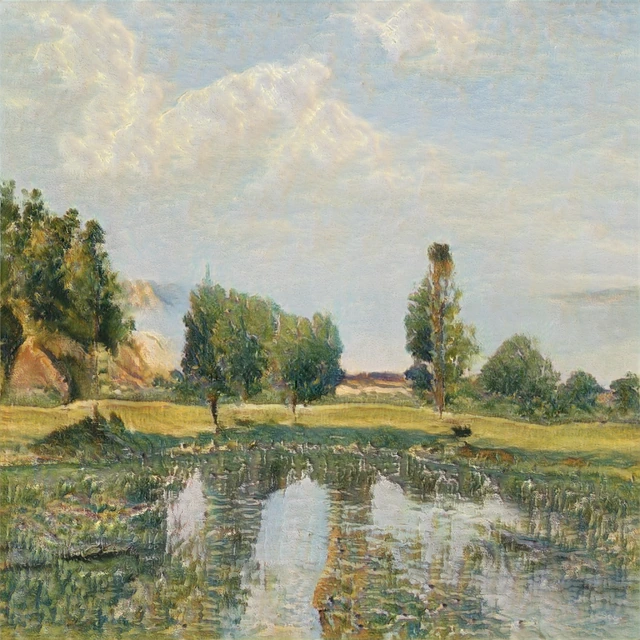
Cover: Henri-Joseph Harpignies, The Rocky Path in the Morvan, 1869. The Metropolitan Museum of Art, Robert Lehman Collection, 1975, 1975.1.182. Object record. All three museum images are public domain under the Met’s Open Access policy; they are real works, not generated substitutes.