Eco-Friendly Artwork: What an Eco Lodge Can Actually Verify
A nature image, a reused frame and a certified paper claim are three different things. Here is a practical way to choose art without turning one good attribute into a promise about the whole piece.
What does “eco-friendly artwork” mean?
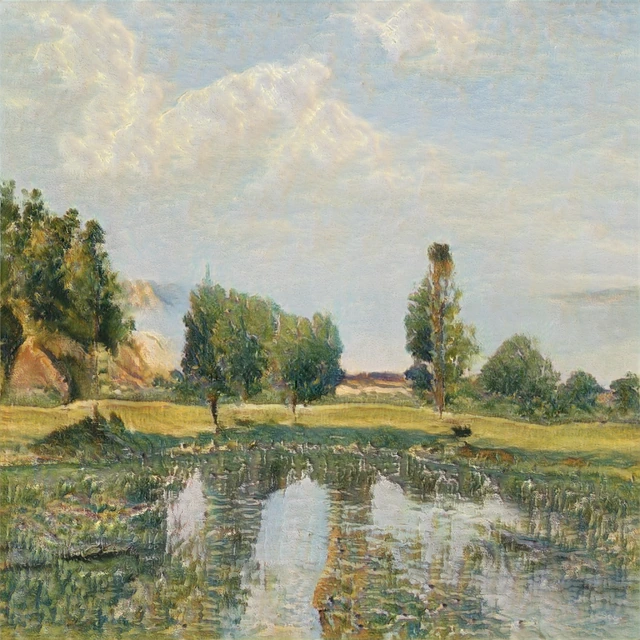
It can mean art about the environment, art made with particular materials or processes, or a physical artwork sold with an environmental claim. Those meanings overlap, but one does not prove another. A woodland photograph has a nature subject; its paper, ink, frame, glazing and delivery still need separate descriptions. Conversely, a reused frame can hold an image with no ecological theme.
For an eco lodge, the useful first move is to ask what the supplier is claiming about this finished piece. The US Federal Trade Commission’s Green Guides summary cautions marketers against broad, unqualified claims such as “eco-friendly.” A narrower statement about an identified component is easier to check and easier to pass on accurately to guests. This article is an editorial selection exercise, not a product certification or a measured life-cycle assessment.
Art made from reclaimed objects, recycled-paper prints and paintings created with particular materials are all worth exploring. The Cincinnati Art Museum, for example, discusses practical material swaps and reuse in artmaking. But an inspiring process story and a procurement record answer different questions. The lodge needs to know what applies to the work it will actually display.
Trace the claim to the part of the artwork
Make a one-page record for each candidate. Put the supplier’s exact words in one column, the relevant component in another, and the document that supports them in a third. Leave anything else as unknown rather than filling the gap with a green adjective.
| What you hear | What to check | What it does not establish |
|---|---|---|
| “Printed on FSC Mix paper” | The paper specification and applicable FSC label or supplier documentation for this order | That the whole artwork is recycled or that its frame and delivery have the same status |
| “Reclaimed frame” | Which frame is reused, its condition, and any new backing, glazing or finish | A quantified carbon saving for the completed work |
| “Printed locally” | Where printing and finishing occur, and where materials and finished pieces travel | Automatically lower transport impact than another option |
| “Recyclable packaging” | Which packing pieces the claim covers and what facilities accept them locally | That the art itself is recyclable or the purchase is waste-free |
The Forest Stewardship Council distinguishes FSC 100%, FSC Recycled and FSC Mix labels. “Mix” is not shorthand for “100% recycled.” Ask for the label and its scope rather than rewriting it. If a vendor mentions low-VOC ink, recycled content or a take-back service, ask for the exact product or policy document; do not combine separate facts into an unsupported whole-product rating.
The same discipline applies to print-on-demand. Printing to order may avoid some unsold stock, but it does not make printing, packing or shipping impact-free. In public artist discussion about sustainable printing, people ask what paper and ink a service actually uses and how to recognize credible evidence. A different shop discussion asks for clearer material and end-of-life information. These conversations reveal questions to answer, not verified environmental rankings.
One wall, three possible choices
Imagine a hypothetical eco lodge with one common-room wall. Its current framed landscape is sound, suits the room and can remain on display. A supplier also offers a new botanical print on paper described as FSC Mix, and a local artist could make a work for a salvaged frame. There are no product-level footprint figures for any route. The immediate decision is what the lodge can justify now, not which object wins an invented environmental score.
| Candidate | What is known | Decision for this room |
|---|---|---|
| Keep the existing framed landscape | The lodge already has the finished work; continued display avoids a new art purchase | Choose now if condition and visual fit remain sound. Record that the work was retained. |
| Order the new botanical print | A paper claim can be requested and checked; frame, backing, packaging and transport are still unspecified | Hold the broad “eco-friendly art” claim. Request component evidence before choosing it. |
| Commission the work in a salvaged frame | The frame could be reused; the actual art material, new frame components and delivery are not yet documented | Keep as a live alternative if its image is preferred and the missing details are resolved. |
Keep the suitable existing piece for this brief. This is a modest, verifiable action: the lodge continues using an artwork it owns. The EPA’s materials-management hierarchy places reducing and reusing materials before recycling as a general priority. That does not mean we can calculate that this particular picture has the lowest lifetime impact; we have no comparable assessment.
The choice has a real tradeoff. A retained landscape may not express the new botanical direction the team wanted. If it is damaged, too small or visually wrong, reopen the new-print and salvaged-frame options. Judge their artwork fit first, then request material and claim evidence at the same level of detail. A recycled-content paper may be a good reason to consider a print, but it cannot do the work of describing the entire framed object.
Say only what the lodge can support
A guest-facing note could say, “We kept an existing framed landscape in our common room rather than replacing it during this refresh.” That describes the choice. If a future work uses a documented paper, the note could identify that paper and its label, while leaving the rest of the artwork uncharacterized. Avoid “our art is carbon neutral,” “zero-impact” or “fully sustainable” unless the precise claim has appropriate substantiation for the complete product.
Keep the selection sheet with the invoice, supplier specification and any care instructions. This also makes later repair or replacement easier: the lodge can see which part needs changing instead of discarding an entire work because its history has been lost. Discussions about secondhand frames and leftover prints show why reuse is attractive, but they do not verify any one supplier’s claim. For the separate task of choosing a nature image versus a preserved or living piece, see our biophilic art guide.
FAQ
Is artwork with a nature subject automatically eco-friendly?
No. The image and the finished object are different. A leaf print tells you what is pictured; the support, frame, production and delivery need their own evidence.
Does FSC Mix mean the entire artwork is recycled?
No. FSC Mix is a specific label for eligible forest-based material; it is not the same as FSC Recycled and does not describe an artwork’s unrelated parts. Ask for the applicable label and the exact paper or wood component it covers.
Is a local artist always the lower-impact choice?
Not automatically. “Local” describes a relationship or production location, not a measured comparison of materials, transport and use. It may be a meaningful sourcing preference; keep the environmental wording precise.
Is print-on-demand waste-free?
No. Producing an item after an order may reduce unsold stock in some arrangements, but paper, ink, finishing, packing and delivery remain. Ask what the printer actually does and documents.
What should a lodge ask a supplier for first?
Request the exact environmental claim, the specific component it describes and the document that supports it. Then ask what the frame, backing, packaging and delivery involve, while marking unknowns explicitly.
Sources and image note
FTC, EPA and FSC links above provide the claim and material guidance. The Cincinnati Art Museum is an artmaking example. Reddit links illustrate public questions; they are not technical proof or a survey of lodge operators. The three-option lodge exercise is hypothetical WhispArt editorial analysis.
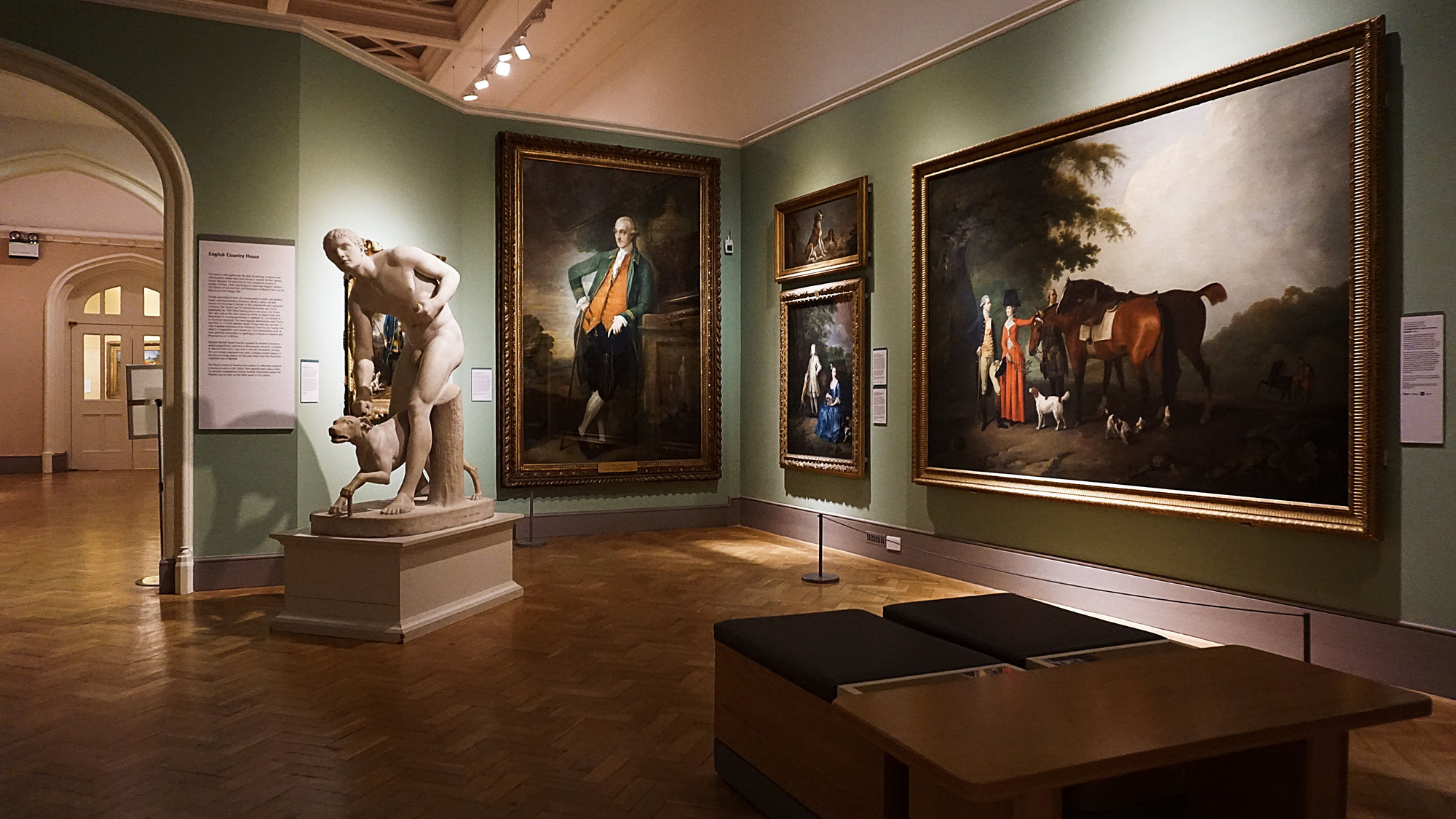
Cover: Pavel Danilyuk / Pexels, a real photograph used under the Pexels License. It shows an existing room and wildlife prints; it is atmospheric and does not establish any environmental attribute of the photographed art.