How to Ship Framed Artwork with Glass: Choose the Packing Route First
The glass, the artwork beneath it and the complete frame need different kinds of protection. Start with that assembly before choosing a box or a shipping label.
The short answer
To ship framed artwork with glass, identify the artwork’s medium, glazing, condition and finished outside dimensions first. Ask a qualified framer or art packer whether to transport the intact assembly or remove and replace the glazing at the destination. If the glass stays, use an object-specific protective package with suitable cushioning and a rigid container; confirm that the selected service accepts the actual work and packing.
For an irreplaceable original, powdery medium, unstable frame or unidentified glazing, pause the do-it-yourself route. A taped X and a “fragile” label do not establish that the artwork is ready to travel.
Describe the whole framed object
“An 11 × 14 print” is not enough information for a packing quote. That might be the image size inside a much larger frame. Record the finished frame’s outside width, height and depth, its weight, and any hardware projecting from the back. Photograph the front, corners and back without dismantling it.
Then identify what is beneath the glazing: a replaceable printed photograph, watercolor, pastel, collage or something else. Note cracks, loose joints, lifting decoration, mold or movement inside the frame. If you cannot identify the medium or condition, say so rather than guessing.
The Canadian Conservation Institute’s travel guidance makes condition documentation and a sound framing system part of preparation. Our reason for asking these questions is practical: the same carton dimensions do not make two different artworks equally suitable for shipment.
Does the glass need to make the trip?
We would settle this question with the person preparing the work, before paying for a parcel service. Removing glass is a framing operation, not merely another packing step. Do not open a valuable or vulnerable work just to make the package lighter.
On a narrow screen, scroll sideways to read all columns.
| Possible route | When to investigate it | What must be resolved |
|---|---|---|
| Keep the glazed assembly intact | The frame and artwork should remain together, and a suitable packer can assess and protect them. | Condition, glazing type, surface compatibility, support, cushioning and the actual transport service. |
| Have a framer remove the glass and arrange re-glazing | A competent framer considers this appropriate and the destination can receive and reframe the work. | Safe preparation of the exposed artwork, its own protective package, and who will reassemble it. Removing glass does not make unprotected art shippable. |
| Consider a different glazing material | You are already having the work professionally reframed for travel. | The medium and complete frame design. Ordinary acrylic’s static can be unsuitable for pastel or charcoal; ask about an appropriate specialist solution. |
These are alternatives to assess, not a ranking from safest to cheapest. If you mainly need to understand an existing canvas and its frame, our canvas-framing guide addresses that separate assembly question.
What a documented protective package looks like
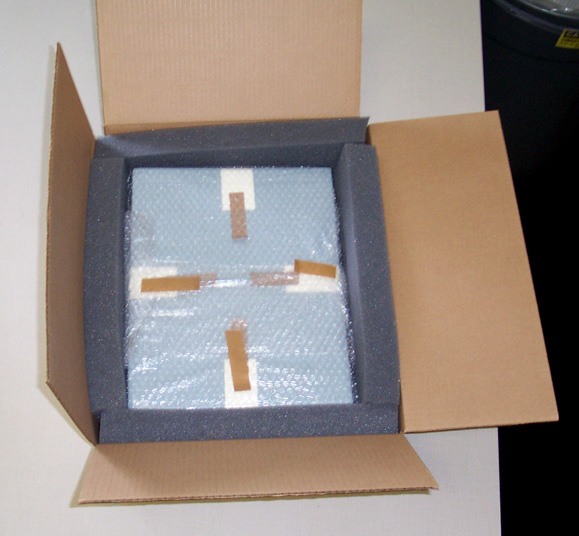
The three real photographs below come from the National Park Service’s Conserve O Gram 17/6, published in August 2009. They show separate jobs within one packing system, rather than a frame dropped into a large empty box.
Keep the source’s limits with the pictures: this method is for sound, glazed framed objects with no edge longer than 16 inches, transported by art carriers or expedited services. The document excludes charcoal, pastel and soft-pencil drawings, unglazed objects and damaged or unstable assemblies. It directs readers to a conservator when the medium or safe shipment is uncertain. These photographs are not instructions for scaling the method up to a large painting.
First, protect and support the assembly
Look at the side of this package: the wrapped frame sits between cushioning layers, with corrugated boards outside them. In the source procedure, the wrapped assembly is secured against shifting before bubble wrap is added outside it.
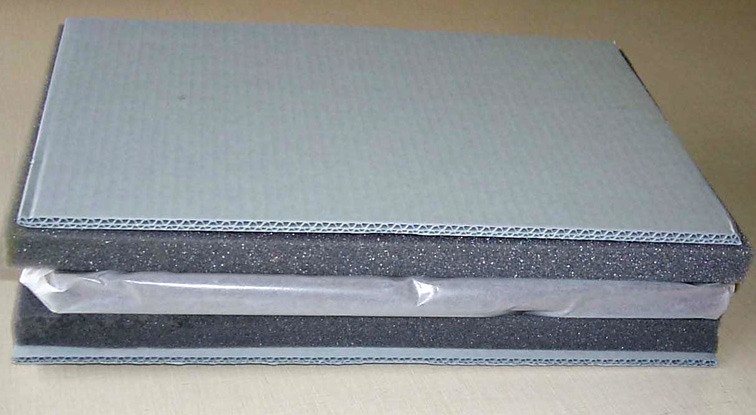
The useful distinction is between the material touching the object and the protection outside it. Bubble wrap around an unidentified painted surface is not the same assembly shown here. Have the preparer specify suitable contact materials for the actual work.
Then cushion the protected package inside the first box
Now find the dark foam surrounding the wrapped package. The NPS procedure specifies two inches of urethane foam at the inner box’s bottom and sides, filling remaining voids, then adding top foam before closing. The photograph shows the sides; it cannot prove the hidden bottom or the top layer.
Finally, give the inner box a second cushioning zone
In the next photograph, the inner box is closed. It sits within a second box, again separated by foam; the source calls for two-inch foam lining and filled voids at this stage too. This is what double boxing means in this particular example.
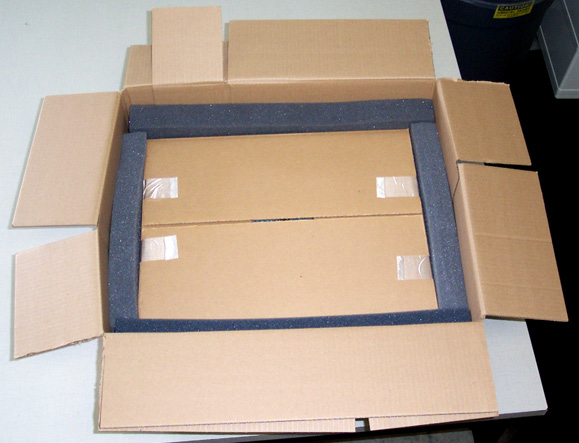
We would use these pictures to ask a packer about support, compatible contact layers and cushioning in each direction. We would not treat the photographed foam thickness as a universal specification for every weight, frame or shipping route. Consult the complete source and the actual preparer; these selected stages are an explanation of the system, not its full construction instructions.
Check the glazing before applying tape
A public museum-worker discussion asks whether an X of painter’s tape prevents breakage. The useful question is narrower: what treatment is compatible with this glazing, and what would happen to broken pieces?
The CCI describes compatible protective film as a way to retain most shards if glass breaks. It cautions against ordinary tape on coated or non-reflective glass and directs readers to the manufacturer or supplier. Product instructions also differ: Tru Vue says its UltraVue Laminated Glass needs no film or glass skin for shipping. Identify the product and follow the appropriate guidance; do not generalize from one pane to another.
A completed decision for an 18 × 24-inch frame
Suppose a customer brings a framing shop an irreplaceable watercolor for a domestic US move. The complete frame measures 18 × 24 inches outside, looks sound, and has glass whose coating is unknown. This is a hypothetical case, not a shipment we have handled.
We would reject copying the small-frame NPS method: the outside dimensions exceed its 16-inch limit, and the glazing has not been identified. We would request an assessment and an object-specific packing quote, with intact transport and professional removal/re-glazing considered as alternatives.
“Please assess this framed watercolor before preparing it for shipment. Its outside dimensions are 18 × 24 inches; the glazing type is unknown. I can supply front, back and corner photographs, its measured depth and weight, and the origin and destination ZIP codes. Please confirm whether it can travel intact or needs a different glazing plan, who will prepare it, the proposed packing and service, and the complete packing, shipping and any reassembly costs. Please also explain the applicable loss/damage terms and exclusions before I book.”
The result is a defined handoff, not permission to send it immediately. If assessment reveals a loose frame or vulnerable surface, resolve that with an appropriate specialist first. A small, replaceable, stable glazed print may lead to a simpler packing plan; changing those facts changes the decision.
For US options, The UPS Store describes artwork packing and custom boxes or crates, with services and prices varying by location. FedEx Office also describes artwork packing services. Ask the actual location whether it can handle this object; neither service page is a conservation assessment or a promise that every artwork is covered.
Arrange the receiving end before dispatch
Confirm who will receive, unpack and, if needed, re-glaze the work. Send identification and unpacking information separately as well as with the shipment. Keep the pre-shipment photographs, quote and packing record.
If the parcel arrives damaged, avoid handling broken glass or pulling fragments from the artwork. Contact the sender promptly and retain the packaging. The UPS Store’s damage FAQ specifically asks recipients to contact the sender and save all packing material; reporting a problem does not guarantee that a claim will be approved.
FAQ
Can I ship framed art with the glass still in it?
Sometimes, after the actual artwork, glazing and frame have been assessed and an appropriate packing and transport plan is confirmed. Size, condition, medium and replaceability matter. Glass remaining in the frame is not, by itself, evidence that an ordinary parcel method is appropriate.
Should I replace the glass with acrylic before shipping?
Discuss it with a qualified framer. Acrylic avoids ordinary glass breakage, but its static and the complete frame design matter; powdery media such as pastel or charcoal need particular care. Do not substitute a sheet without assessing the work.
Is taping an X across the glass enough?
No. It does not establish adequate support, cushioning or containment. Any film or tape treatment must suit the identified glazing and its manufacturer’s guidance; ordinary tape can be inappropriate for coated glass.
Can I use the NPS packing example for a 24 × 36-inch frame?
No. The cited method is limited to sound glazed framed objects with no edge longer than 16 inches and has additional medium and transport restrictions. Get a packing design for the actual larger work instead of multiplying the example’s dimensions.
Does professional packing guarantee an undamaged arrival?
No packing choice removes every transit risk. Confirm the provider’s actual services, acceptance, applicable protection and exclusions in writing, and keep condition and packing records.