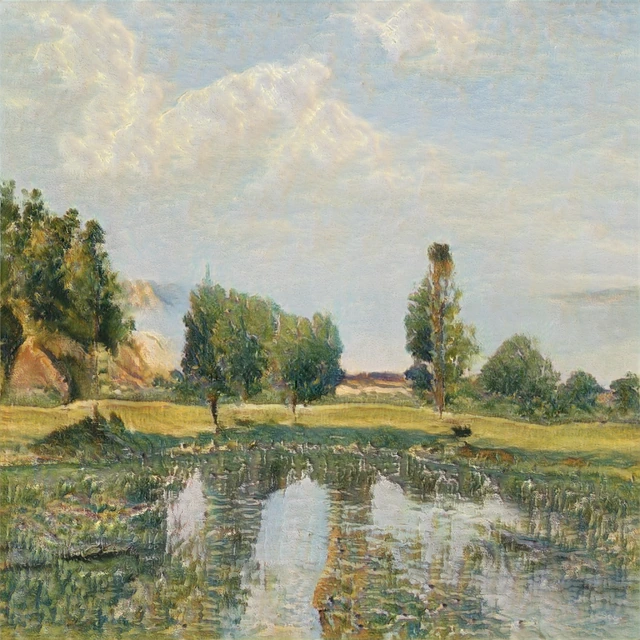
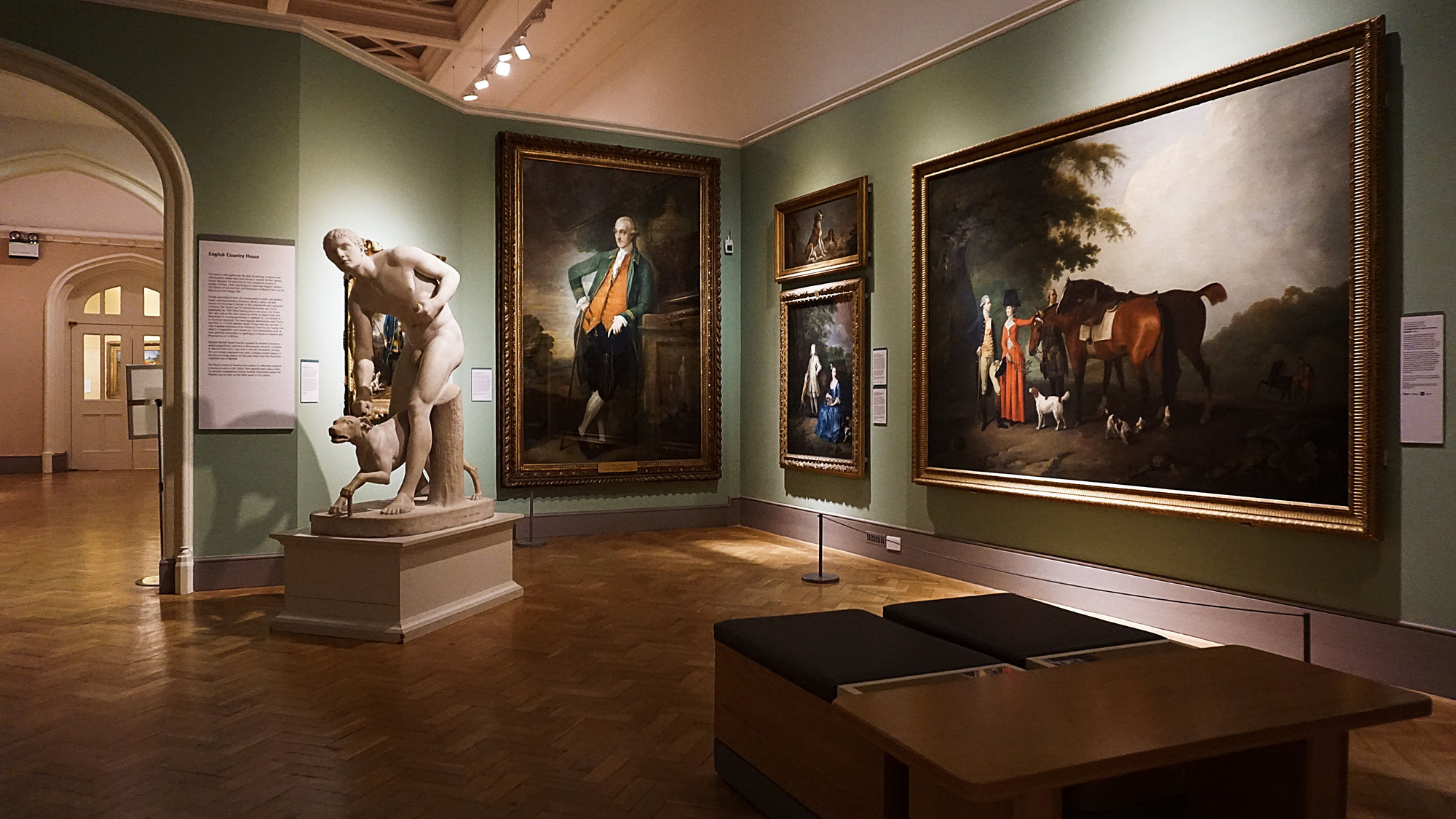
Modern vs Traditional Art: Why Age and Realism Don’t Settle It
An 1874 dancer can belong to the history of modern art and borrow the structure of a traditional portrait. Start with the meaning of the label, then look at the work.
The difference between modern and traditional art depends on the context. In art history, modern refers to a broad history of experimentation and changing artistic conventions. Traditional may refer to inherited cultural practices or established conventions. In a room brief, modern often describes a desired look. Neither a work’s age nor its realism settles all of those meanings.
That distinction changes what to ask for. “A historically modern painting” needs an artist, date and documented context. “An image that feels modern in our lounge” needs a description of the visual qualities you want. A newly made work can follow a living tradition; an old painting can belong to modern art.
We would clarify which question is being asked before choosing examples. Otherwise, a request for a fresh-looking image can accidentally become a request for a historical period—or for abstraction that the reader never wanted.
Modern art has a history; “modern-looking” has a speaker
MoMA’s modern-art glossary uses the 1880s through the 1970s as its broad span and emphasizes artists questioning established practices. Other histories begin earlier. The National Gallery of Art’s Paris 1874 exhibition, held in 2024–25, examined the emergence of modern painting around the first Impressionist exhibition. Those are institutional frames, not one universal birthday for modern art.
Everyday interior language answers another question: what feels current, spare, graphic or unconventional to this person? Those words can describe a preference, but they do not establish a movement. A painting made today in a carefully modeled portrait tradition is contemporary in date; a century-old experimental work may still supply the visual energy someone wants.
“Traditional” also needs a referent. It can describe an academic portrait convention, a specific craft lineage or an inherited community practice. UNESCO’s account of living heritage explicitly includes traditions practiced in the present. That is a useful corrective to calling everything traditional “art from before the nineteenth century.” A European painting chronology cannot stand in for every culture’s traditions.
Manet: recognizable people, an unsettled view
In Édouard Manet’s The Railway, find the woman’s book and the small dog in her lap. Then follow the child’s gaze through the bars. The pale steam blocks the view we might expect the picture to explain.
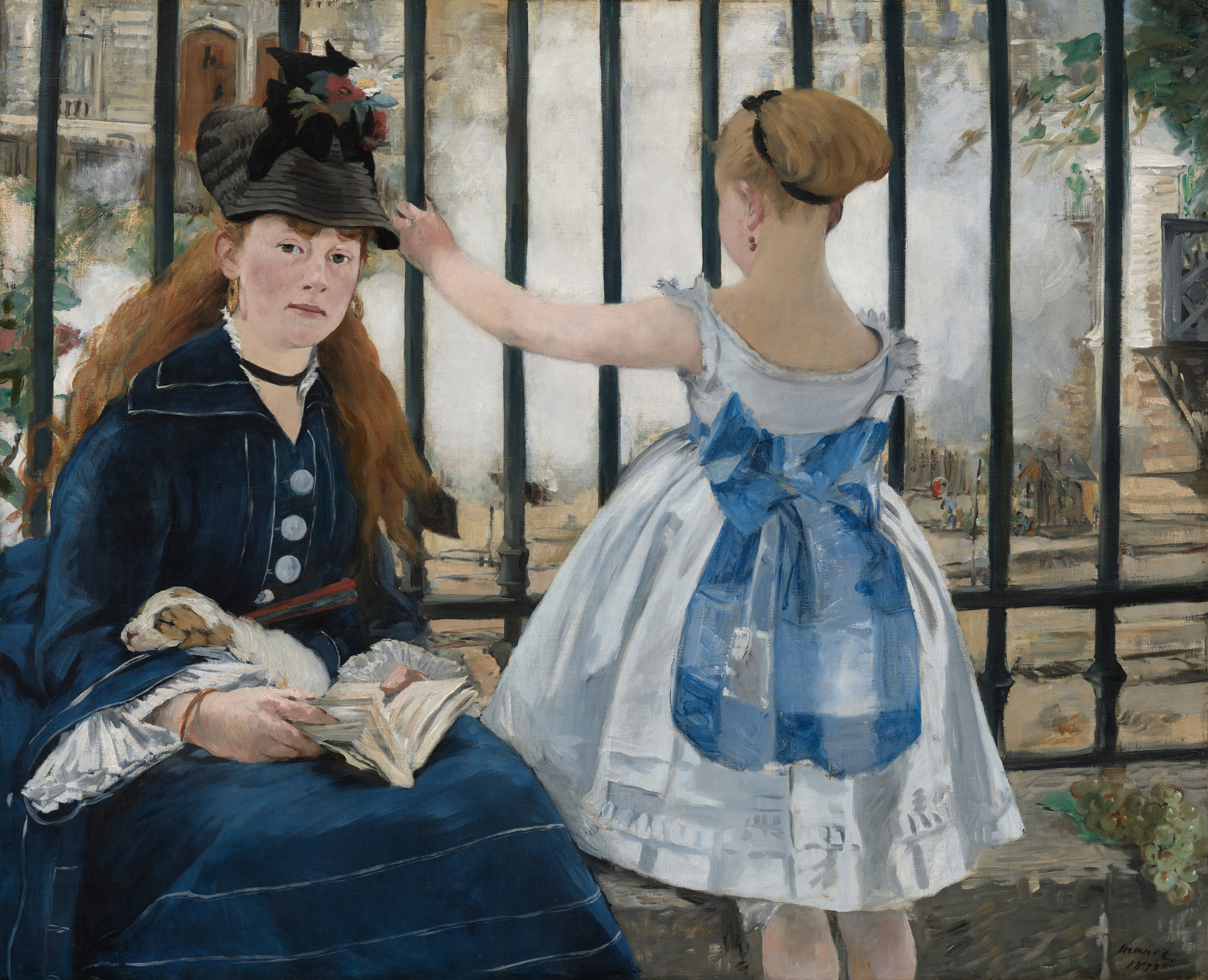
The National Gallery’s record dates the painting to 1873 and records its appearance at the Salon of 1874. Its inclusion in Paris 1874 helps place it within a discussion of modern painting; the Salon entry also complicates a neat story in which every modern work stood outside official exhibition life.
We are drawn to the withheld view. The figures are easy to recognize, but they do not share one gaze or give us an uncomplicated story. That is a specific response to this image. Calling it “traditional because it shows people” would miss the historical question; calling it “abstract because it feels unfamiliar” would miss the visible subjects.
Renoir: an inherited portrait structure inside a modern experiment
Auguste Renoir’s The Dancer offers an even clearer overlap. The full-length figure stands near the center, facing us in a pale blue ballet costume. Around her, green and blue strokes soften the distinction between fabric and background.
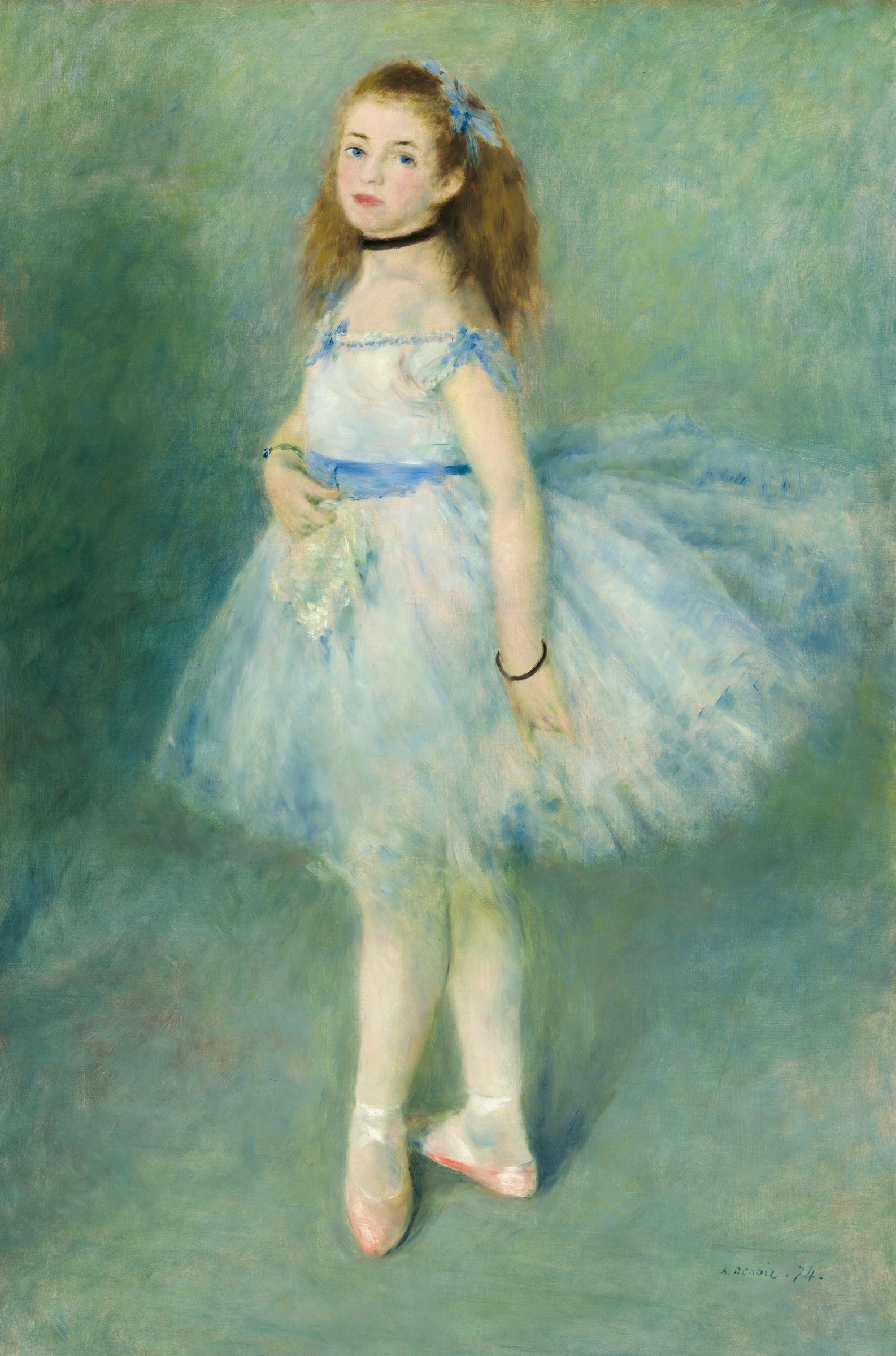
The museum’s account identifies this as one of Renoir’s works in the first Impressionist exhibition in April 1874. It also explains how the figure’s prominence and scale recall traditional portraiture. Experimentation did not require every inherited compositional device to disappear.
Look from the comparatively defined face to the hazier edge of the skirt. We would keep “recognizable figure,” “soft edges” and “varied brushwork” in a visual description. The exhibition record supplies its historical context. Neither set of information makes the other redundant.
If you want to name particular kinds of abstraction, our guide to abstract art makes those distinctions through other works. Here, the useful point is that historical modern art does not require an unrecognizable subject.
Mercié: even the date can describe more than one thing
The wings, armor and fallen body in Mercié’s Gloria Victis bring a different visual language into view. This is a bronze sculpture, shown in a photograph, rather than another painting. Its dramatic pose and allegorical figure make an illuminating comparison with the everyday figures above.
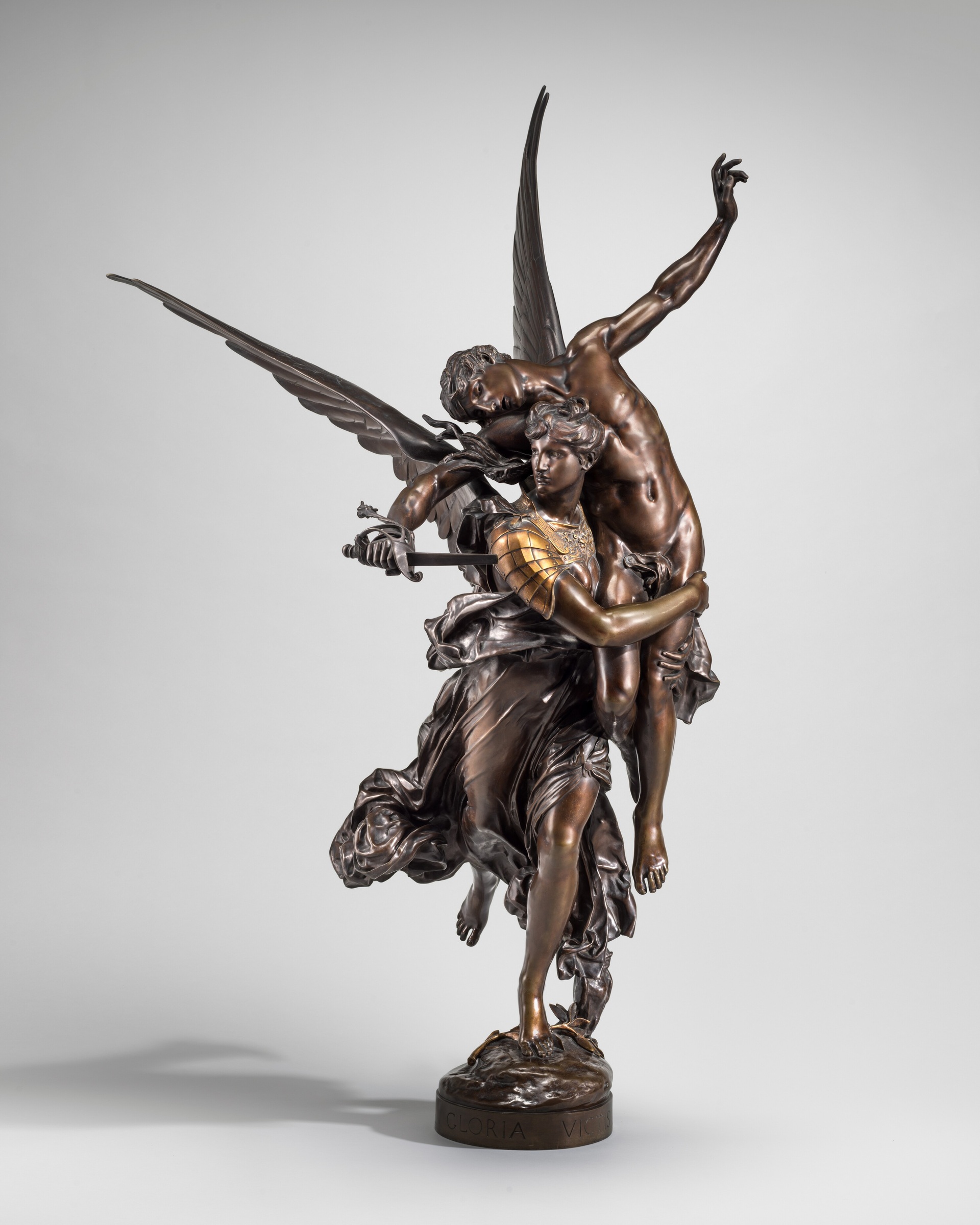
The object record gives two stages: the model dates to about 1874; this bronze was cast after 1879. The National Gallery’s exhibition wall text distinguishes the later bronze from the related plaster shown at the 1874 Salon. Reducing the label to “1874 bronze” would collapse those stages.
The comparison does not place every work made around 1874 into one style. It shows why a date, recognizable anatomy or exhibition venue needs context. An inherited visual language and a response to the artist’s own time can coexist.
A clearer request for a members’ lounge
Imagine a US private members’ club asking for “modern art, but with people we can recognize.” This is a hypothetical editorial exercise. The club wants a fresh image with soft, visibly worked passages; it accepts newly made art and is not seeking a historical original.
We would take The Dancer forward as a visual reference because its figure remains readable while its fabric and background loosen. The Railway offers a more interrupted, narrative scene. Gloria Victis offers an emphatic allegorical pose. For this stated preference, Renoir’s handling is the closer reference—not a proposal to copy or acquire the museum painting.
We want a newly made, figure-led image with a recognizable person, soft edges and visible variation in the handling of color. Keep some passages open and loosely resolved. Renoir’s The Dancer is a reference for that relationship between a readable figure and softer surroundings; the new subject and composition should be original.
That request gives an artist or art adviser something concrete to discuss. Its tradeoff is clear: it pursues an image quality without promising historical modern-art status. If the club instead wants documented originals from the modern period, we would change the request to a specified historical scope and seek appropriate acquisition advice. That is a different decision.
A gallery-label discussion captures the confusion between modern as a period and modern as an expected abstract look. We use it as a question worth clarifying, not as an authority on dates or a survey of club members.
FAQ
Is modern art the same as contemporary art?
The terms overlap in everyday usage, but historical modern art refers to particular developments and periods, while contemporary usually concerns recent art and the present artistic context. Check how the institution or speaker uses the term. A new date alone does not make a work part of historical Modernism.
Can modern art show realistic people?
Yes. Renoir’s The Dancer has a recognizable figure and was shown in the first Impressionist exhibition. Recognition, degree of realism and historical context answer different questions.
Can traditional art be made today?
Yes. Inherited practices can remain living practices. Name the particular tradition or convention rather than using traditional as a blanket synonym for old, realistic or European.
Does a nineteenth-century date prove that a work is modern art?
No. Consider the individual work’s documented context. A sculpture label may also distinguish the model date from a later casting date, as with the Gloria Victis shown here.
What should I ask for if I simply want art that looks modern?
Specify what you can see and want: perhaps simplified shapes, visible brushwork, spare composition or soft edges. State separately whether you want a new work, a reproduction or a documented historical object. The lounge example chooses recognizable figures with loose handling, not abstraction by default.
Sources and image credits
MoMA and the National Gallery supply the historical framing; UNESCO supports the living-tradition distinction. Linked object records and exhibition material supply identities, dates and exhibition details. Visual readings and the hypothetical club direction are our editorial judgments. The three museum works are educational references, not WhispArt inventory.
Cover: Édouard Manet, The Railway. Public domain / CC0. Complete artwork image(s) proportionally fitted within a neutral matte. The responsive hero may show a detail; the full reproductions appear in the article.