Monochromatic Artwork: What “One Color” Means
A blue botanical image, a figure painted in gray, and a black square can all enter a conversation about monochrome. Looking at the actual picture makes the description more useful.
One hue is different from one flat shade
Hue names a color family, such as blue. Value describes how light or dark a passage appears. A pale blue shape and a dark blue background can therefore belong to the same monochromatic scheme even though they are easy to tell apart. The Obelisk definition includes a range of values associated with a single color; Printed Editions also discusses grayscale and ink-based work.
We would describe the visible result before trying to reconstruct the artist’s palette. “Made with three tubes” is a statement about materials. It does not tell us whether the finished picture contains one hue family or several. A small palette can still produce a visibly varied picture.
A blue image can hold a recognizable subject
In Anna Atkins’s Dictyota dichotoma, concentrate on the blue page, rather than the gray photographic background and the edge of the book. The pale branching algae form spreads across a much darker blue field. Small overlaps and changes of density remain visible within that restricted range.
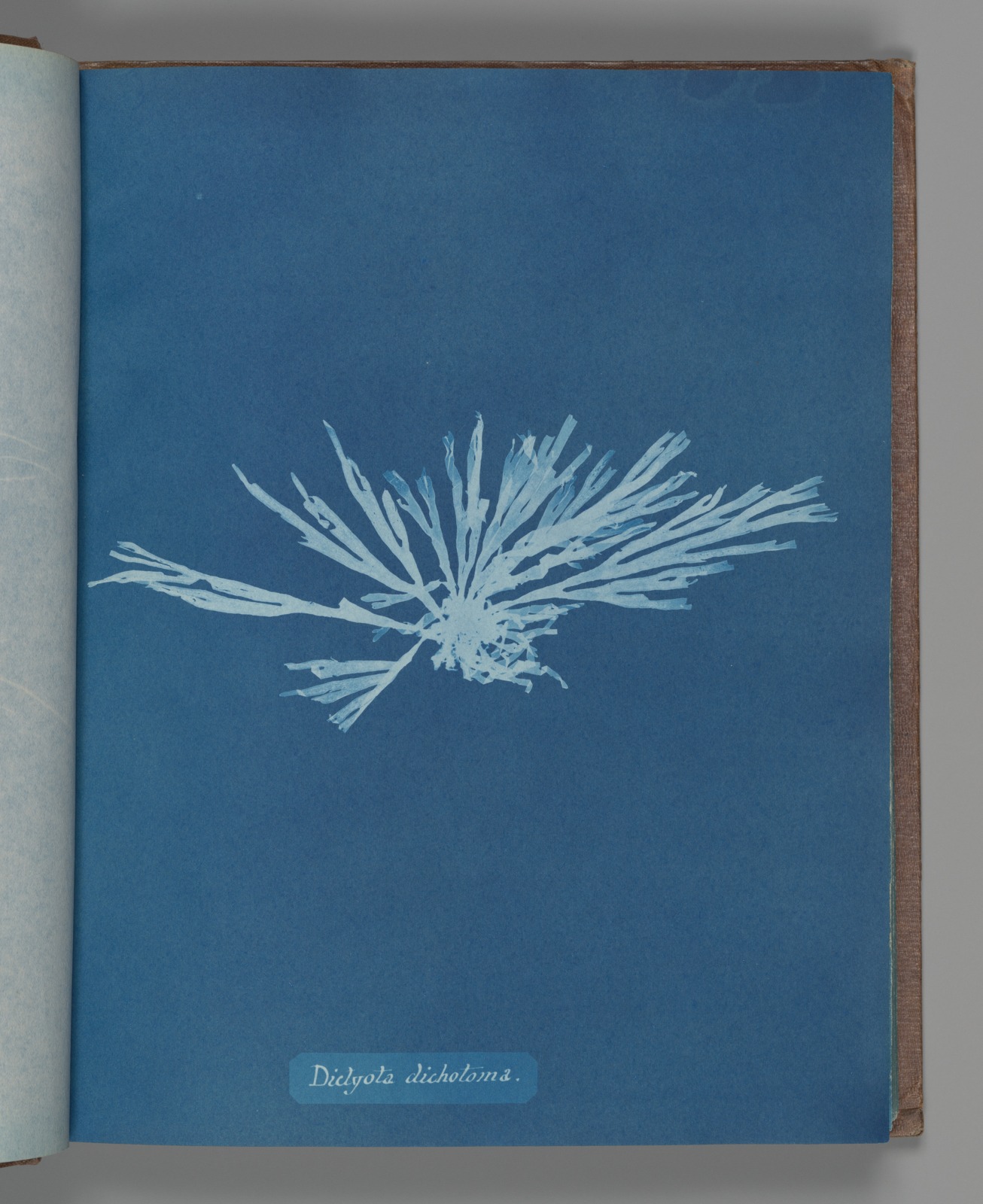
The Met identifies this work as a cyanotype, made around 1853. Its record for Atkins’s British Algae album explains the process of placing specimens on light-sensitive paper and exposing it to sunlight. This is a photographic process, not a blue painting.
We would call it a blue cyanotype with a pale botanical form. That description preserves both its color relationship and its medium. Monochrome tells you about the restricted color; it does not tell you whether the image is abstract, figurative, painted, or photographic.
Grisaille describes a painting in gray
Now compare the blue page with Ingres and his workshop’s Odalisque in Grisaille. The figure, cushions, and curtains are modeled largely through gray values. Follow the rounded shoulder and the folds at the right: a restricted palette can still describe bodies, fabric, and depth.
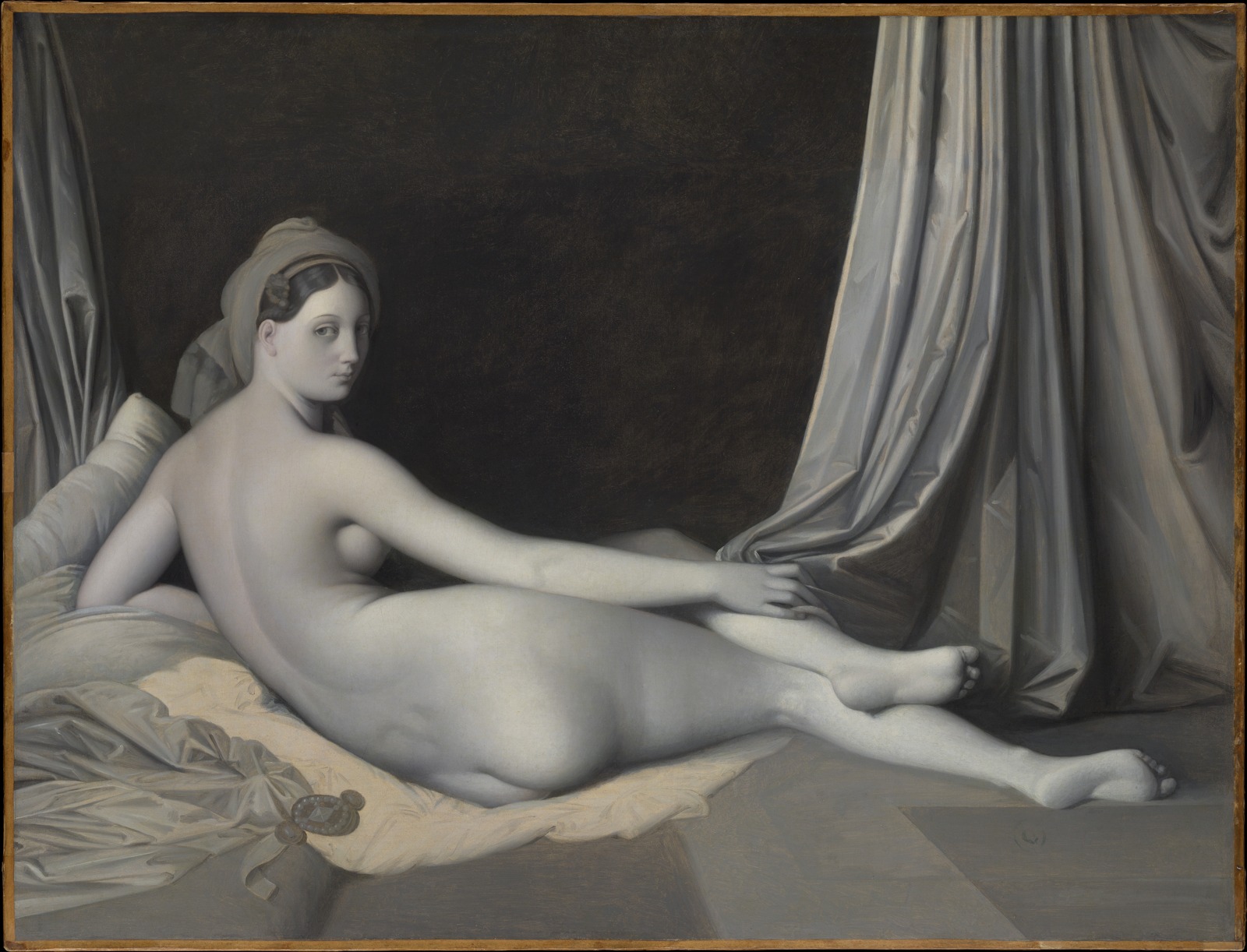
The Met calls this a grisaille painting and identifies the medium as oil on canvas. Its audio description also notes a slight blush of color, particularly along the figure’s back and right ear. We therefore prefer “a figure painting largely in gray” to the more absolute “a picture containing no color.” The museum’s classification and the small qualification can coexist.
This is a color photograph of a largely gray painting. That matters when browsing online: a black-and-white photograph of a colorful painting would describe the reproduction’s appearance, not the original work’s palette. Check the collection record or another reliable image before naming the original’s colors.
A restricted palette does not prescribe the subject
Malevich’s Black Square offers a very different image from the reclining figure. The black shape occupies most of the painted area, with a light field around it. The photographic reproduction also reveals irregularities and cracks in the dark surface.
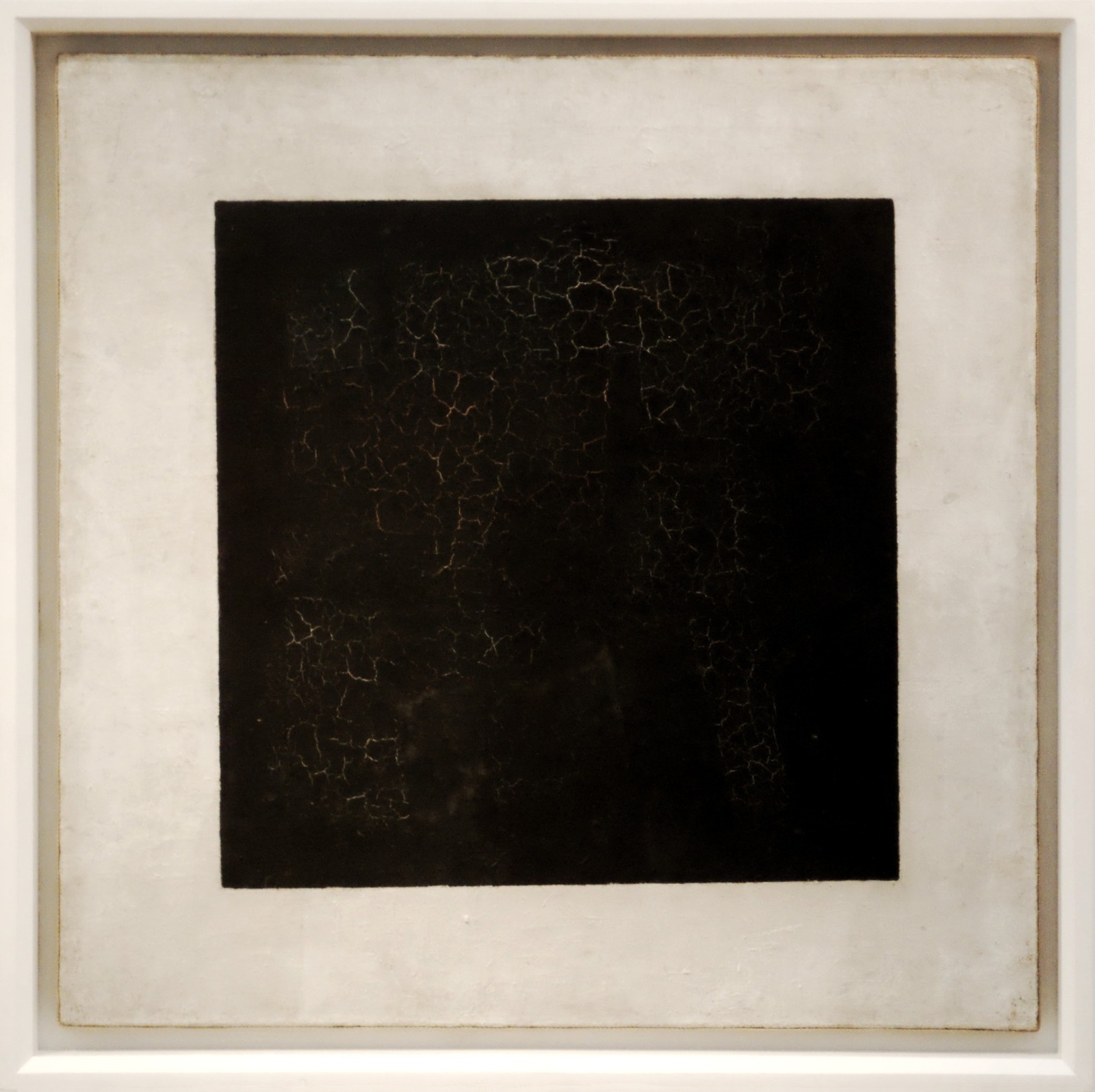
We would describe what is actually visible: a black square set within a light painted field. Calling it monochrome must not make the light surround disappear. It is not a literal demonstration of one uniform color covering every inch of canvas, and its restricted palette does not make it visually equivalent to the modeled figure above.
The comparison separates two questions: how many color families organize the picture, and what the picture does with them. A recognizable plant, a modeled figure, and an abstract shape can occupy different answers to the second question. If you want to examine the light–dark relationships themselves, our black-and-white contrast guide treats that separate subject.
Use the description that preserves the difference
A public discussion about grayscale with blue highlights produces competing names, including monochrome and selective color. The useful lesson is that a broad label may leave the important visual feature unstated. We would say “a grayscale scene with a blue accent” when the isolated accent is what someone needs to understand.
On a narrow screen, scroll sideways to compare these descriptions.
| What you see | A useful description | What it does not establish |
|---|---|---|
| Light and dark passages in one blue family | Blue monochromatic image | A single flat shade or one pigment |
| Forms modeled mainly in gray paint | Grisaille; painting largely in gray | A black-and-white photograph of the original |
| Several distinct hues from a small selection of paints | Limited palette | Necessarily monochromatic |
| A mostly gray image with one localized colored feature | Grayscale with a color accent | That the whole image has the same colored appearance |
These are descriptions for communicating what you see, not a test that every historical artwork must pass. A catalog may use monochrome broadly. Adding the hue, medium, and location of any accent lets you keep the useful term while making the particular work easier to imagine.
FAQ
Can monochromatic art be blue, red, or green?
Yes. It can use lighter and darker variations of one hue family. Black-and-white is a common monochrome form, not the only one.
Are grayscale and monochrome opposites?
No. Grayscale is commonly included within monochrome usage. “Grayscale” is the more specific description when the image is organized through black, white, and gray rather than a chromatic hue such as blue.
Does using one pigment guarantee a monochromatic painting?
A material recipe and an image description answer different questions. The support, other layers, mixtures, and visible result matter. Describe the picture you can inspect; use documented material information for claims about pigments.
Is monochromatic artwork always quiet or minimalist?
No. Restricted color does not determine subject, complexity, or mood. The botanical form, modeled figure, and abstract square above are visibly different. Describe those differences before assigning a feeling to the category.