Small Dining Room Wall Decor: Art, Mirror, or Shelves?
A small dining corner can feel complete without filling every surface. Compare three wall treatments in the same room, then choose for what you want to see and how you use the seats.
Give the empty wall a specific purpose
Choose art when you want an image or color, a mirror when you want the view it will reflect, and shelves when you have a useful storage or display need and a clear place for them. In a small dining room, the chair and the person using it belong in that decision from the beginning.
Paint, wallpaper, decorative plates, personal photographs and small picture groups are also legitimate wall decor. Southern Living’s illustrated dining-room collection shows how broad those options can be. The example here keeps an existing wall finish, table and chairs, and compares three plausible additions.
A bare wall is not necessarily a storage problem. In one dining-nook discussion, suggestions for furniture and shelves meet objections about a narrow walkthrough; another reply asks how deep the available space actually is. The useful question is what the added object will do in the furnished room.
The same dining nook, three different results
Here is our hypothetical room: a compact table beside a window, two chairs, existing kitchen storage and one available wall above the wall-side seat. The resident wants a colorful image and prefers to leave the space above that chair free of projecting storage. The opposite kitchen counter holds the ordinary equipment of daily life.
Keep those conditions fixed. Compare what each wall treatment adds.

A adds a selected image. The color stays within the frame, and the picture does not repeat the kitchen view. It still needs a suitable position and secure mounting, but it asks for no additional shelf space.
B adds another view of the room. In this example, that view contains cupboards, a dish rack and a kettle. There is nothing wrong with those objects; this resident simply prefers to look at a picture while eating. A mirror cannot be judged by its frame alone.
C adds somewhere to put things. Plates and mugs now sit on a shelf projecting above the wall-side chair. The resident already has storage for them and would rather keep that area open. A higher shelf, a shallower display ledge or a different wall would be a different proposal, with its own use and clearance checks.
The choice for this room: one framed image
Choose the framed image for this resident. It supplies the wanted color, does not repeat the everyday kitchen view and avoids adding storage above a seat where none is needed. Keep the existing table and chairs in their useful positions.
The tradeoff is straightforward: this choice adds neither a reflected view nor new storage. Both are reasonable things to want in another room. Here, neither answers the resident’s unfinished task as well as a picture.
This comparison is a way of applying familiar advice, not a rule that art always wins. Mixtiles’ small-dining-room guide already discusses reflection, slim profiles and chair-back clearance. The important part is applying those considerations to the same furnished corner before buying several different solutions for it.
When the mirror would win
Change the view or the preference and the answer can change. A resident might enjoy seeing a window, a plant or a fireplace reflected from a seat that otherwise faces a plain wall. In that case, a mirror can be the intentional choice.
In a discussion about dining-room mirrors, one participant describes a reflected fireplace as the appeal; others question whether they want to watch themselves eat. Those preferences can coexist. You do not need a mirror simply because dining rooms often have one.
Inspect its proposed view from the chairs people will actually use, including in the evening. A standing photograph taken from the doorway may show a different reflection. If the mirror mostly returns a view you would rather leave behind you, choose another position or a picture instead. Its decorative frame does not change what it reflects.
When shelves would earn their space
A shelf becomes worth considering when you can name the useful items it will hold: frequently used cups, a small collection you enjoy, or pictures you genuinely want to change. That is a stronger starting point than buying a shelf because the wall looks empty.
In an enclosed-nook discussion, the original poster considers art, shelving and a wine rack. A reply asks whether the glasses would really be fetched from that spot or already have a home, and raises the limited space above the seating. That is the distinction to preserve.
For the illustrated resident, the shelf loses because the storage is unnecessary and the seat’s overhead space is preferred open. For someone who needs accessible cup storage, a checked shelf position on an unobstructed side wall could become the better choice.
Judge the actual shelf’s depth and height, its intended contents and normal chair and body movement. A flat paper outline only shows the face of a proposed object; it cannot establish projection clearance. Follow the mounting requirements for the wall, shelf and intended load. The illustration supplies no universal safe distance.
Keep the dining setup usable
Once the picture is chosen, relate it to the dining area as it is used. Start with the table in its working position, with enough room to get into the seats. Then inspect the proposed frame from the entrance and from the chairs.
A useful caution comes from a small dining-area mirror question: the original poster explains that moving the table into visual alignment would compromise seating clearance. Making the wall photograph look symmetrical should not create a worse place to eat.
In our example, keep the table where it is and use the available wall above the dining position. Before fixing anything, check the complete frame footprint against the chair back and people’s normal movements. If that actual frame interferes, change its position or format. Do not shift useful furniture simply to preserve the first artwork layout.
For the final vertical measurement, use our art hanging-height guide. Treat the seated view as part of this room’s check rather than applying a standing-eye-level number without looking.
Choose an image you would like to keep
The picture does not have to depict food, match the table or turn the dining nook into a formal room. A personal photograph, a small landscape, an abstract composition or a figure can all provide a reason to look at the wall.
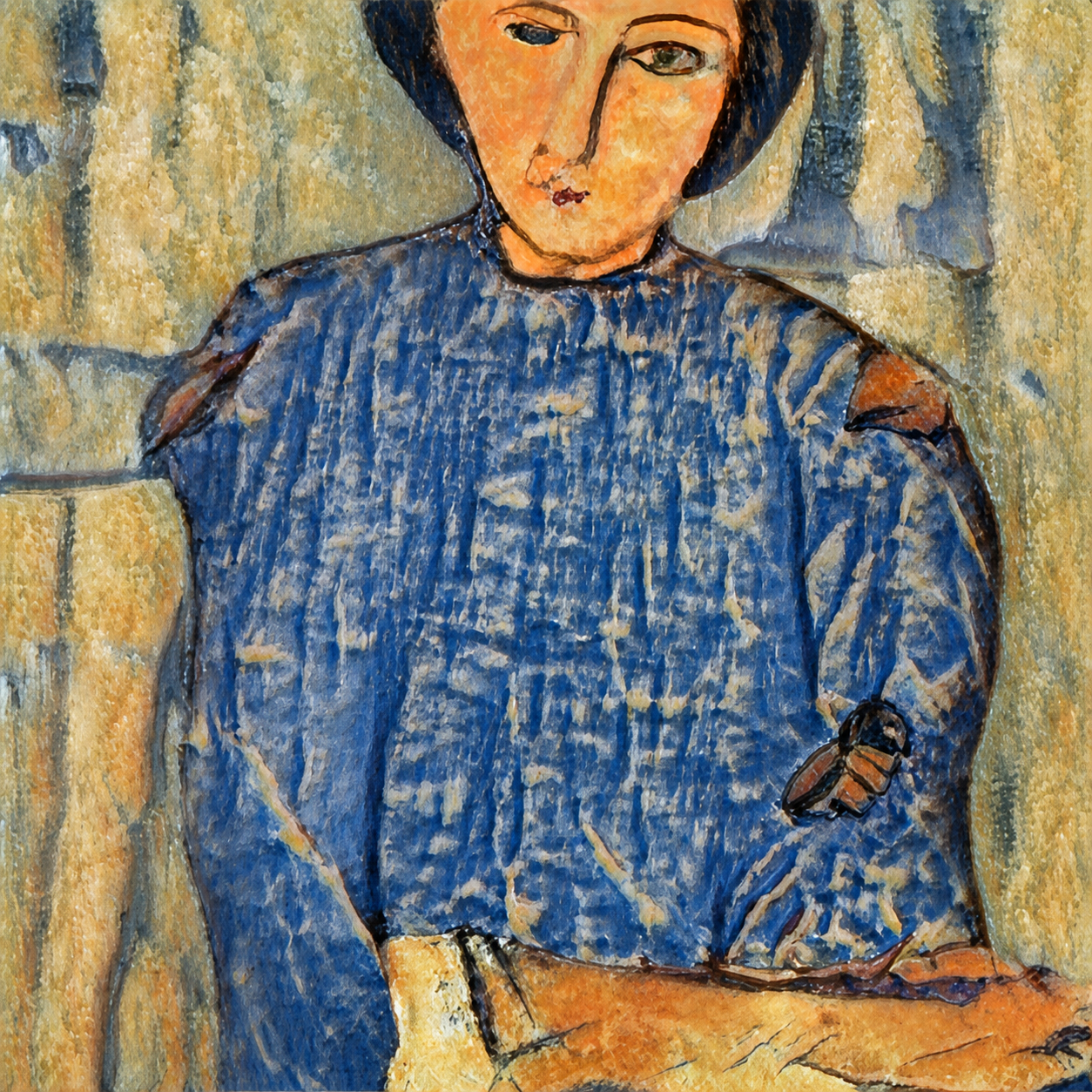
WhispArt’s Moth of Mnemosyne is one figurative example. The orange face, patterned blue clothing and moth introduce a dreamlike subject within a clear composition. The complete supplied artwork is shown below, separately from the simplified teaching image in the room comparison.
If you already own a poster or print you love, start with that. Its price does not make it unsuitable for a grown-up home. Inspect it in a clear position before deciding it needs a larger replacement; a small image can belong to a small dining corner without taking over the entire wall. Our first-apartment wall-decor guide explores keeping meaningful pieces as the rest of a home develops.
For this nook, the finished plan is one chosen picture, the existing kitchen storage and no additional wall object bought merely to fill the remaining space.
FAQ
Is a mirror better than art in a small dining room?
It depends on the actual reflection and what you want from the wall. Choose a mirror for a view you welcome from the seats. Choose art for a specific image or color, particularly if you would rather not repeat the opposite kitchen or watch yourself eat.
Can I put a shelf above a dining chair?
Some arrangements allow it, but the particular shelf, contents, wall position and seated or standing body movement must be checked. The example shelf is not chosen because this resident does not need its storage and prefers open space above the chair. The illustration does not prove a collision or supply a safe mounting height.
How high should dining-room art hang?
Start with a clear position relative to the furnished dining area, then check both the entrance view and seated views. Confirm that the actual frame clears chair movement. Use the linked hanging-height guide for the final calculation instead of treating one eye-level number as correct for every dining nook.
Does dining-room artwork need to match the furniture?
No exact match is required. An image can repeat a room color, introduce a new one or provide a subject you enjoy. Keep the decision specific: in this example, the resident wants the color and figurative interest of a picture, rather than additional reflected kitchen details.
Should I replace a small poster with a larger work?
Only if the current piece fails the view you want after you have tried a sensible position. A liked poster, personal photograph or small print is a valid starting point. A larger replacement should solve a visible problem, not simply signal a bigger budget.
Can the other dining-room walls stay bare?
Yes. One picture, a chosen wall finish or a small display may be enough. If the table, lighting and existing objects already give the nook character, the rest of the wall can remain open. Adding more decor is optional.
Sources and illustration notes
Southern Living, Mixtiles and Fracture provide useful examples of art, mirrors and other treatments. Linked community discussions supply individual questions and contrasting preferences; they are not measurements of all small-home residents.
The three-option room is an AI teaching illustration of a hypothetical choice. Minor rendering differences do not establish exact geometry, and real mounting and movement still need checking. The cover uses a detail of the supplied WhispArt artwork; its complete, unaltered image appears in the article. No installed customer room is represented.