Small Paintings: What Makes a Small Work Feel Complete?
A small painting can offer a whole encounter: a face turning toward you, a cluster of flowers, a landscape held together by a few decisive patches. Its scale does not tell you whether it is complete, intricate, preparatory or slight. Those are different questions.
When choosing a small work for a first home, we would start with how we want to look at it. Do we want something that invites close inspection, something whose main shapes register immediately, or a study whose decisions remain visible? Four museum examples help separate those attractions before browsing works for sale.
Small is a scale, not a verdict
“Small paintings” is a broad browsing description. There is no useful single cutoff here that turns every picture below it into a miniature or a study. An artist’s intended object, its documented role and what happens inside its edges matter more than the category name.
Our working test for completeness is a looking question: Does the picture give us a convincing relationship to return to, at its actual scale? That might be a few large shapes or a dense sequence of details. It is an editorial way to compare pictures, not a measurement of artistic value.
A small panel can have a strong whole
Johannes Vermeer’s Girl with the Red Hat, dated around 1669 by the National Gallery of Art, has a painted surface of 22.8 × 18 cm. Begin with the red hat, the blue robe and the face between them.
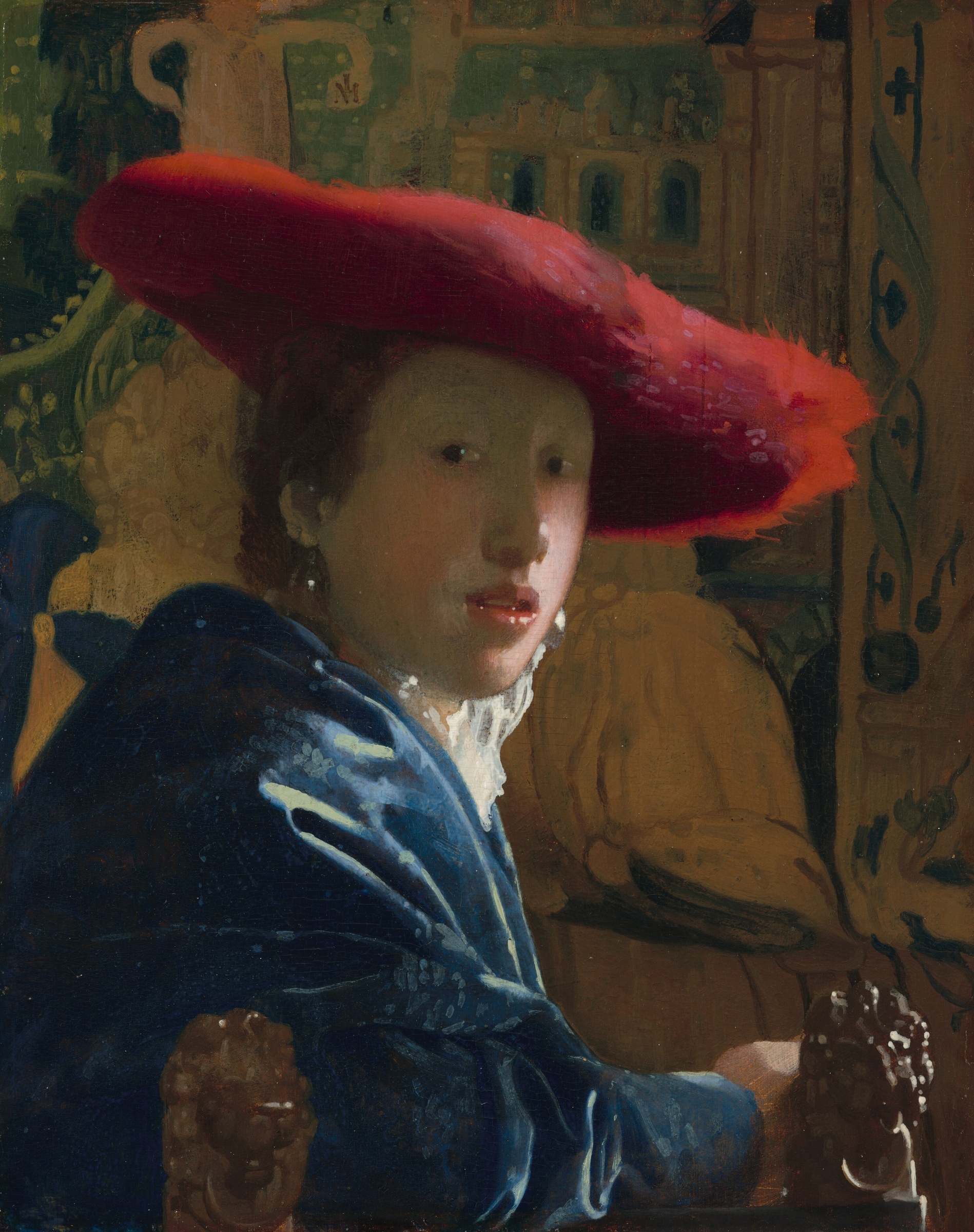
The hat gives the upper part of the picture a broad colored shape. The blue below answers it; the pale collar and facial highlights interrupt the darker surroundings. We can follow that arrangement before inspecting the small glints.
For us, its presence comes from the relationship of those shapes and the turned face, rather than the number of details squeezed into the panel. The museum distinguishes the painted surface from the slightly larger support. Neither measurement is the outer size of a frame.
A miniature asks for a closer kind of attention
Simon Bening’s Self-portrait, 1558, is described by the Metropolitan Museum of Art as a portrait miniature. The work measures 8.5 × 5.7 cm and uses tempera and gold leaf on parchment. Look for the spectacles held beside the face, the window grid and the inscription below.
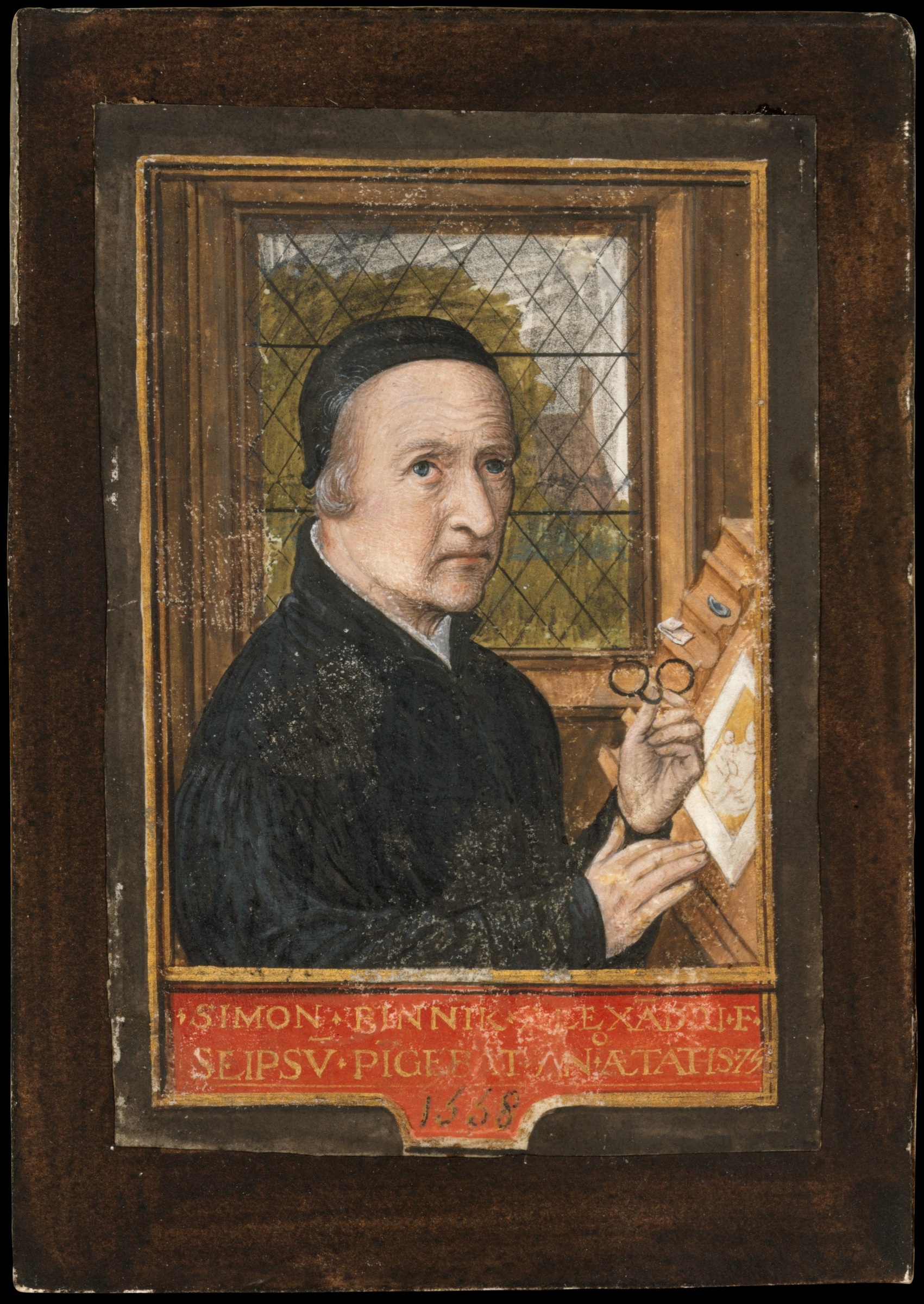
Those particulars make close inspection part of the invitation. The reproduction includes a frame, but the listed dimensions belong to the work; do not assume the photographed outer frame measures 8.5 × 5.7 cm.
We would choose this kind of detailed, intimate direction when coming closer is something we actively want to do. We would be less persuaded by it for a brief that asks a tiny image to supply a dominant view from across the room. Intricacy can be a pleasure without serving that second job.
A study can be small without being a lesser finished picture
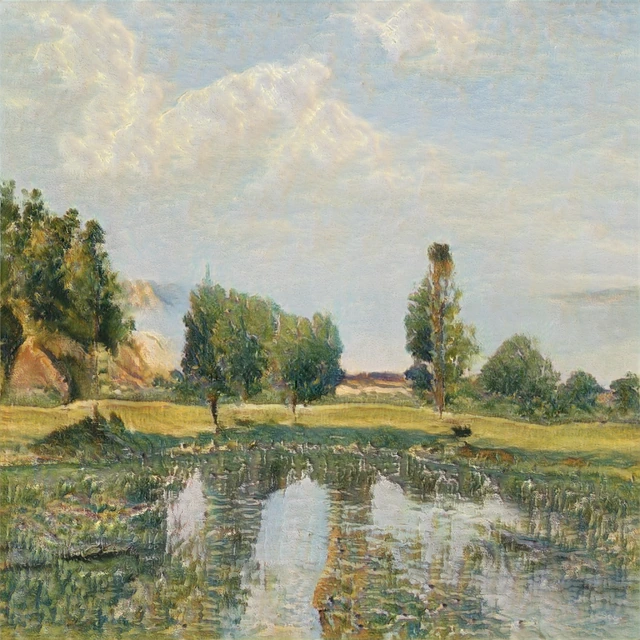
Georges Seurat’s Study for “La Grande Jatte”, 1884/1885, is oil on wood, measuring 15.9 × 25 cm. Its preparatory role is established by the National Gallery of Art’s record. First compare the large green foreground with the pale water and the vertical trees.
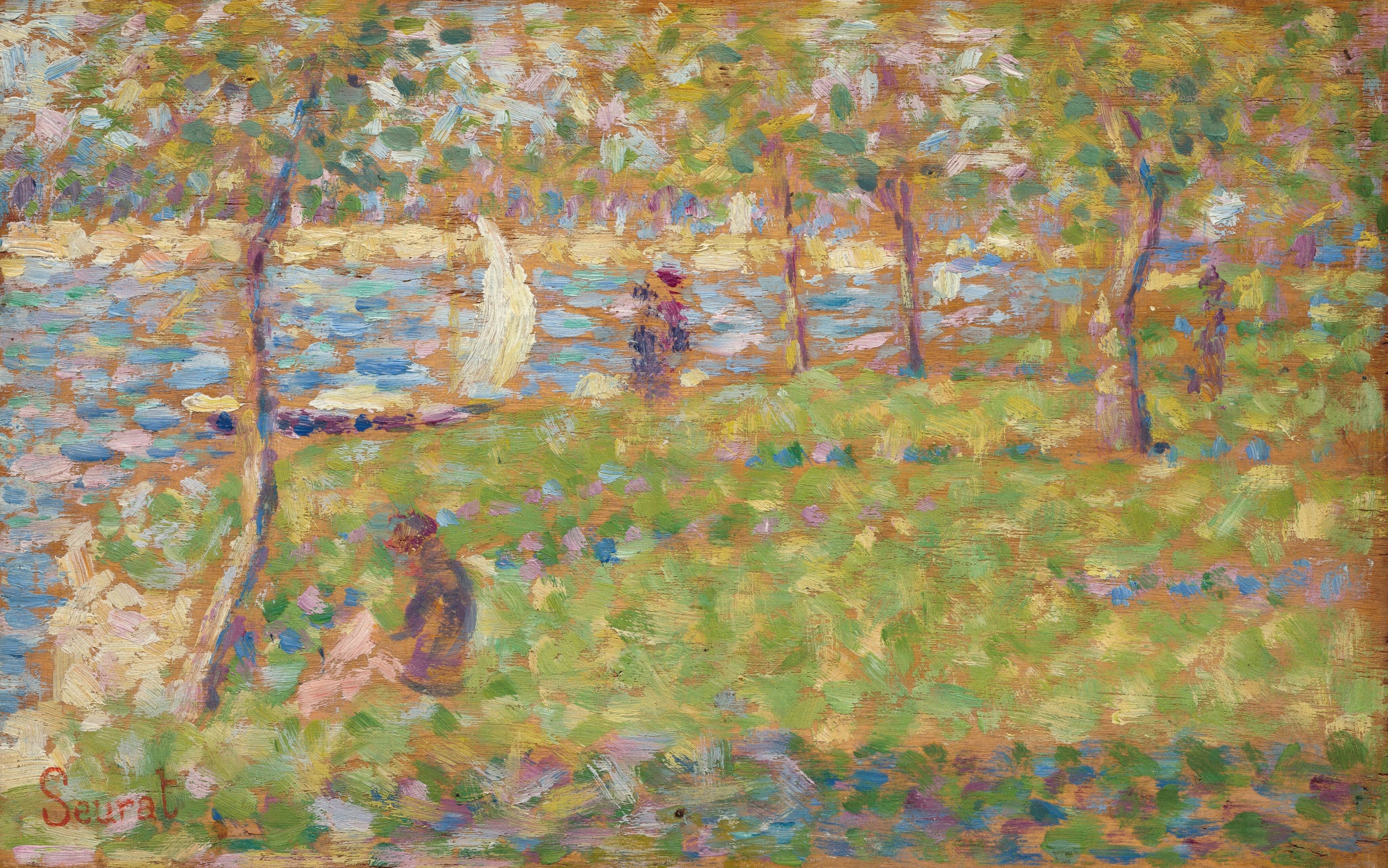
Figures are suggested with brief marks. Larger patches of green, yellow and lilac organize the scene instead of supplying a fully described surface everywhere. We find that open handling worth looking at in its own right: it lets the relationships between patches stay conspicuous.
“Study” tells us something about the work’s role. It does not automatically mean a failed painting, and loose brushwork does not automatically prove that an unrelated work is a study. For a contemporary purchase, use the artist’s description to establish that role rather than deciding from finish alone.
Detail is one route; a clear arrangement is another
Henri Fantin-Latour’s Potted Pansies, 1883, is oil on canvas, 27.9 × 34.3 cm. Compare the flower cluster and pale pot with the broad brown space around them before looking into the petals.
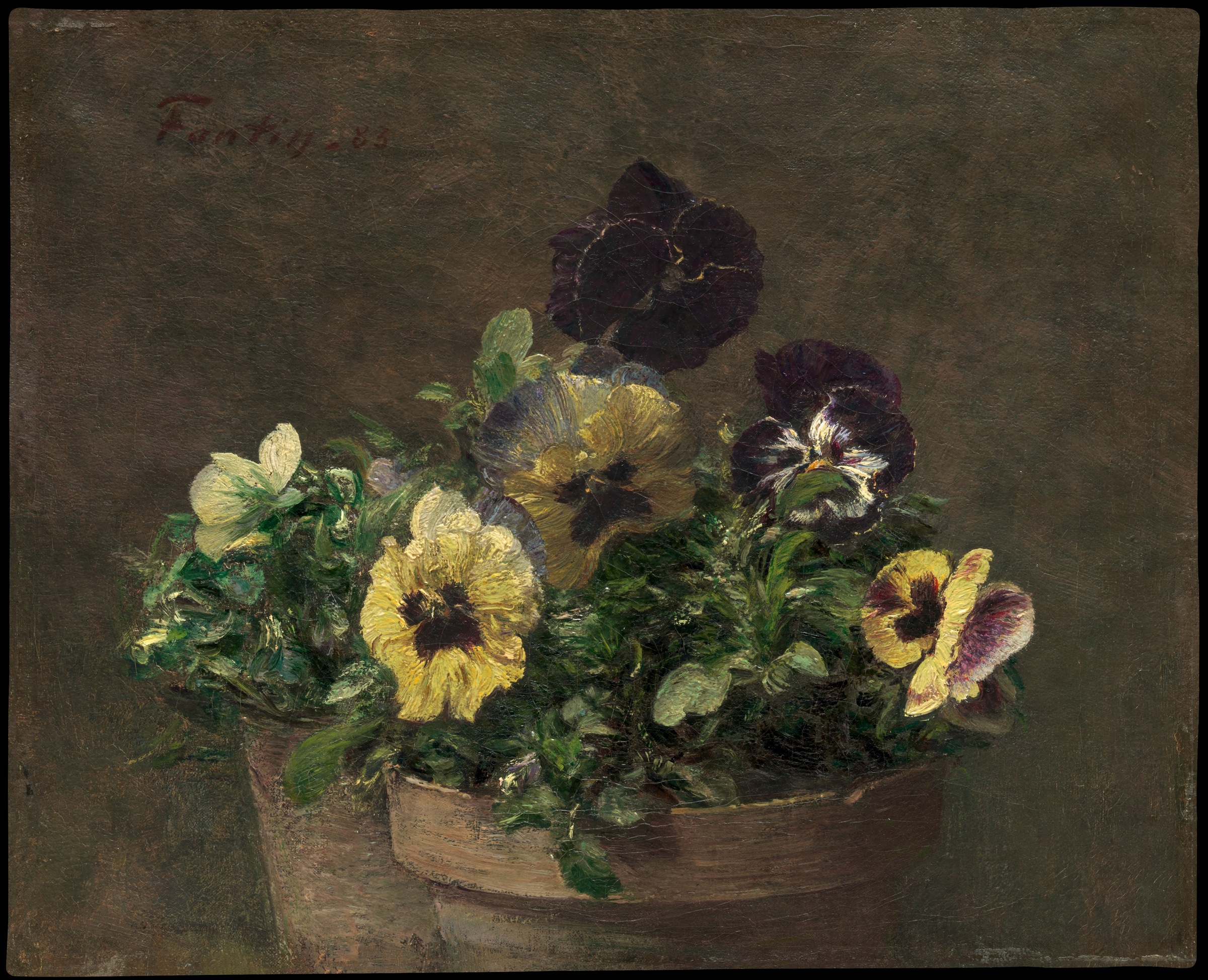
The yellow face of a flower stands out near the left of the cluster; darker purple blooms sit above the leaves. The surrounding space lets that small group have a clear boundary. For us, the arrangement provides a whole to return to even before the individual flowers become the subject of close attention.
We would not turn these four examples into a ranking. The miniature’s fine particulars, the study’s open patches and the more immediately legible masses ask for different kinds of looking. Their reproduced sizes on this page also vary, so comparing their screen heights would be a misleading way to compare the physical objects.
What we would choose for a first condo
Consider a hypothetical buyer who wants a manageable work they will keep, enjoys looking closely, but also wants a recognizable image when entering the room. The goal is lasting personal attention, not a prediction about resale value.
For that combination, we would start with a compact picture whose larger shapes hold together before its small details become visible. The Vermeer and Fantin-Latour examples explain the direction: a clear whole first, then further things to inspect. We would keep a more loosely handled study as an alternative if the visible decisions between patches were the main attraction.
The tradeoff is that a compact, broadly legible picture may offer less minute intricacy than a miniature. If the buyer’s favorite part is approaching the work to inspect tiny particulars, we would reverse the emphasis and consider the miniature direction. If the goal is a dominant across-room image, we would reconsider a very small work rather than expect excellence to make its physical scale disappear.
Bring the image back to its real dimensions
Before choosing, compare the candidate at a known physical size. For a digital reproduction, display or print the image without stretching it and measure its width with a ruler against the artist’s listed painted width. Do not assume a browser’s “100%” setting gives actual centimeters. For the Vermeer example, that comparison width is 18 cm for the painted surface, not the frame.
Look at the main arrangement from the position where you expect to encounter the work, then come closer for the details. If the face or flower cluster still interests you while finer particulars disappear, the picture may suit a brief that asks for both a whole and close attention. If all of its attraction depends on particulars you cannot comfortably inspect at that scale, the close-viewing brief needs to be intentional.
This is a way to judge an image’s scale and organization. A reproduction cannot establish the physical paint surface, color under your lighting or the condition of a work for sale. Where possible, view the actual candidate. These museum paintings are examples of different attractions, not an available shopping list.
A useful browsing note would be: a compact painting with a clear overall arrangement, plus details or painted decisions that reward coming closer. For the separate questions about object type, seller evidence and total purchase cost, continue with our guide to original art under $1,000.
FAQ
Are all small paintings miniatures?
No. “Small” is a broad description of scale. Bening’s work is documented as a portrait miniature; Seurat’s is documented as a study. Do not apply either role to every modestly sized painting.
How can a small painting feel complete?
Look for a relationship that holds the image together at its real scale: large colored shapes, a subject against surrounding space, or details organized into a coherent whole. We would ask what keeps us looking, rather than count how much information fits inside the edges.
Is a study worth considering as art for a home?
It can be, if its open handling or visible decisions are what you enjoy. Establish its documented role and judge the actual work. A study is not automatically an inferior substitute for a finished painting, nor does loose handling establish authenticity or quality.
Does a small painting always cost less?
No. Scale alone cannot establish the asking price or value. Artist, object type, medium, condition and the particular work matter. These historical museum examples demonstrate ways of looking; they do not promise an affordable equivalent.
Can I judge its scale from a large online photo?
Use the listed dimensions and a measured reproduction as a limited scale check. A full-screen image can make a tiny work seem physically large. It also cannot replace inspection of the actual surface, frame or condition.
Sources and image credits
Each caption links to its museum’s object record. Dates, media, dimensions and documented roles come from those records. Our looking descriptions and conditional choices are editorial judgments based on the reproduced images. The National Gallery of Art and Met images used here are public domain Open Access images.
Cover: Georges Seurat, Study for "La Grande Jatte". CC0 / public domain. The responsive cover may show a detail; the complete reproduction appears in the article. Image proportionally resized and JPEG re-encoded.