Still Life Art: What to Look for Beyond the Fruit Bowl
A cup, an orange, a skull and a folded cloth can offer very different kinds of attention. Three real paintings show what ordinary objects can do in a picture.
What still life art depicts
Still life art gives arranged objects the main role: fruit, flowers, vessels, books and other everyday or natural things. It is a genre defined by its subject, rather than one required painting style. The interest can lie in material, arrangement, symbolism or the way an artist reshapes familiar forms.
A still life can appear immediately legible: here is a cup; there is an apple. We think that familiarity is a good starting point. Once we know what the objects are, we can notice how differently they have been pictured.
For someone whose home is already furnished but offers little to look at, this is an appealing possibility: a picture can ask for attention without needing an extraordinary subject. The attraction lies in how the image handles ordinary things. It is not a promise that a particular genre will suit every home or change how someone feels.
Begin with the surfaces you recognize
In this painting, compare the basket on the left with the pale cup on the right. Then find the peeled orange at the front.
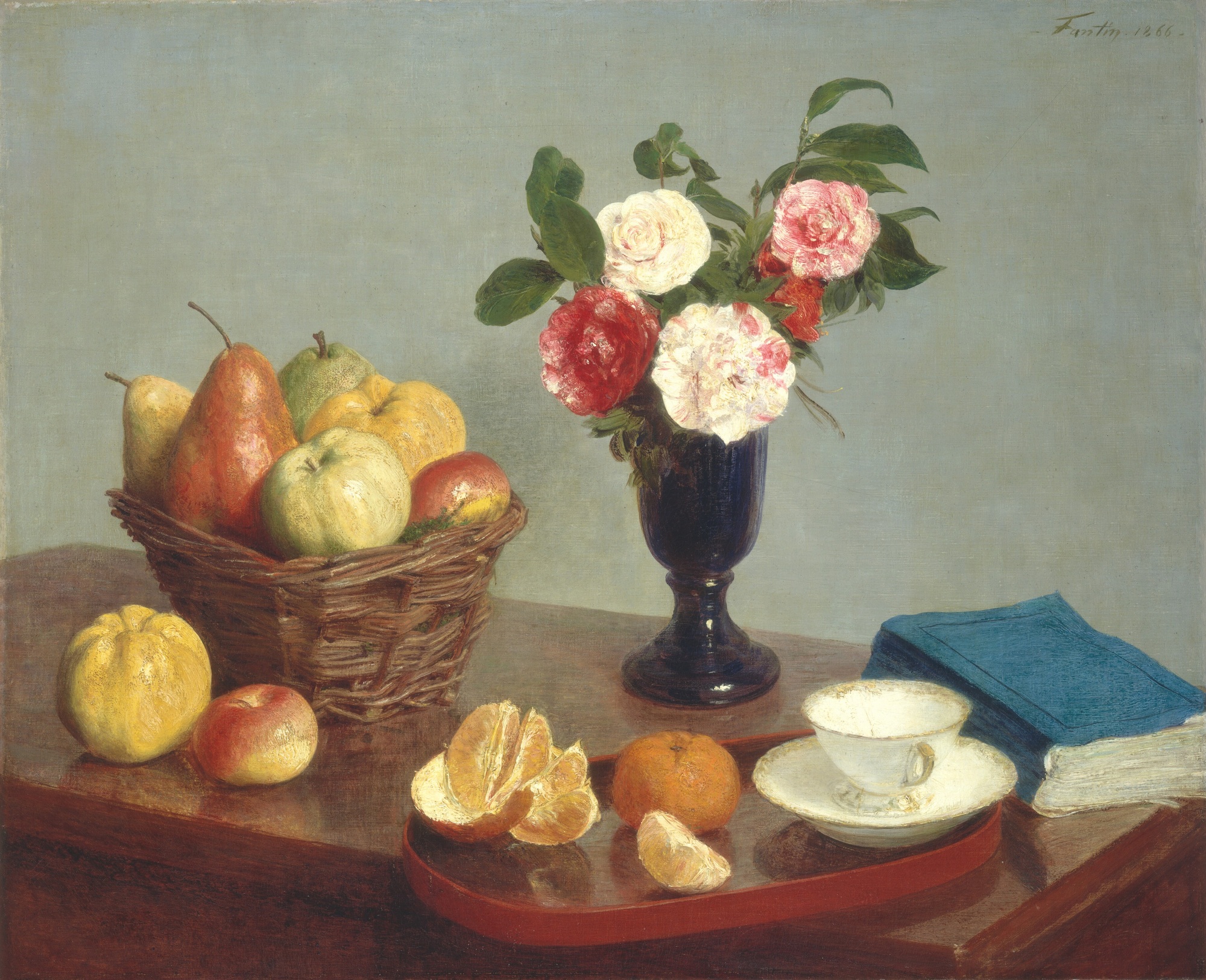
Henri Fantin-Latour’s Still Life, 1866, gathers fruit, flowers, a book and tea things on a polished wooden surface. Each is familiar; their treatment gives the picture its particular character.
The basket has repeated woven ridges. The cup has a fine rim and a small gleaming handle. The peeled orange exposes pale membranes and uneven segments beside the smoother skin of the intact fruit. We enjoy the changes in material: the image keeps asking the eye to adjust from rough to smooth, opaque to reflective, whole to opened.
The arrangement matters too. The fruit basket and flower vase give the back of the table height, while the tray brings the cup and oranges forward. Rounded shapes recur in the fruit, basket, tray and saucer, connecting objects that have different uses.
Here is our finished reading: the rough basket and delicate cup create a contrast in surfaces, while the opened orange makes the table feel specific and close at hand. “Lived-with” is how we would describe our response. It is not evidence that Fantin-Latour recorded a particular person’s actual breakfast.
Nothing in that reading requires a secret meaning for every item. The objects are already doing visible work.
When the objects also carry a message
A skull changes the question. Look at it alongside the toppled glass on the right and the small lamp on the left.
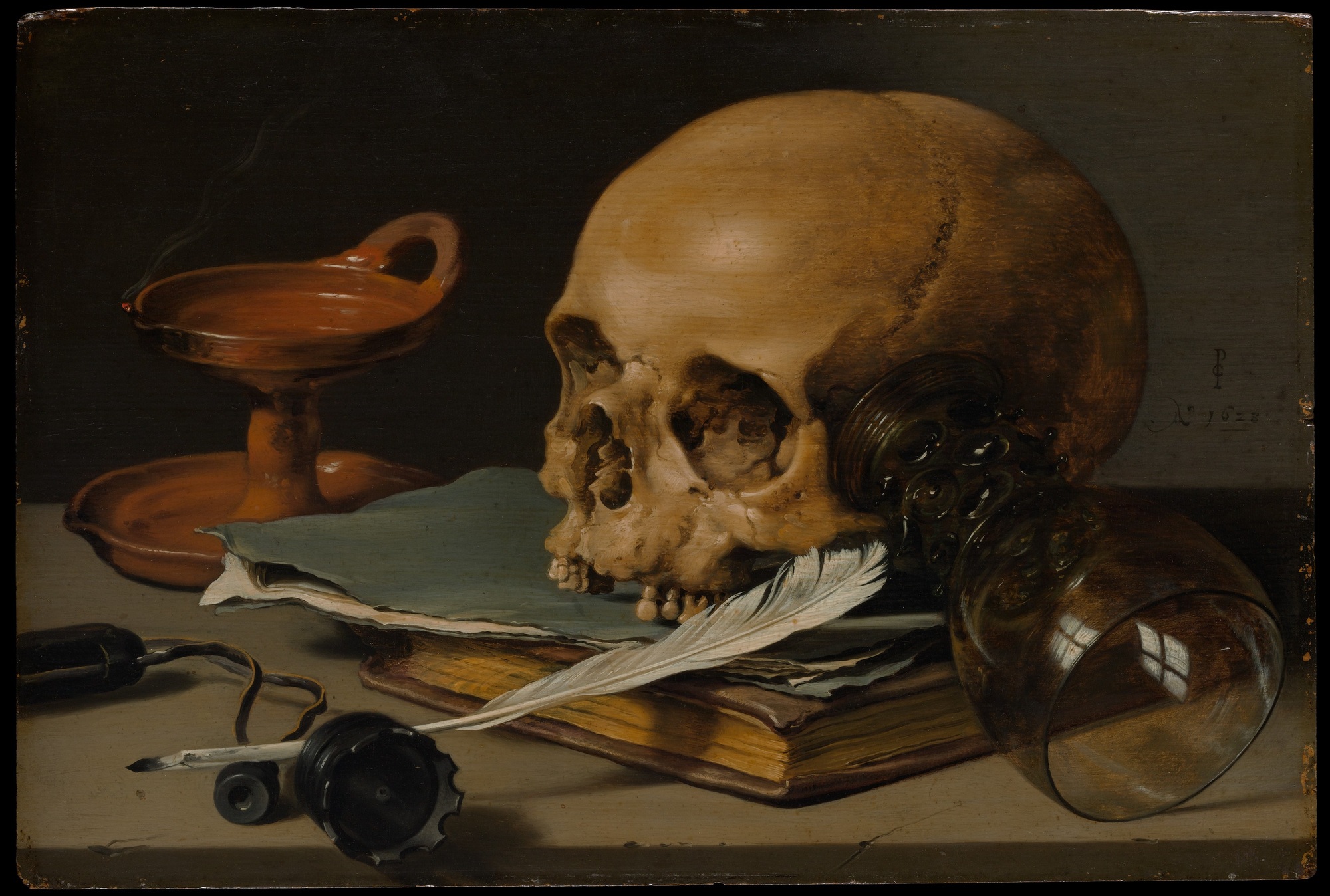
In Pieter Claesz’s Still Life with a Skull and a Writing Quill, 1628, the objects carry a documented reminder of mortality. The Met identifies the skull, overturned glass and guttering lamp wick as signs of life’s brevity. This is a vanitas still life.
We find the contrast between the objects especially affecting. The quill, ink and books evoke things made and recorded; the skull interrupts that activity. The bright feather also leads the eye across the darker, worn surfaces. That second observation is ours: the historical message and the visual arrangement can both matter.
It would be a mistake to turn this one picture into a universal dictionary. A cup in another work need not mean what the glass means here. Historical context, the grouping of objects and the exact painting all help determine a supported interpretation.
A discussion about the deeper purpose of still life raises both symbolic meanings and the value of simply directing attention toward an object. We think both deserve room. A documented message can deepen a painting; looking need not stop when there is no code to solve.
The subject can stay familiar while the painting changes
Follow the white cloth through the apples, then compare its angular folds with the large dark leaves above.
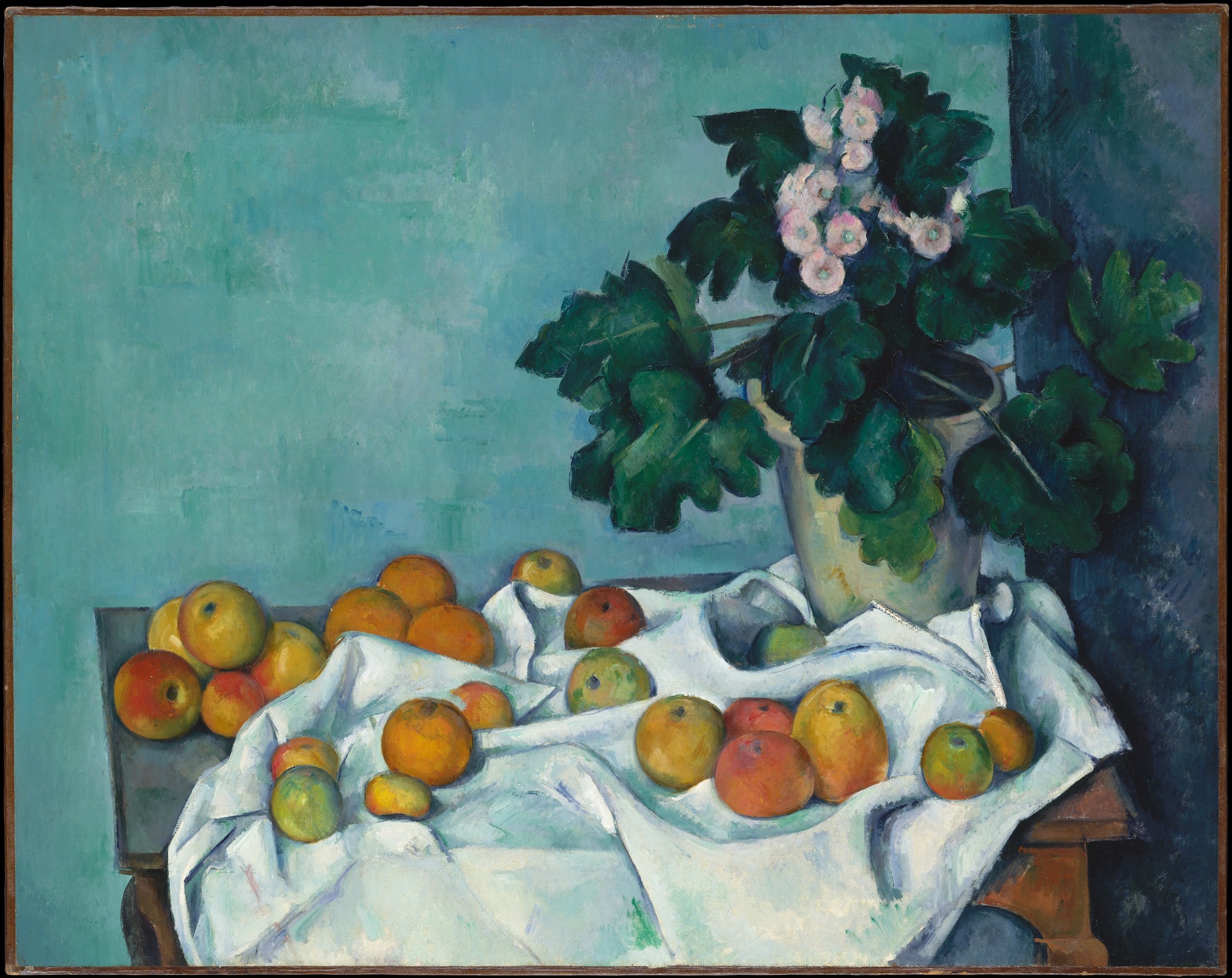
Paul Cézanne’s Still Life with Apples and a Pot of Primroses, about 1890, keeps the fruit and plant recognizable. Yet the image gives us something quite different from Fantin-Latour’s wicker and porcelain.
Here we keep returning to the patches of green, yellow and red within an apple. They suggest its rounded form while remaining visible as painted changes of colour. The cloth makes a series of pale ridges and hollows; the leaves gather into broad dark masses above them.
The table is partly hidden. Instead of a continuous, easily surveyed surface, we move between clusters of fruit, folds and the plant pot. We like the way the cloth both connects and divides the apples: the picture has a rhythm that a list of its objects would never describe.
Still life, then, does not demand photographic imitation. The same ordinary subject can become a study of texture, a historically supported meditation on mortality, or an exploration of painted shape and space. These are three readings of particular works, not the only purposes the genre can have.
Why we give ordinary objects a second look
Our view is that a still life earns attention through what happens between its objects as much as through which objects it includes. A costly vase is not automatically a more interesting subject than a cup. A convincing surface can be absorbing; a deliberate departure from smooth illusion can be absorbing too.
The Met’s history of Northern European still life describes the genre’s growth in the early seventeenth century and its varied decorative, symbolic and observational interests. The three paintings here give us different entry points into that variety.
For us, the useful question is specific: which relationship in this picture makes the everyday subject worth another look? In Fantin-Latour it is the change between woven basket, fine cup and exposed orange. In Claesz it is the fragile material world gathered around mortality. In Cézanne it is the movement among fruit, cloth and leaves.
If the next question is how to choose a picture for your own home, our guide to choosing artwork without a fixed style takes that separate decision further.
FAQ
Is still life limited to fruit and flowers?
No. Books, vessels, tools, food and other objects can be its principal subjects. The genre concerns the foregrounded arrangement of objects, not a compulsory fruit bowl or bouquet.
Is every still life a vanitas painting?
No. Vanitas is a particular kind of still life concerned with mortality and the transience of worldly things. The Claesz shown here has a supported vanitas reading; that does not make every still-life object a fixed symbol.
Can still life art be abstract or stylized?
Yes. A still-life subject can be simplified, distorted or partly abstracted. Genre names the subject; style describes its treatment. Cézanne’s apples and plant remain recognizable even as the colour patches and cloth folds become major parts of the viewing experience.
Can a photograph be a still life?
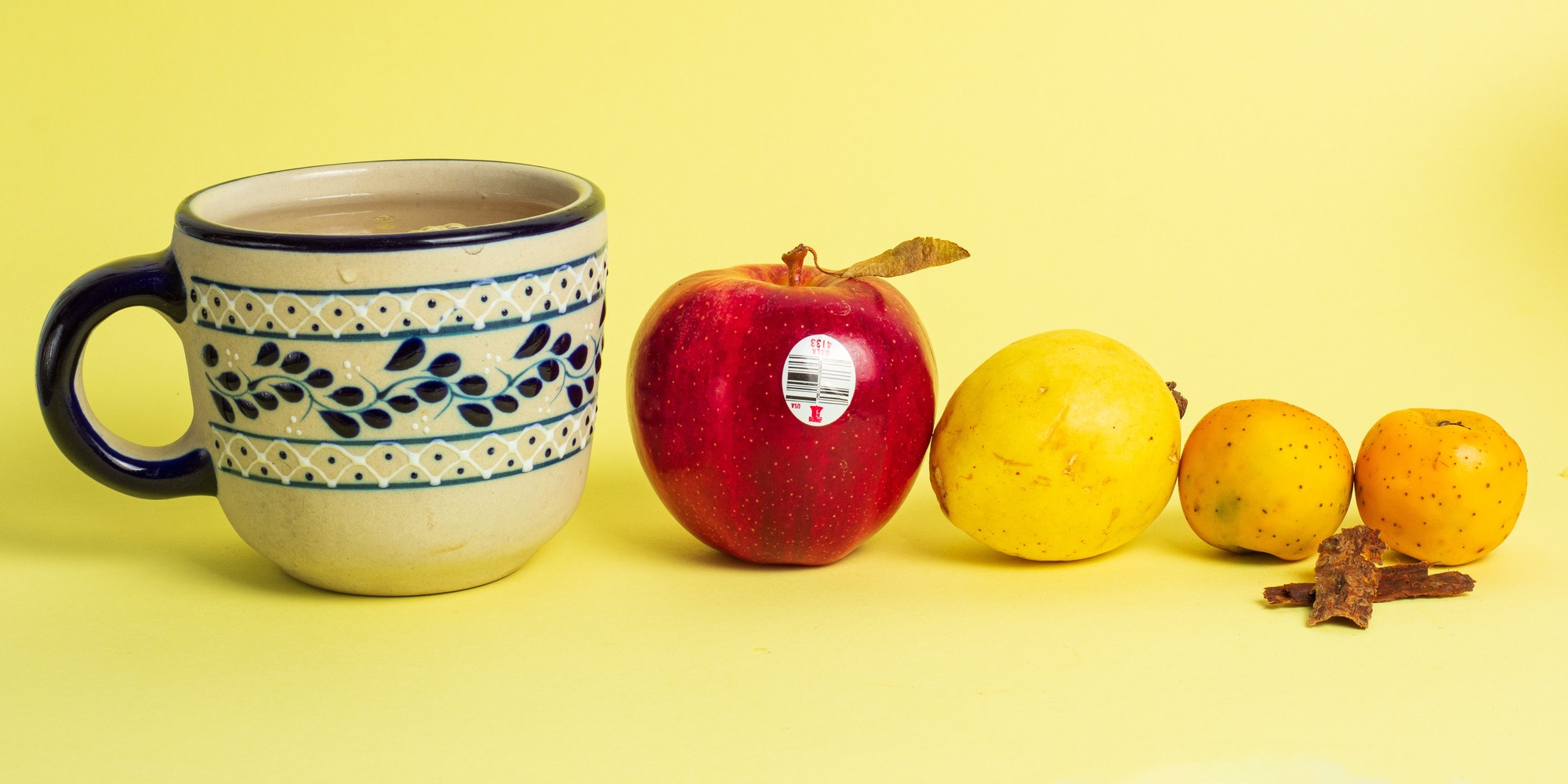
Yes. Still life is not restricted to oil painting. A photograph can also foreground an arrangement of objects, as the real mug-and-fruit photograph on this article’s cover does. The medium and the still-life subject are separate descriptions.
Sources and image credits
The National Gallery of Art and the Met supply the object records and open-access images credited beside the paintings. The Met’s essay supplies the brief historical context. Our descriptions of visible relationships and our preferences are editorial readings of these reproductions. The cover is a real mug-and-fruit still-life photograph by Erick Ortega / Pexels, used under the Pexels License. It is an independent editorial photograph, not a WhispArt installation.