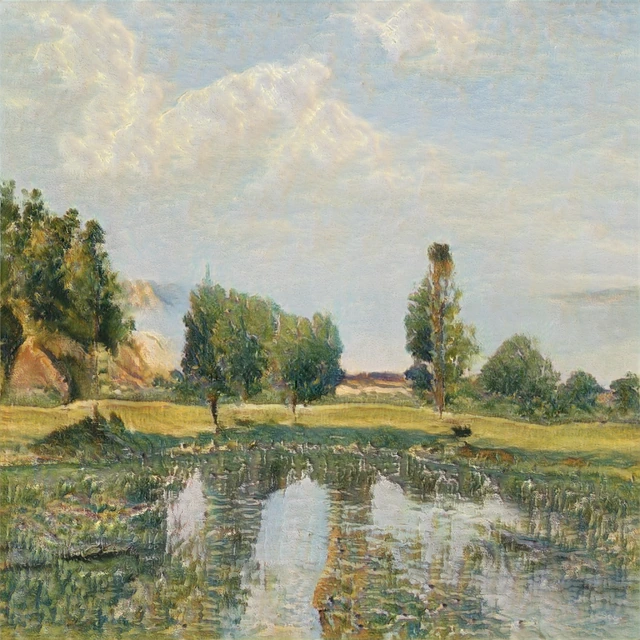
Figurative Art: Recognizable Subjects, Unfamiliar Forms
A face can be stretched, a body loosely painted, and a familiar figure surrounded by impossible forms. The subject can remain recognizable through all of those changes.
Figurative art depicts recognizable subjects from the real world; it does not have to reproduce them realistically. People are especially prominent in the modern use of the term. In the broader representational sense, a recognizable landscape, animal or still life can also be figurative. The useful starting question is what you can identify, followed by how the artist has transformed it.
Tate’s definition emphasizes modern art that retains references to the real world, particularly the human figure. That emphasis explains why figurative collections so often feature bodies and faces. It does not make photographic accuracy a requirement.
We would keep three things distinct when describing a work: the recognizable subject, the way its forms are handled, and what its record actually identifies. The distinction becomes practical when a fluent-sounding description accidentally invents a person, date or material.
Recognizing a subject is different from counting its details
In Mary Cassatt’s Little Girl in a Blue Armchair, we can follow the sitter’s bent arms and extended legs, identify the chairs, and find the small dog curled at the left. Those recognizable things remain clear even where the paint describes fabric with quick, irregular marks.
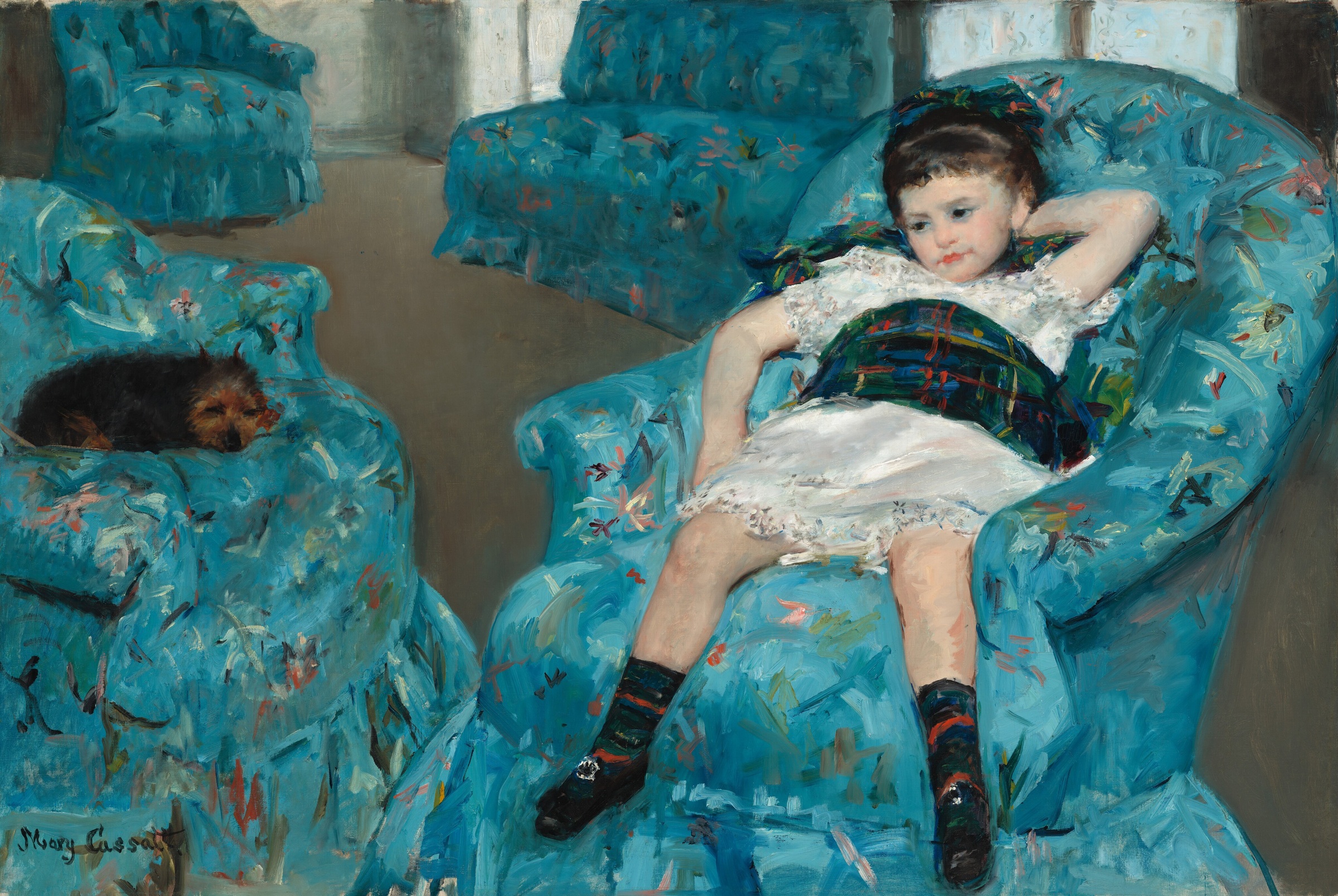
Look at the blue upholstery beside the girl, then at her face and pale clothing. Different areas offer different amounts of detail. We do not need every patch to be equally precise to understand the scene. The National Gallery of Art records this as Cassatt’s 1878 oil painting; the image gives us a way to see what that handling does.
A bowl of fruit offers another recognizable subject without a human figure. Our still life guide explores that genre. “Still life” names the subject category more specifically, while “figurative” or “representational” describes the continuing relationship to recognizable things.
A simplified figure can still be a portrait
Amedeo Modigliani’s Jeanne Hébuterne takes the distinction further. The elongated neck, tilted oval face and pale almond-shaped eyes depart from ordinary proportions. Yet the seated figure, the hand near the chin and the white garment are easy to recognize.
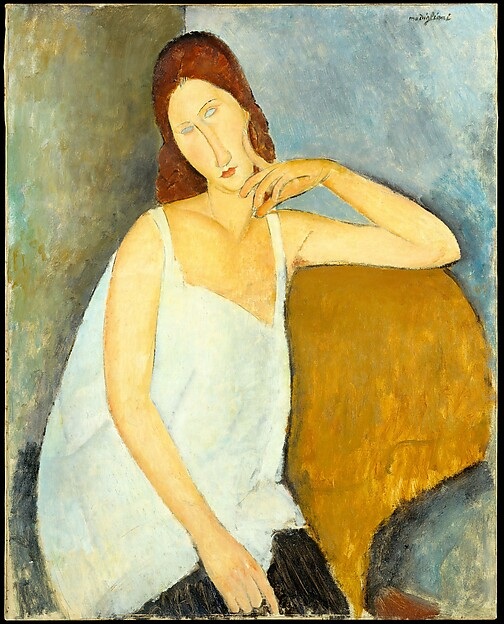
We would describe the figure as elongated and simplified before making a claim about realism. Those words point to visible decisions. They do not tell us whether the person was real or who she was. Here the Met’s record supplies the title, sitter and 1919 date. Recognition comes from the image; identification comes from documentation.
This is why “figurative versus abstract” is not always a clean either-or question. A work can simplify or distort a figure while keeping it recognizable. A discussion asking about figurative art versus Expressionist art raises the related difficulty of separating a recognizable subject from a style label. It is an individual learning question, not evidence that every viewer uses the terms the same way. For the broader taxonomy, our guide to types of abstract art handles the separate distinctions.
When a readable face meets unsettled forms
WhispArt’s The Red Vow has a recognizable face above a red garment. Farther down, cream-colored forms join and fold in ways that make the body harder to resolve. We can recognize figure imagery without being able to turn every surrounding shape into an ordinary anatomical description.
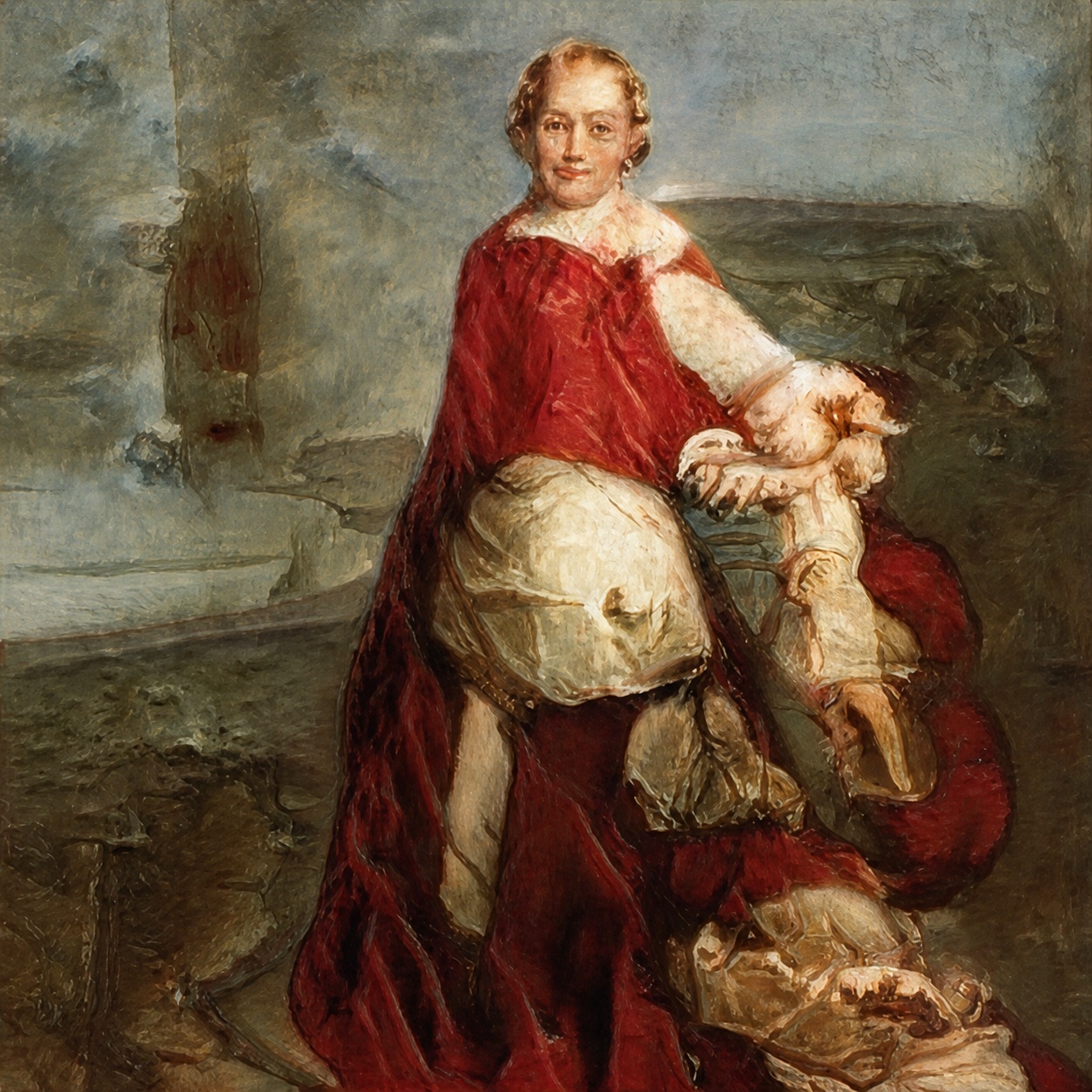
We would retain both observations. Calling the whole image purely nonrepresentational would miss the face. Calling it a realistic likeness would flatten what is strange about the lower forms. “A recognizable figure with ambiguous surrounding forms” is a more accurate first description.
The current product record gives us its title. The supplied image shows its visual character. Neither the painted-looking surface nor a poetic product description identifies a historical sitter or proves that the image is a photograph of a hand-painted oil original.
Correcting a catalogue entry, rather than adding another style label
Imagine a social club preparing a small digital artwork catalogue. This is a hypothetical editing exercise, not a report of a club installation. Someone has described The Red Vow as:
“Oil portrait of a named nineteenth-century sitter, circa 1890.”
That entry sounds specific, but the available record does not support its material, person or date. We would remove those claims rather than replace them with a confident movement name. The corrected entry would read:
WhispArt, The Red Vow. Image reproduced from the supplied artwork file. A recognizable face appears above a red garment; the cream-colored forms below become ambiguous. The image is figurative, with distorted or unresolved surrounding forms. A named sitter, historical creation date and physical painting medium are not established by this image record.
The correction keeps the useful specificity: title, source, visible subject and treatment. It also separates what belongs in an image description from what belongs in an object record. If the club later acquires a physical work, its catalogue should add the verified maker, medium, dimensions and object details from the actual purchase record. A screen image cannot supply those fields by itself.
We would change the entry if reliable documentation establishes more. A named sitter could then be identified; a documented medium could be stated. Until then, an unknown is more useful than an attractive invention.
FAQ
Does figurative art have to show people?
People are central to the modern usage described by Tate. In the broader representational sense, recognizable animals, landscapes and objects also qualify. Use the more specific genre when it helps: a recognizable arrangement of objects can be called a still life.
Is figurative art the same as realistic art?
No. Figuration concerns a recognizable subject. Realistic handling concerns how closely the work resembles ordinary appearances. Modigliani’s elongated figure remains recognizable despite its altered proportions.
Can a painting be both figurative and abstract?
Yes, if abstraction simplifies or transforms forms without removing the recognizable subject. Describe the particular relationship rather than treating the labels as two sealed categories.
Does a recognizable face prove that a work portrays a real person?
No. A face may be imagined, composite or unidentified. “Portrait-like” can describe its appearance, but a claim that it depicts a particular sitter needs supporting documentation. The Met’s record supplies that identification for the Modigliani example.
How should I describe a work when its sitter or medium is unknown?
State its known title and source, then describe what the image shows. Leave unsupported identity and material fields unknown. Painted-looking marks in a reproduction do not establish the medium of a physical object.
Sources and image credits
Tate supplies the modern definition. NGA and Met object records support the museum artwork identities; their designated public-domain images are reproduced under their open-access policies. Our descriptions of visible forms and the catalogue correction are editorial readings. The club exercise is hypothetical, and the contemporary example is a supplied WhispArt image.
Cover: Mary Cassatt, Little Girl in a Blue Armchair, 1878. Courtesy National Gallery of Art, Washington, collection of Mr. and Mrs. Paul Mellon, 1983.1.18. Public domain / CC0. The responsive hero may show a detail; the full artwork appears in the article.