Lounge Wall Art Ideas for Shared Spaces: What Stays, What Changes?
A permanent picture, a small group you already own, or a changing selection of local work: choose the display you want to live with, and give practical notices a clear place of their own.
Start with the kind of display you want to keep
For a shared lounge, choose fixed artwork when you want a settled wall, and a changing selection when someone will look after it. Keep time-sensitive information recognizable in either arrangement. A picture can stay for years; tomorrow’s walking-tour time cannot.
This is especially useful in a hostel common room, where one wall may be asked to hold artwork, local recommendations, activity sheets and guest contributions. Decide which of those jobs actually belong together before filling the available space.
Three practical starting points are:
- One lasting picture. A street photograph, a drawing or a favorite print gives the seating area a complete display without creating an ongoing selection project. Choose something you want to keep seeing; it does not need to be a landmark or a large statement piece.
- A fixed group from an existing collection. Keep a few pictures together when they already have a connection. The useful idea may be to retain and finish that selection, rather than continually add to it. Our lounge gallery-wall guide covers which pictures belong together.
- A changing local or guest selection. A few travel sketches or photographs can make the display itself part of the room’s activity. Choose this when participation is wanted and a named person will select, credit and change the work.
A documented neighborhood image can give either fixed option a local connection. Retain the actual place and creator with it; an attractive invented street scene should not become “our neighborhood” in its caption. If you are still choosing image styles, the illustrated guide to abstract art provides that separate comparison.
The same lounge, two ways to use the art wall
Consider a hypothetical hostel lounge with a long bench, reading chairs, a shared table and an existing entry noticeboard. Staff already update activity information. Nobody has agreed to manage a changing art selection.
Choose the fixed picture for this room, and keep current notices on the entry board. It finishes the art display without assigning a new job to someone who has not taken it on.
Compare the two versions below. The furniture and noticeboard remain in place. What changes is the art area above the bench: one picture in the upper view, four drawings in the lower view.
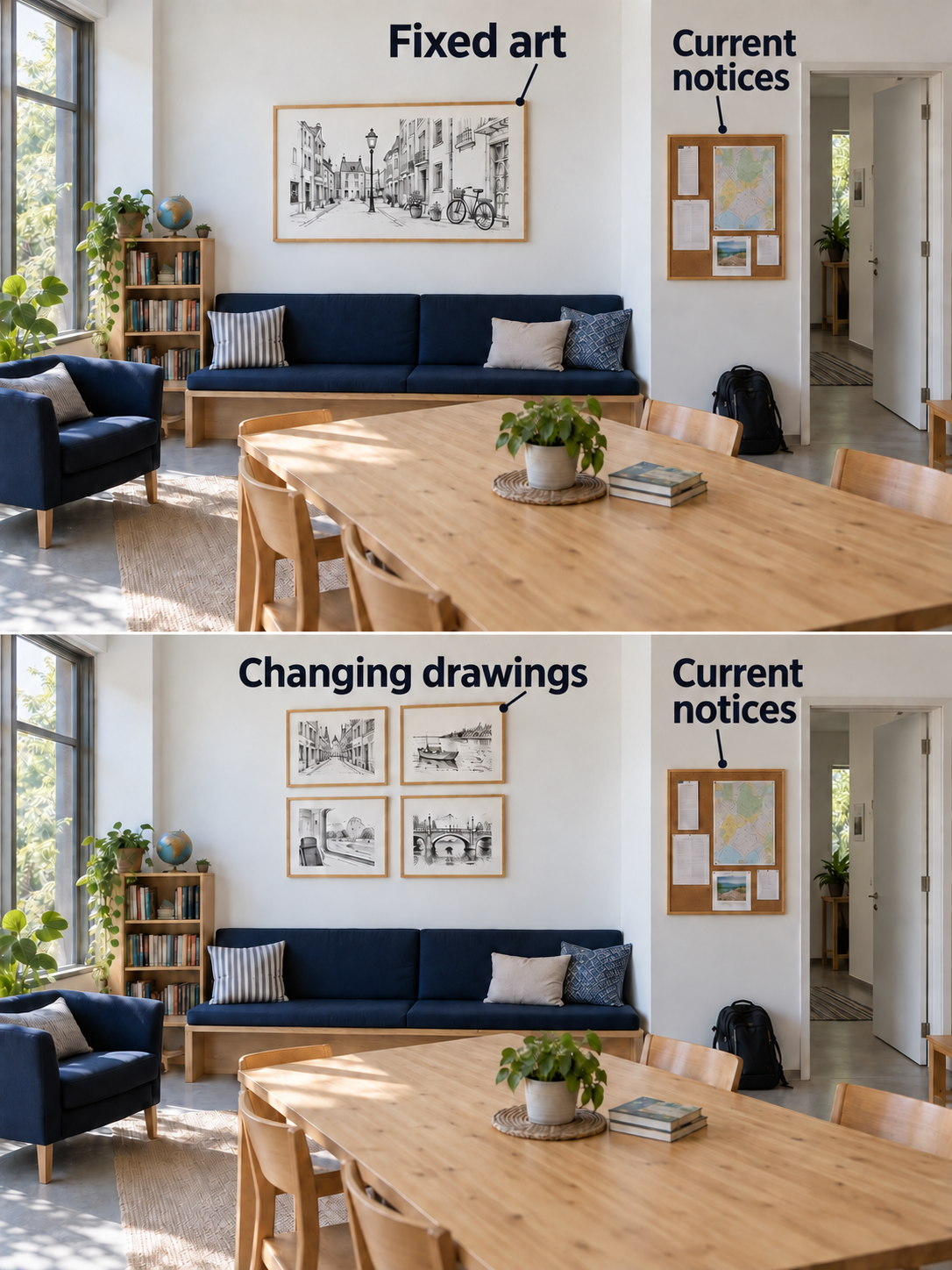
The four-drawing wall is not automatically a rotating display. It could remain a fixed group indefinitely. To make it a changing selection, someone must decide what comes next and handle the changeover; the number of frames cannot do that work.
For the original brief, the upper arrangement is complete: a stable picture above the bench and current information beside the entrance. The tradeoff is that it does not offer a changing contribution feature. That is a reasonable choice when nobody wants responsibility for one.
The noticeboard is separate in both views because its purpose is different. An activity sheet needs to be found and read; it should not depend on a guest sorting it out from pictures and creator credits. In a real room, also check that someone reading it can stand there without blocking the doorway or the route to a seat.
When a changing wall earns its place
Now give the same lounge a different brief. A staff member wants to run a small local-sketch display. Four drawings are available with permission to display and credit them, and the next changeover will happen at the end of the month.
Choose the managed drawing display in this case. The lower arrangement now has a purpose and an owner. A short, completed handoff could read:
- This selection: the four agreed drawings, each with its creator’s credit beside the work.
- Display area: the four-frame group above the bench; activity information stays on the entry board.
- Changeover: the staff member who accepted the display checks the next selection at month-end and returns or removes the current drawings as agreed.
- If the next selection is not ready: keep the current drawings only if that remains within the agreed display permission; otherwise return to a fixed work the lounge can continue to use.
The month-end date is an input to this example, not a required exhibition schedule. A longer-running display may suit the room better. Likewise, an invitation for guests to submit work can remain open without promising that every contribution will go on the wall.
If no one can maintain the selection, choose fixed artwork until that changes. A communal room does not need a contribution program to be welcoming.
Leave room for different ways of being there
Guests can share a room without wanting the same experience from it. In a discussion about hostel common rooms, participants describe wanting conversation, reading quietly and preferring organized meals or activities as social moments. These are differing individual accounts, not evidence that a particular picture changes behavior.
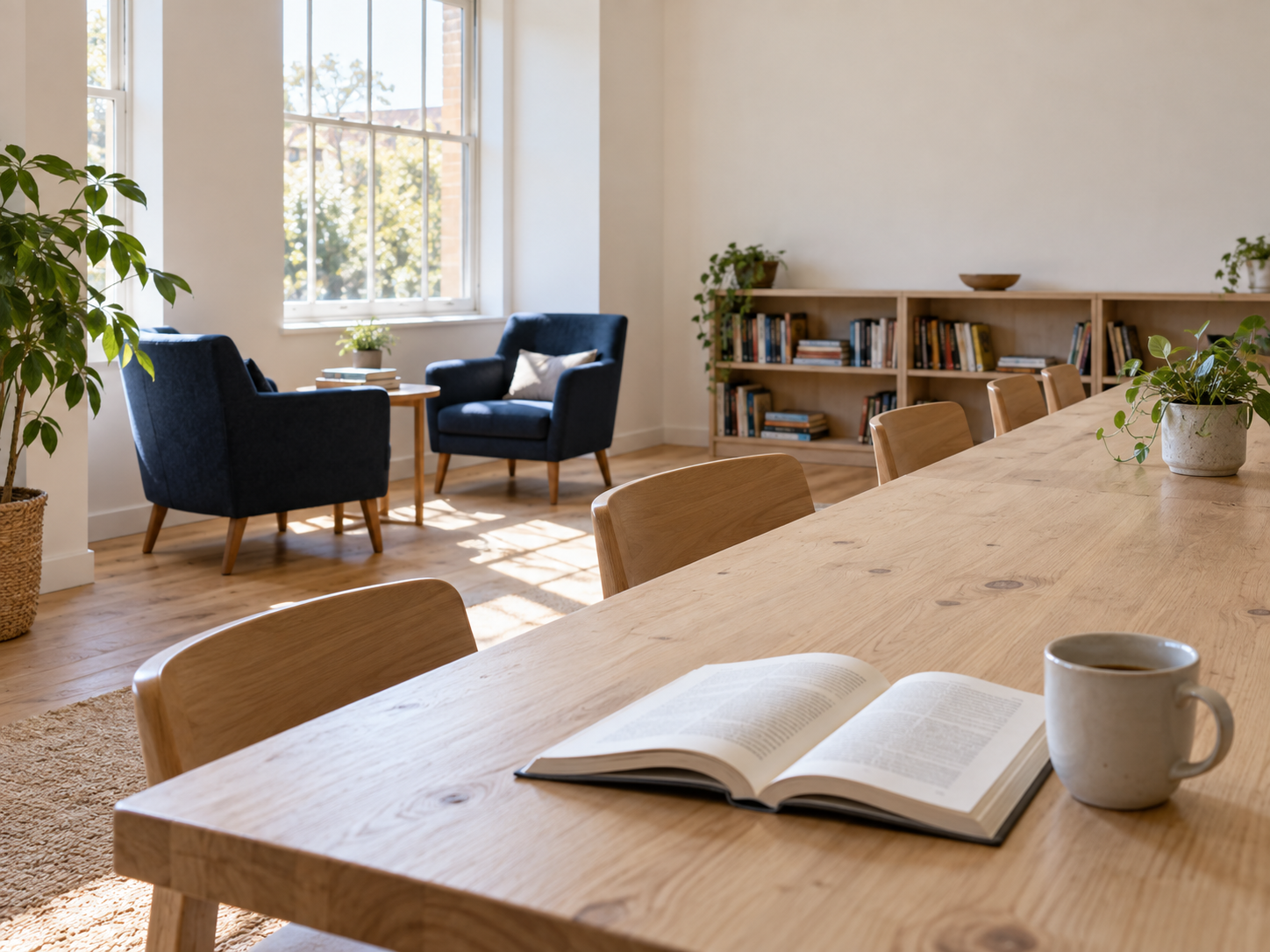
The art display can be complete while someone simply reads a book beside it. Keep participation optional and practical notices easy to distinguish. Staff invitations and activities are separate decisions; the painting does not have to carry that whole brief.
For the example lounge, the finished choice remains simple: fixed art and a separate noticeboard today; a managed drawing selection when its purpose, permission and changeover owner are in place. If you are furnishing a private sitting room instead, our living-room art guide develops color, format and furniture relationships.
FAQ
Is one picture enough for a shared lounge?
Yes. One selected work can complete the art display. Choose a group when several images have a reason to remain together; choose changing work when the room has a reason and a person to maintain it. Filling every wall is optional.
Can artwork and notices share a wall?
Yes, if their display boundaries and reading positions are clear. The example uses two distinct wall areas that are already available. On one wall, keep the current-information area recognizable rather than scattering notices between art frames.
How often should a lounge art display change?
There is no required interval. Fixed work can stay. For a changing selection, choose a review or changeover date the responsible person can maintain and that fits the agreed display permission. The example’s month-end change is one workable fictional brief, not a universal schedule.
Can guests contribute photographs or drawings?
Yes, through a voluntary process with permission for the intended display. Agree who selects the work, keeps creator credits with it and handles removal or return. Public visibility online does not itself establish permission to reuse an image.
Will more expressive art make guests socialize?
The research used here does not establish that effect. Art gives people something to look at; invitations, staff interaction and activities are separate choices. Guests should also be able to enjoy the lounge without joining a conversation.
Sources and image notes
Society6’s living-room collection supplies examples of subjects and formats, while ElephantStock’s living-room guide discusses style and display options. The fixed-versus-changing choice and staff handoff here are hypothetical editorial applications. The linked community discussion supplies individual perspectives on shared-room use.
The cover, comparison and reading-corner image are newly generated illustrations. The comparison uses generic invented drawings; it depicts no real collection, local attribution or installed customer project.