What Is Cyanotype Printing? From Light to a Blue Image
Cyanotype printing is a photographic process that uses light-sensitive iron compounds to form a blue image. An object or a negative controls where ultraviolet light reaches a prepared surface; washing completes the print. That is why a pale plant silhouette and a detailed river photograph can both be cyanotypes.
The blue comes from the process
A cyanotype does not begin as an ordinary photograph with a blue filter added. Its blue image forms through a reaction in the sensitized surface. The color is associated with Prussian blue, an iron compound. Richard Benson’s explanation of non-silver photographic processes, hosted by Yale University Art Gallery, connects this chemistry with both engineering blueprints and photographic pictures.
The basic sequence is straightforward:
- Prepare the surface. Paper or another suitable absorbent material receives a light-sensitive coating and is dried away from exposing light. Prepared cyanotype paper can supply this stage.
- Place an object or negative against it. This determines which areas receive more or less light.
- Expose it to UV. Sunlight or an appropriate UV source produces the reaction in the exposed areas.
- Wash and dry the print. Unreacted soluble material washes away, leaving the image in the support.
The National Portrait Gallery’s process definition identifies the traditional chemicals as ferric ammonium citrate and potassium ferricyanide, and explicitly includes both objects and negatives. This is an explanation of how the image forms, rather than a chemical mixing recipe.
There is no exposure time that applies to every setup. Light strength, the negative and the prepared material change the result. For making a first print, follow the instructions for the particular kit and use a test exposure. A workshop’s ten-minute UV-box exposure is not automatically a ten-minute outdoor exposure.
An object can make the image directly
Look at the thick pale stems and the fine branching strands in Equisetum sylvaticum. Anna Atkins and Anne Dixon placed plant specimens on sensitized paper, held them under glass and exposed the sheet to sunlight. The Getty’s record describes that process for this work.
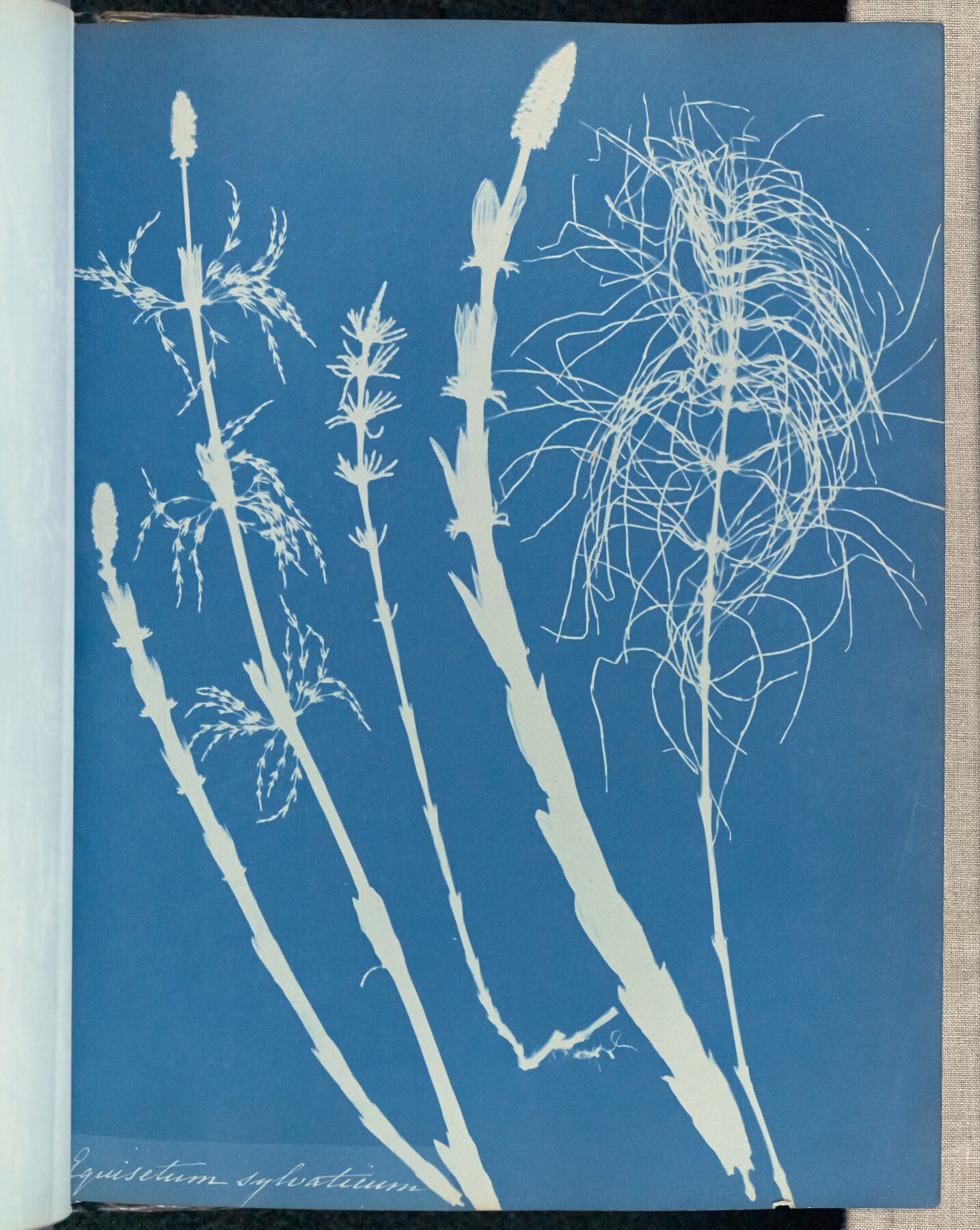
The specimens blocked light. Their pale shapes register contact with the prepared sheet; the surrounding exposed areas became blue. This kind of camera-less image is a photogram. The plant did not have to be photographed first.
I would begin a comparison with the almost solid stem near the middle, then move to the branching specimen on the right. Both belong to the same process, yet they produce very different amounts of open blue space. The image records the specimens’ placement and shapes, not their natural green color.
This distinction also keeps the vocabulary useful: cyanotype names the printing process, while photogram describes how objects formed this particular image. The two words overlap here, but they are not interchangeable in every case.
A negative can carry a photograph into the same process
Henry Bosse’s Mouth of the St. Croix River shows buildings, trees, water and a receding landscape. Compare its many intermediate blues with the pale plant shapes above. The Smithsonian identifies this object as a cyanotype; the scene was not made by placing the river’s objects on a sheet of paper.
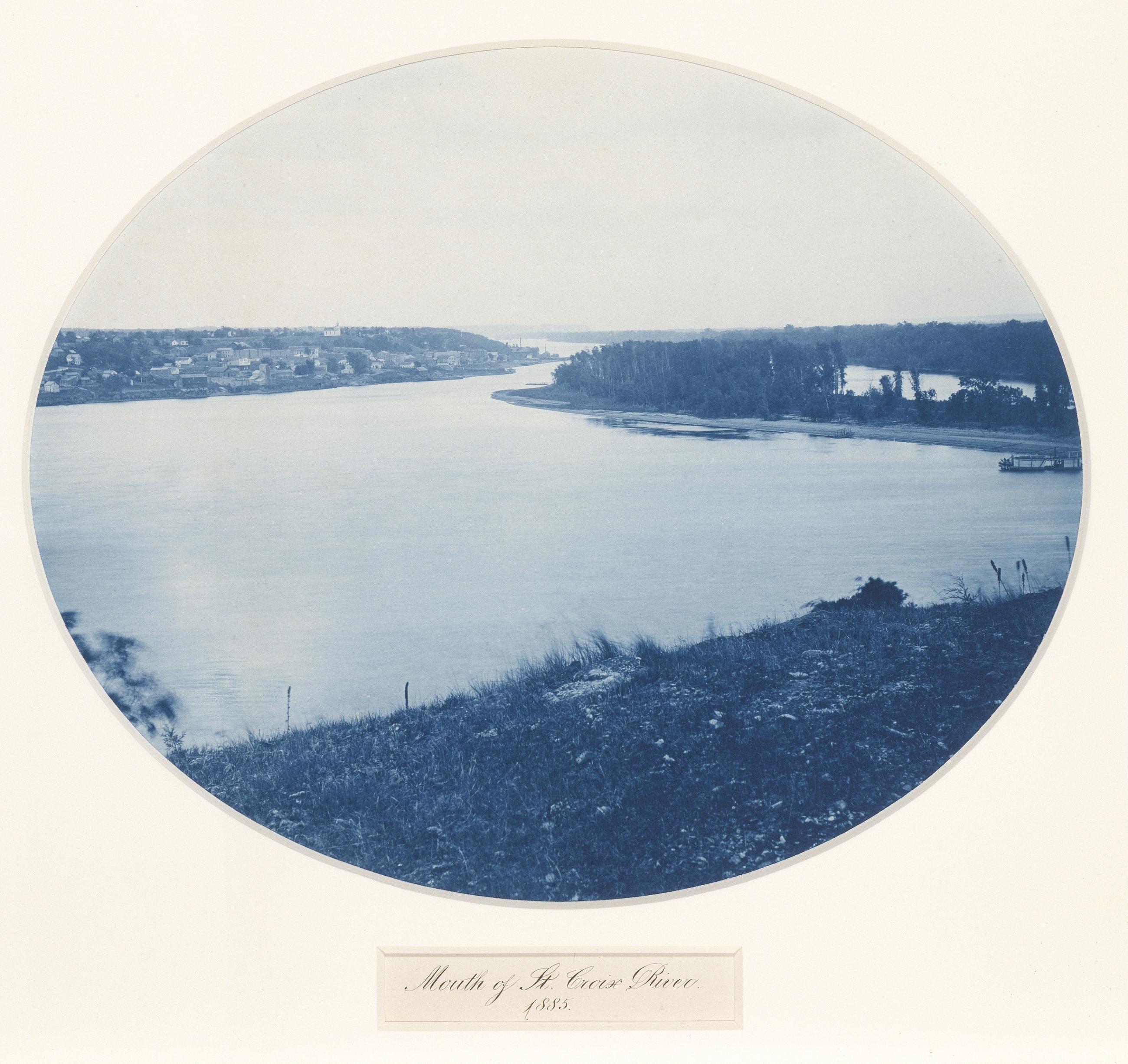
A photographic negative replaces the plant as the material controlling the light. Denser parts of a negative let less UV through and produce lighter areas; clearer parts let more through and produce darker blue areas. Variations between them can carry photographic detail and a range of tones.
The U.S. Army Corps of Engineers’ account of Bosse documents his use of a large-format glass-plate camera and cyanotype printing for river work. That supports the photographic route; it does not identify a surviving individual negative for this particular museum object.
Today, a photograph can also be prepared as a digital negative and printed on suitable transparent film before contact exposure. The inkjet-printed film is then a tool for making the cyanotype. It is not the finished blue print itself. NYFA’s workshop account describes students using printed negatives alongside objects and cut shapes.
A cyanotype and a reproduction of one are different objects
The two pictures on this page are digital reproductions of museum-held cyanotypes. Looking at them on a screen does not turn the screen image into sensitized paper. The same distinction matters in a print listing.
Suppose one offer is described as a cyanotype on paper, exposed and washed by the maker, while another is an inkjet reproduction of a cyanotype. If you want an object made by the cyanotype process, the first description addresses that requirement. The second may reproduce the appearance accurately, but names a different way of making the object. This comparison is illustrative, not two current offers.
I would check the medium of the item being sold before relying on its color or brush-like border. A reproduction can copy both. If the listing only says “blue botanical print,” ask how that physical print was made. Our digital-print guide develops the distinction between an image, a file and a finished print.
Likewise, monochromatic art describes a restricted color approach. It can describe the appearance of these blue images without identifying their chemistry. A palette description and a medium label answer different questions.
FAQ
Do you need a camera to make a cyanotype?
Not for a photogram made by placing objects on sensitized material. A cyanotype made from a photographic negative uses an image captured or prepared separately; the printing step still works by light passing through that negative.
Can you make a cyanotype from a phone photo?
Yes, through a suitable digital negative. Preparing and printing the negative is separate from exposing the cyanotype paper. Printer-compatible film, negative density and exposure need to work together; making a photo black and white is not the same as inverting it into a negative.
Why is cyanotype associated with blueprints?
The process was used to reproduce technical drawings as light lines against blue. It can also produce photographic tones, as Bosse’s river view shows. Not every modern plan called a blueprint is a cyanotype.
Can I identify a cyanotype just by its blue color?
No. An inkjet reproduction can show the same blue image. Use the maker’s process description or the collection’s medium record to establish what the physical object is.
Sources and image notes
The linked museum and photographic-process sources support the medium explanations. The visual comparisons are editorial readings of the reproductions, not physical examination of the original objects. Cover: [Barge], unidentified artist, ca. 1895, cyanotype. Smithsonian American Art Museum, 1994.91.195. Public domain; the native cover displays a cropped detail.
Community questions about printing photographs rather than objects and preparing a photo negative helped clarify the distinction. Community recipes were not used as chemical or conservation instructions.